
Orchid Care
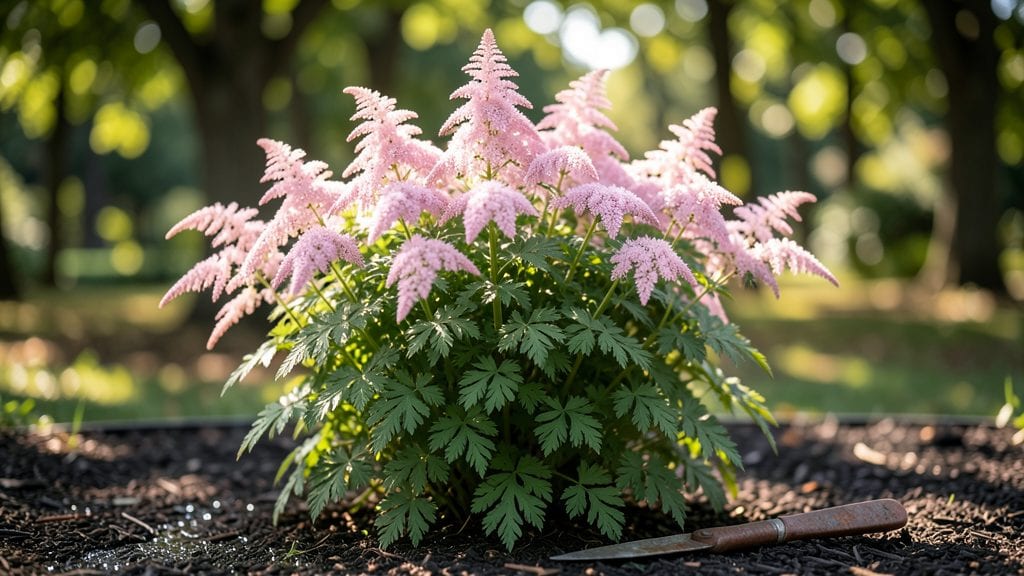
Most gardeners consider astilbe a hardy perennial because its roots persist through winter, even if the foliage freezes back. 🌿 The key difference between annual and perennial behavior lies in how well the roots withstand freezing temperatures—some northern varieties might look dead in winter but regrow from the same root system come spring.
I've seen astilbe bounce back after -10°F winters with proper mulching, proving it's far more resilient than many people realize.
What sets astilbe apart is its ability to adapt to different growing conditions. In warmer zones (7-9), it thrives year-round with minimal care, while in colder regions (3-6), gardeners must protect the roots with thick mulch or even container growing.
The plant's natural dieback in winter isn't a sign of annual behavior—it's simply its survival strategy for harsh conditions.
💡 In This Article
- Astilbe Lifespan Factors in Different Climates
- Extending Astilbe’s Perennial Performance
Astilbe lifespan factors in different climates
The true test of whether astilbe acts as a perennial or annual comes down to root survival during winter. In USDA hardiness zones 7-9, astilbe thrives year-round with minimal care—its roots naturally overwinter in the soil, protected by organic matter.
The key mechanism here is the plant's ability to enter dormancy, where metabolic processes slow dramatically, allowing it to withstand temperatures down to 10°F without permanent damage.
In colder zones (3-6), the story changes dramatically. Here, frost penetration can reach depths of 12-18 inches, putting astilbe roots at risk. The plant's crown (where stems meet roots) is particularly vulnerable—when exposed to prolonged -15°F temperatures, it can suffer irreversible damage.
This is why some gardeners in these zones treat astilbe as an annual, though with proper protection (like 8-12 inches of mulch), it often returns stronger each spring.
What most gardeners don't realize is how soil composition affects survival. Sandy soils drain quickly, allowing roots to freeze more rapidly, while clay soils retain moisture and provide better insulation.
I've found that amending garden beds with 30% compost before winter creates a microclimate that can raise soil temperatures by 5-7°F, making a significant difference in root protection.
The plant's natural dieback pattern offers clues about its resilience. In spring, new shoots emerge from the same root system that survived winter, proving its perennial nature. However, in extreme cold snaps (-20°F), even well-mulched plants may fail to regrow—this is when they behave more like annuals.
The difference often comes down to variety selection, with 'Fanal' and 'Deutschland' being particularly cold-hardy.
Seasonal timing matters too. The critical window is late fall, when roots need to establish sufficient energy reserves before dormancy.
If you plant astilbe in late August or September in colder zones, it gives the roots 6-8 weeks to develop before winter sets in—this makes all the difference between a perennial and an annual experience.
One surprising factor is wind exposure. Cold winds can lower effective temperatures by 10°F or more, making sheltered locations ideal. I've seen astilbe thrive in full sun in zone 8 but struggle in exposed beds in zone 6—the same variety, same care, just different microclimates.
For gardeners in marginal zones, the solution often lies in container growing. Potted astilbe can be moved to protected locations (garages, porches) during winter, where temperatures stay above 20°F. This simple strategy transforms what would be an annual into a reliable perennial.