
Flowers
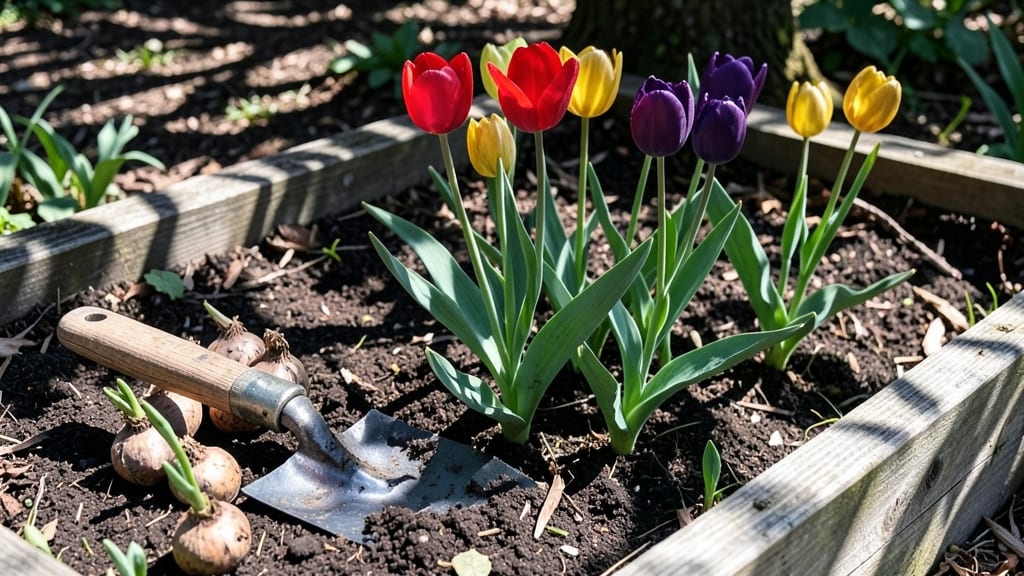
Most bulbs you plant in fall—like tulips and daffodils—are hardy perennials that return for years, storing energy underground over winter. 🌱 The key difference lies in their dormancy periods: true perennials (such as alliums) thrive with minimal intervention, while "annual" bulbs like cannas or gladiolas need replanting each season in colder zones.
My garden journals show how USDA Zone 5 winters force me to dig up dahlias every fall, while tulips in Zone 7 often naturalize and multiply without help.
What trips up new gardeners is the misconception that all bulbs follow the same rules. For instance, summer bulbs (like dahlias) store energy differently than spring bloomers (hyacinths), requiring warmer soil to trigger regrowth.
I've learned to mark planting dates in my garden planner—fall for spring bloomers, late spring for summer varieties—to match their natural cycles with local frost dates.
💡 In This Article
- How Bulb Lifecycles Differ by Type
- Planting Strategies for Perennial vs. Seasonal Bulbs
How bulb lifecycles differ by type
Here's what's actually happening underground: Most bulbs you plant—like tulips and daffodils—are true perennials because they store energy in specialized underground structures called corms or tubers that remain dormant through winter.
These storage organs contain modified leaves that convert starches into sugars during the growing season, then enter a metabolic slowdown when temperatures drop below 40°F. The key difference? True perennials have evolved to survive multiple freeze-thaw cycles, while seasonal bulbs like gladiolas lack this hardiness. 🌱
The science behind this involves photoperiodism—the plant's response to daylight changes. Spring-blooming bulbs (like hyacinths) need 12-16 weeks of cold exposure (35-45°F) to break dormancy, a process called vernalization.
Summer bulbs (dahlias) skip this step entirely, relying instead on soil temperatures above 55°F to trigger regrowth. That's why you'll see tulips blooming reliably in Zone 5 but must dig up dahlias before first frost—those storage organs simply can't withstand prolonged freezing.
What most people don't realize is how bulb size affects longevity. A tulip bulb planted at 2 inches deep in Zone 6 might return for 3-5 years before declining, while a dahlia tuber—even when properly stored at 40-50°F—often weakens after 2 years without replanting.
The reason? Perennial bulbs develop offsets (baby bulbs) that gradually replace the parent, while seasonal bulbs lack this regenerative capacity. My Zone 5 garden shows this clearly: alliums spread aggressively, while cannas need annual division to prevent center rot.
Climate plays a surprising role too. In USDA Zone 8+, even tulips may act more like annuals because they don't get enough winter chill to properly recharge. The 10,000-hour chill requirement for some varieties means they'll bloom weakly or not at all in mild winters.
Meanwhile, summer bulbs like caladiums thrive in Zone 9-11 as perennials but must be treated as annuals in Zone 6 where frost penetrates 6+ inches deep. This geographic variability explains why seed catalogs often list "hardy" vs. "tender" bulb categories.
Let's talk about the biological tradeoff: Perennial bulbs invest energy in building robust storage organs, while seasonal bulbs prioritize rapid above-ground growth.
For example, a dahlia tuber might weigh just 2 ounces but produce 6-foot stems in one season, whereas a daffodil bulb (weighing 3 ounces) grows more slowly but lives decades.
The texture difference is telling too: Perennial bulbs develop papery outer scales for moisture protection, while seasonal bulbs have smoother, more delicate skins that bruise easily when handled. 💫
Here's a practical takeaway: If you're in Zone 4-6, focus on spring-blooming perennials (tulips, crocuses) for low-maintenance color, but treat summer bulbs (dahlias, lilies) as annuals unless you're willing to dig and store them.
In Zone 7+, you can push the limits—planting tulips in fall and dahlias in spring for year-round blooms. The secret? Matching the bulb's native climate to yours: Mediterranean bulbs (squills) handle heat better than Alpine bulbs (snowdrops).