
Plants
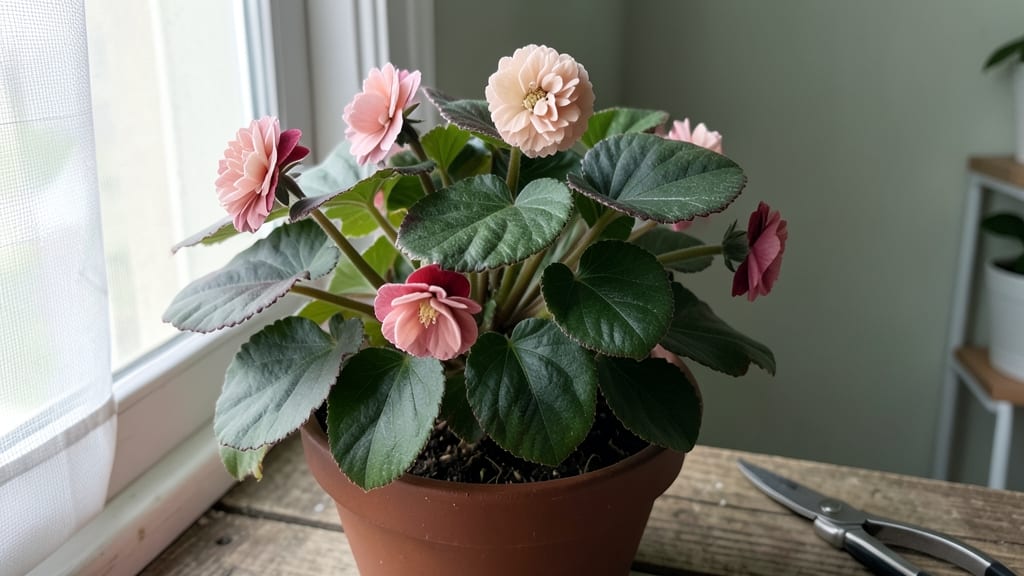
Wax begonias are not true perennials in most climates because they cannot survive frost or temperatures below 50°F (10°C). However, they can be preserved indoors or grown as tender perennials in warm zones 10-12 with consistent care.
Wax begonias originated in tropical regions, which explains why they struggle in cooler climates. 🌱 Their delicate foliage and shallow root systems make them particularly vulnerable to cold snaps, often resulting in complete dieback.
In zones 10-12, where winters rarely drop below 50°F, they naturally behave like perennials, reblooming season after season. The key difference lies in their ability to endure seasonal changes—most gardeners in colder regions treat them as annuals unless they take steps to overwinter them indoors.
For those in frost-prone areas, proper overwintering techniques can extend their lifespan dramatically. This involves pruning back the plant, repotting in fresh soil, and providing bright indirect light to mimic their natural growing conditions.
Without these precautions, wax begonias typically treat each growing season as a new beginning, which is why many gardeners assume they're annuals by default.
💡 In This Article
- Wax Begonia Cold Hardiness Zones Explained
- How to Overwinter Wax Begonias Indoors
Wax begonia cold hardiness zones explained
Wax begonias evolved in tropical climates where temperatures rarely dip below 60°F (15.5°C), making them highly sensitive to frost and cold snaps. Their natural habitat spans regions like Brazil and Bolivia, where humidity hovers around 70-80% and soil temperatures stay consistently warm.
This tropical adaptation explains why they struggle in USDA zones 8 and below, where winter temperatures can plunge to 20°F (-6.7°C) or lower. 🌡️ The moment nighttime temperatures drop below 50°F (10°C), their metabolic processes slow dramatically, leading to leaf drop and eventual dormancy.
The real damage occurs when cells freeze and rupture—a process called cytoplasmic crystallization. Unlike hardy perennials that develop protective antifreeze proteins, wax begonias lack these adaptations. Their thin, waxy leaves (which give them their name) actually insulate poorly against cold, making them more vulnerable than thicker-leaved plants.
In zones 9 and below, even a single 32°F (0°C) night can kill the plant outright, while zones 10-12 provide the stable 55-75°F (13-24°C) range they need to thrive year-round.
Here's what happens at the cellular level: Cold stress triggers osmotic imbalance in their cells, causing water to crystallize and rupture membranes. This is why you'll often see wax begonias in nurseries labeled as "tender perennials"—they can technically survive multiple growing seasons, but only if protected from frost.
In colder climates, gardeners must either treat them as annuals or create microclimates (like greenhouses) to mimic their native conditions. 🌿 The key threshold is 50°F (10°C): below this, their growth halts completely, and prolonged exposure leads to irreversible damage.
Interestingly, wax begonias exhibit thermoperiodism—a response to temperature cycles that triggers flowering. In their native tropics, consistent warmth (with minimal temperature swings) keeps them in active growth mode.
When you bring them indoors for winter, maintaining 65-70°F (18-21°C) temperatures with 12-14 hours of light can preserve their vitality until spring. This is why overwintering success hinges on replicating their tropical environment, not just keeping them alive at any cost.
For comparison, consider zone 10 (Southern California, Florida) where wax begonias grow wild-like, vs. zone 5 (Chicago, Minneapolis) where they'd need 6+ inches of mulch or container culture to survive winter. The difference isn't just about temperature—it's about thermal consistency.
Wax begonias can't handle the 20°F (11°C) daily swings common in continental climates, which is why they're classified as tender perennials rather than true hardy plants. 🌡️
The science behind their tropical origins explains why they're such light and temperature-sensitive plants. Their shallow root systems (6-12 inches deep) can't access deep soil warmth, making them dependent on ambient air temperatures.
This is why even a 40°F (4°C) night can stress them enough to trigger leaf drop—a survival mechanism to conserve energy when conditions turn unfavorable.