
Vegetables
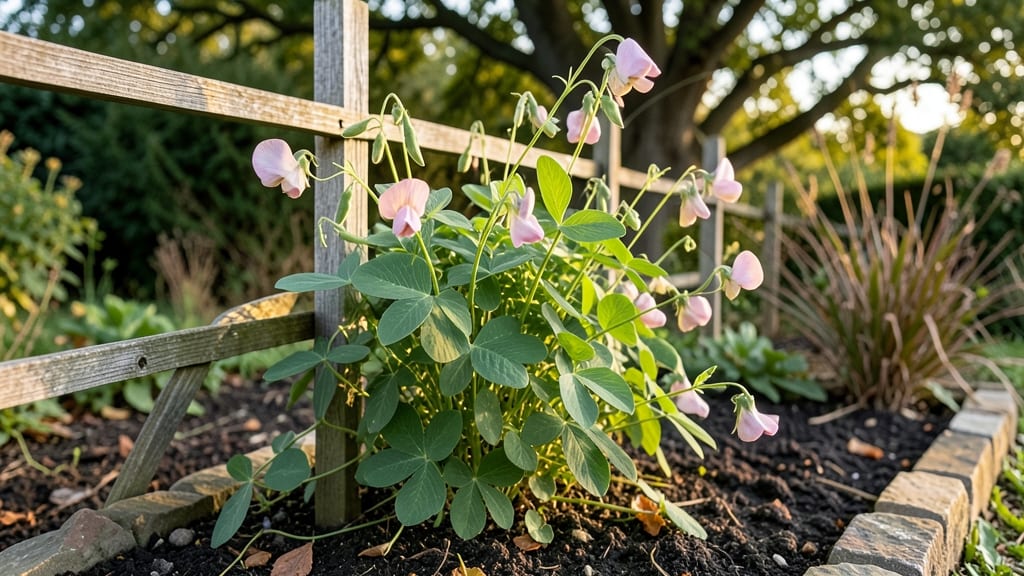
Sweet peas act as annuals in most climates because their delicate shoots freeze easily, even though their roots can survive Mediterranean winters where they’re true perennials. Gardeners in zones 4-9 usually replant yearly since frost kills the tops, but with proper protection, they can persist in milder regions.
This behavior comes down to their native Mediterranean hardiness—where they naturally overwinter—but their sensitivity to cold snaps outside those zones forces most gardeners to treat them as short-lived plants. 🌱 The key difference lies in their shoot systems: while roots may endure light frosts, the tender stems and leaves blacken at 28°F or below, making annual planting the practical choice for most U.S. growers.
Even in zone 7, a heavy winter often wipes out established plants, so many gardeners opt for fresh spring sowings to guarantee blooms.
What makes this especially interesting is how their growth habit changes with climate. In warmer zones (8-10), they’ll often self-seed prolifically, creating volunteer plants the following year—effectively acting as perennials through natural regeneration.
This is why some gardeners in Southern California or Florida report sweet peas returning year after year without extra effort.
💡 In This Article
- Sweet Pea Lifespan: Why They Act Like Annuals in Most Gardens
- Best Regions to Grow Sweet Peas as Perennials
Sweet pea lifespan: why they act like annuals in most gardens
Sweet peas (Lathyrus odoratus) are botanically classified as hardy perennials in their native Mediterranean climate, where they naturally survive winter dormancy. However, their tender shoots and leaves freeze at temperatures below 28°F, making them behave like annuals in most U.S. gardens.
The confusion stems from their root systems, which can endure light frosts down to 20°F—but without protected foliage, the plant simply can't regrow in colder zones. 🌱
Here's the science: Sweet peas store energy in their thick, fibrous roots during dormancy, similar to peonies or daylilies. In Mediterranean winters, these roots survive 30-40°F temperatures with minimal protection, then regrow shoots in spring.
But in zones 4-7, even a single hard freeze (below 25°F) kills the aboveground growth, leaving only the roots—often too weak to produce new stems the following year. This is why gardeners rarely see them persist beyond one season without intervention.
The key difference lies in their growth habit: Perennial sweet peas in warm climates develop woody crowns that regenerate annually, while annual varieties (like 'Cupani' or 'Perfume') focus all energy on flowering rather than winter survival.
Even in zone 8, where they can overwinter, many gardeners still replant yearly because the second-year blooms are less vigorous—a trade-off for their delicate, fragrant flowers. 💫
What most gardeners don't realize is how mulching thickness affects survival. A 6-inch layer of straw or leaves can raise soil temps by 10-15°F, protecting roots in zone 7, but the shoots still need row covers during winter.
In contrast, Mediterranean sweet peas (like Lathyrus latifolius) have thicker stems and deeper roots, making them true perennials even in zone 6 with proper winter care. This is why heirloom varieties often outperform modern hybrids in colder climates.
Consider this comparison: A zone 9 garden might see sweet peas self-seeding for years, while a zone 5 grower will get one season of blooms unless they use a greenhouse. The critical threshold is 20°F)—below this, even protected plants struggle. This is why most commercial growers treat them as annuals, despite their perennial classification. The energy required to regrow after winter often results in smaller, weaker plants the following year. ✨
For those in marginal zones (7-8), the solution lies in selecting cold-hardy varieties like 'Blue Perfume' or 'Spencer Purple' and combining mulch + row covers. These methods can extend their lifespan to 3-4 years, but the trade-off is often reduced flowering.
The bottom line? Sweet peas want to be perennials—but their delicate nature forces most gardeners to treat them as annuals for reliable blooms. 🌿