
Vegetables
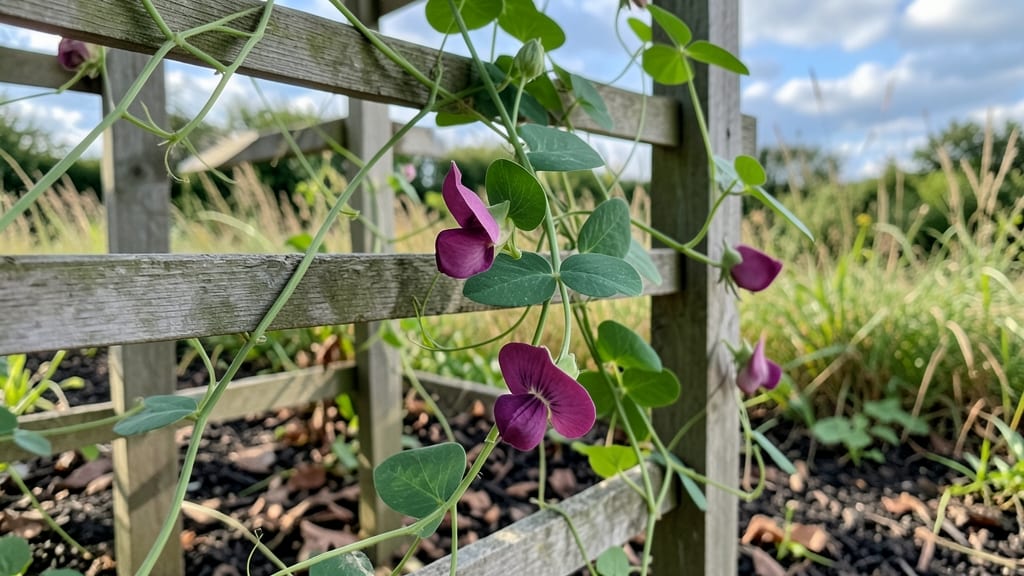
Sweet peas are not perennial in most climates, as they typically die back after producing flowers and pods in a single growing season, though some varieties may self-seed prolifically for multiple years under ideal conditions.
Sweet peas behave like annuals in most growing regions because their natural lifecycle is tied to frost sensitivity. 🌱 While they thrive in USDA zones 4-9, a hard freeze signals their decline, causing the plants to wither after flowering.
However, their ability to self-seed means you might spot new sprouts the following spring if conditions are right—though these won't be the same plants. The key difference lies in their botanical classification: sweet peas are cool-season annuals, not hardy perennials like asparagus or rhubarb.
If you're hoping to keep sweet peas around year after year, focus on preserving their seeds rather than relying on the plants themselves to survive winter. Planting in well-draining soil and allowing some pods to mature fully ensures a fresh batch of seeds for next season.
This way, you can enjoy their delicate blooms and sweet pods without the frustration of perennial expectations.
💡 In This Article
- Sweet Pea Lifespan and Cold Hardiness Explained
- How to Extend Sweet Pea Growth Through Self-Seeding
Sweet pea lifespan and cold hardiness explained
Sweet peas (Lathyrus odoratus) are classified as cool-season annuals, meaning their entire lifecycle—from seed to flower to pod—unfolds in a single growing season. The key reason they don't persist year-round lies in their delicate root systems and frost sensitivity.
Unlike true perennials (such as lavender or hostas), sweet peas lack the robust underground storage organs like rhizomes or tubers to survive winter. Their fibrous roots simply can't withstand prolonged freezing temperatures below 20°F, which triggers cellular damage and death.
In their native Mediterranean climate, sweet peas experience mild winters and grow as perennials, but in colder regions like the U.S., they behave as annuals. The transition happens because frost disrupts their natural dormancy mechanisms.
When temperatures drop to 28-32°F, the plant's metabolic processes slow dramatically, and any remaining foliage blackens.
What's fascinating is how their lifecycle is synchronized with daylight: shorter days in autumn trigger flowering, while prolonged cold signals the end of the season. 🌿 This adaptation explains why they flourish in USDA zones 4-9 but rarely survive winters in colder zones.
The confusion often arises from their ability to self-seed prolifically. While the parent plants die, their seeds may germinate the following spring if conditions are right—soil temperature above 40°F, consistent moisture, and sunlight. This isn't true perennial behavior but rather a survival strategy.
For comparison, true perennials like peonies regrow from the same root system year after year, while sweet peas rely entirely on new seedlings. The trade-off is their rapid growth cycle: from seed to harvest in just 60-90 days, compared to perennials that take years to establish.
Here's what happens botanically during frost: Ice crystals form in plant cells, rupturing membranes and halting photosynthesis. The plant's natural antifreeze proteins (like those in winter wheat) aren't sufficient in sweet peas.
Their energy shifts from growth to seed production, ensuring the next generation's survival rather than the parent plant's. This explains why you might see "volunteer" sweet peas appearing in gardens—it's not the same plant persisting, but its offspring taking over. 💫
For gardeners in marginal zones (like zone 4), the solution lies in timing: plant seeds early in spring (4-6 weeks before last frost) to complete their lifecycle before winter arrives. In warmer zones (8-9), they may produce multiple flushes of flowers if given consistent water and support.
The hardiness difference between varieties is minimal—focus instead on soil preparation (well-draining, rich in organic matter) and protection from late-season frosts to maximize their single-season potential.
What most gardeners overlook is how sweet peas' annual nature actually benefits them: no need to prune dead foliage or manage perennial spread. Their self-seeding habit creates a natural succession planting, reducing labor while extending the visual appeal.
The trade-off is accepting their ephemeral nature—embracing their brief but vibrant presence rather than fighting an impossible battle against winter's chill. ✨