
Plants
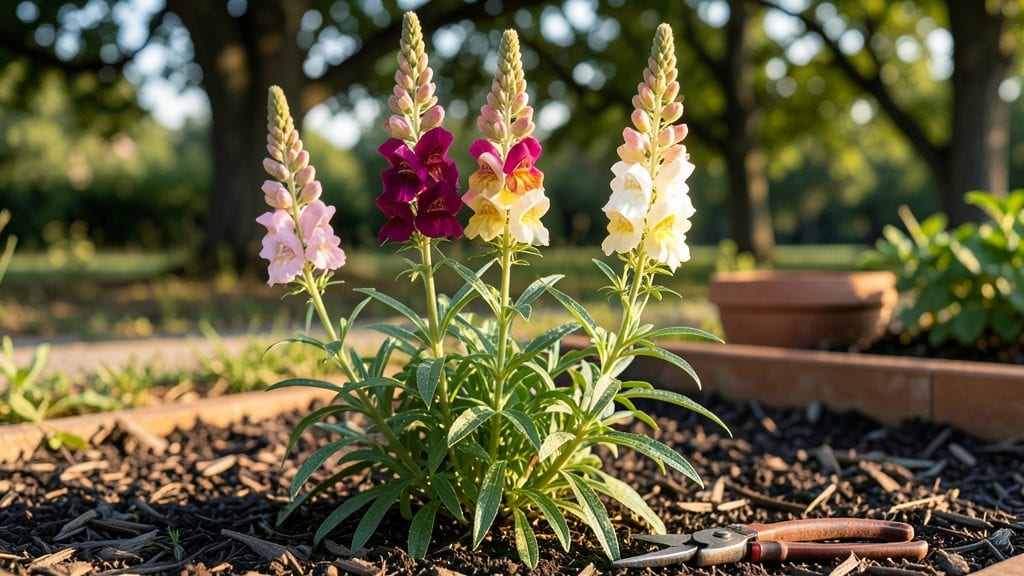
Snapdragons are not perennials in most climates, dying back after flowering but often self-seeding prolifically. In warmer USDA zones 7-10, they may overwinter with protection, while colder regions treat them as annuals despite their biennial tendencies.
Whether snapdragons return year after year depends entirely on your climate zone and how you care for them. 🌱 These plants are technically biennials, meaning they complete their life cycle over two years—but in colder regions, they rarely survive winter without intervention.
The key lies in their hardiness: while they can tolerate light frost, prolonged cold or harsh winters will kill them back to the ground. That’s why gardeners in zones 5-6 often replant fresh seeds each spring, even though the original plants might resprout if given proper winter protection.
What’s fascinating is how snapdragons adapt: their seeds often germinate the following spring, creating natural volunteer plants. This self-seeding habit is what tricks many gardeners into thinking they’re perennials—until they realize the new blooms aren’t from the same roots.
In milder zones, you can extend their lifespan by cutting back plants after flowering and mulching heavily, but even then, they won’t reliably return like true perennials.
💡 In This Article
- Snapdragon Lifespan: Annual vs Biennial vs Perennial Behavior
- Extending Snapdragon Growth: Overwintering Tips for Cold Zones
Snapdragon lifespan: annual vs biennial vs perennial behavior
Here's what's actually happening with snapdragon classification: these plants are biennials by nature, meaning they complete their life cycle in two years. In their first year, they focus on building strong roots and basal leaves, storing energy for flowering.
The second year, they produce those iconic 2-inch blooms—then die after seeding. This two-year pattern is hardwired into their genetics, with Antirrhinum majus (the common snapdragon species) following this cycle even when grown from seed.
The confusion arises because snapdragons exhibit perennial-like behaviors in mild climates. In USDA zones 7-10, where winters rarely drop below 20°F, they may survive multiple years by going dormant rather than dying completely.
Their deep taproots can reach 12-18 inches deep, allowing them to access moisture during dry periods—a survival strategy that mimics perennial plants. However, this doesn't make them true perennials; they still follow the biennial pattern when conditions allow.
What most people don't realize is how climate triggers this behavior. In zones 5-6, where winters regularly drop below 0°F, snapdragons lack the cold tolerance to survive. Their cells freeze and rupture at these temperatures, killing the plant entirely.
This is why gardeners in colder regions treat them as annuals—even though the seeds often germinate naturally the following spring, creating the illusion of perennial growth. The science involves cold acclimation: snapdragons can only harden off to about 15°F without protection.
There's a fascinating exception: some snapdragon varieties, particularly those bred for cold tolerance, show partial perennial behavior. These cultivars may resprout from the base after winter in zones 6-7, though they rarely produce flowers the second year.
The key difference lies in their growth habit: true perennials like coneflowers regrow from the same root system annually, while snapdragons either die back completely or produce new plants from seed. This makes them short-lived perennials at best.
Consider this comparison: a true perennial like peony returns every year from the same roots, while snapdragons either complete their biennial cycle or rely on self-seeding.
Their seed viability is another factor—snapdragon seeds can remain dormant for 3-5 years in soil, which explains why you might see "volunteer" plants appearing years after the original planting. This seed bank behavior is what often leads gardeners to mistakenly classify them as perennials.
The bottom line is that snapdragons are opportunistic biennials that exploit mild winters to extend their lifespan. Their ability to self-seed prolifically is their survival strategy, not a true perennial trait.
In colder climates, this behavior becomes impossible without human intervention—like heavy mulching or container overwintering—which is why they're typically grown as annuals in most gardens. 🌿