
Flowers
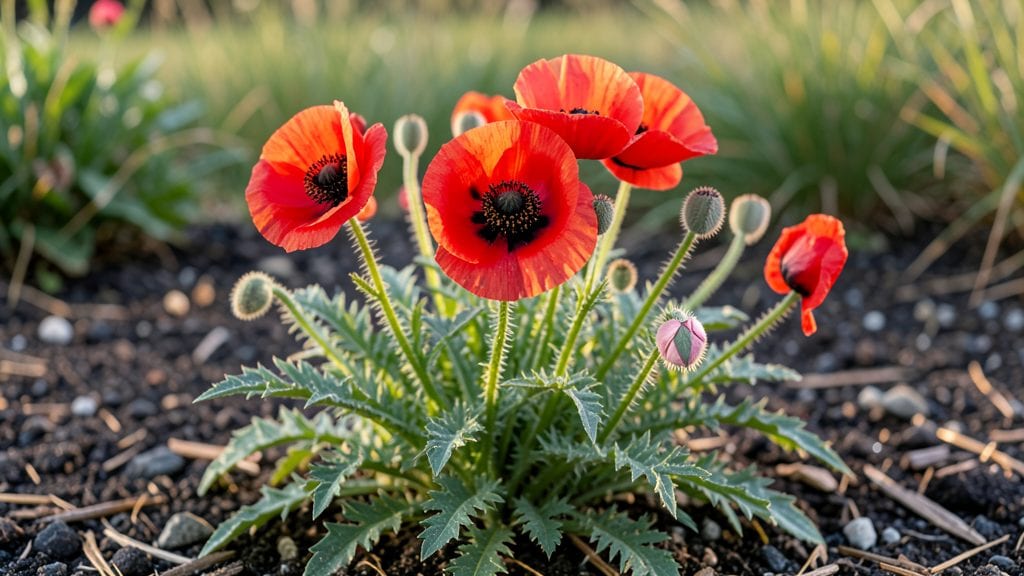
Poppy flowers are not perennials in most climates—they grow as annuals or biennials, dying back after blooming once or twice. However, some species like the Iceland poppy (Papaver alaskense) may self-seed prolifically, creating a perennial-like appearance over time.
Most poppy varieties follow a one-season life cycle, meaning they complete their entire growth and flowering phase within a single growing season. 🌸 The key difference between annuals and biennials lies in their germination timing—annuals sprout, bloom, and set seed all in one year, while biennials take two years to reach maturity.
This distinction explains why your garden might look empty after their first bloom, even if they appear to return year after year through natural reseeding.
What makes this interesting is how environmental factors play into their behavior. For example, California poppies (Eschscholzia californica) thrive in dry climates and often reseed aggressively, while Oriental poppies (Papaver orientale)—though technically perennials in their native regions—struggle in hot summers.
Understanding these patterns helps gardeners choose the right varieties for their zone and manage expectations about long-term growth.
💡 In This Article
- Poppy Life Cycle: Annual vs Biennial Growth Patterns
- Best Poppy Varieties for Self-Seeding Gardens
Poppy life cycle: annual vs biennial growth patterns
The distinction between annual and biennial poppies comes down to their biological clock and environmental triggers. Annual poppies like the corn poppy (Papaver rhoeas) complete their entire life cycle in just 60-90 days, germinating in spring, flowering in summer, and dying back by fall.
Their seeds lie dormant through winter until cold stratification (exposure to 32-40°F for 4-8 weeks) breaks dormancy, ensuring new plants emerge when conditions are favorable.
Biennials, such as the common poppy (Papaver somniferum), take two years: they focus on leaf growth in year one, then bolt, flower, and set seed in year two.
Daylight plays a crucial role in this timing. Most poppies are long-day plants, meaning they flower in response to increasing daylight hours (typically 14-16 hours of light). This explains why they bloom in late spring or early summer.
Temperature also matters: seeds often require a period of cold to germinate, while established plants thrive in 60-75°F ranges. The Iceland poppy (Papaver alaskense) is an exception—it can handle cooler climates (40-60°F) and often self-seeds prolifically, creating the illusion of perennial behavior.
What most gardeners miss is how these patterns interact with soil conditions. Poppy seeds need well-draining soil to prevent rot, and they germinate best when surface temperatures reach 50-60°F. If sown too early, they may rot; too late, and they won’t complete their cycle before frost.
This is why biennials often fail in warm climates—they bolt too quickly in the first year, skipping their vegetative growth phase entirely. 🌱
Here’s a key factor: seed viability. Poppy seeds can remain dormant for years, waiting for ideal conditions. This adaptability explains why some gardens appear to have "perennial" poppies—they’re actually a succession of new seedlings from previous years’ seeds.
For example, the California poppy (Eschscholzia californica) produces thousands of seeds per plant, ensuring continuous blooms if left undisturbed.
The science behind this involves vernalization (cold treatment) and thermoperiodism (temperature-sensitive growth). Annuals prioritize rapid reproduction, while biennials invest energy in root and leaf development first. This trade-off affects their resilience: annuals thrive in disturbed soils (like farm fields), while biennials often prefer stable environments.
Understanding these mechanisms helps gardeners choose varieties that match their climate and maintenance style.
For instance, in Zone 5-7, biennial poppies like the Oriental poppy (Papaver orientale) may survive winters if protected, but they’ll still die back after flowering. Meanwhile, annuals like the Shirley poppy (Papaver rhoeas) will self-seed reliably if left to go to seed.
The trick is to mimic nature: let some plants flower and set seed while deadheading others to prolong blooms.