
Plants
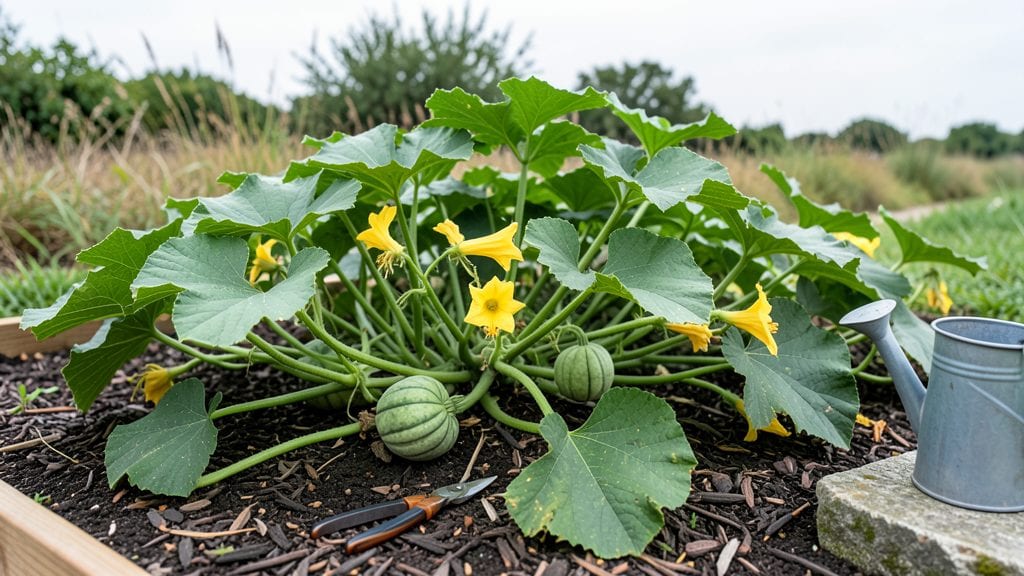
Pumpkin plants are not perennial—they die back after producing fruit in one growing season. However, their vines can regrow from the roots in warmer climates (zones 4-6) if protected from frost, though this is unreliable for consistent harvests.
Pumpkin plants follow a monocarpic lifecycle, meaning they focus all their energy on producing fruit before dying—unlike true perennials such as asparagus or rhubarb, which regrow year after year. 🌱 The root system may linger in mild winters, but the plant itself lacks the resilience to survive repeated freeze-thaw cycles.
In colder zones (3-5), even protected roots often fail to produce reliable regrowth, making annual replanting the standard practice for most gardeners.
What's fascinating is how some varieties, like the cold-tolerant 'Jack Be Little,' push the limits of this behavior. These hybrids can sometimes survive light frosts, but they still require careful overwintering strategies—think thick mulch or container cultivation—to give roots a fighting chance.
The trade-off? Even with protection, you're gambling on inconsistent harvests rather than guaranteed perennial performance.
💡 In This Article
- Why Pumpkin Vines Die Annually (And Rare Exceptions)
- How to Extend Pumpkin Growth in Cold Climates
Why pumpkin vines die annually (and rare exceptions)
Here's what's actually happening: pumpkins are monocarpic plants, meaning they allocate nearly all their energy to a single reproductive cycle before dying. This is different from true perennials like asparagus, which store energy in underground rhizomes to regrow annually.
Pumpkin roots, while capable of storing some starch, lack the complex vascular systems needed for long-term survival. When frost hits, the above-ground vines die, but the root system may linger—though it rarely produces reliable regrowth the following year. 🔥
The key factor is frost sensitivity. Pumpkin roots can tolerate temperatures down to 25°F for short periods, but repeated freeze-thaw cycles (common in zones 4-6) cause cellular damage. Even in mild winters, the root system weakens from energy depletion after fruit production.
True perennials like winter squash (e.g., 'Turk's Turban') have evolved thicker, more insulated roots that survive better, but pumpkins prioritize rapid vine growth over root resilience.
What most people don't realize is how climate interacts with this behavior. In zones 7-10, pumpkins might regrow from roots if protected, but the second-year harvest is often smaller and less reliable.
The plant's energy reserves are depleted after fruiting, leaving little for new growth. This is why gardeners in warmer climates still treat pumpkins as annuals—consistent harvests require replanting each year. 🌱
There's a fascinating exception: certain heirloom varieties like 'Cinderella' or 'New England Pie' show slightly better regrowth potential, but even these rarely match true perennials. The difference lies in their root structure—pumpkins develop fibrous roots that spread widely but shallowly, while perennials have deep, woody taproots.
This structural limitation explains why pumpkin regrowth is more of a gamble than a reliable strategy.
Consider this comparison: a pumpkin plant's root system stores about 10-15% of its energy reserves after fruiting, while a perennial like rhubarb stores 40-50% in its crown. This energy gap is why pumpkins struggle to regrow consistently.
Even with protection, the roots lack the stamina for multiple growing seasons. The trade-off between rapid vine growth and root storage is what makes pumpkins annuals by design. ✨
For gardeners in marginal zones (6-7), the best approach is to treat pumpkins as annuals while experimenting with overwintering techniques. The rare exceptions prove the rule: pumpkins are biologically wired to die after fruiting, but clever gardeners can sometimes coax a second year of growth under ideal conditions.
The science is clear—nature built pumpkins for one big harvest, not perennial productivity. 💫