
Vegetables
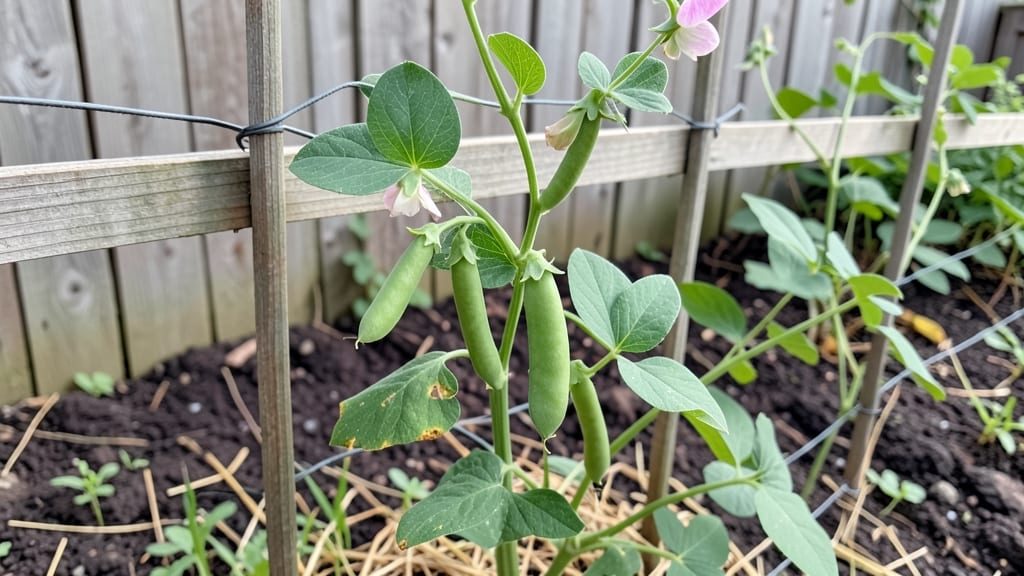
Peas are not perennial—they are cool-season annuals that complete their life cycle in one growing season, typically dying off after producing pods. However, some varieties may self-seed or regrow if conditions are ideal, creating a perennial-like appearance in certain climates.
Peas belong to the annual plant category, meaning they grow, produce, and die within a single season. 🌱 This life cycle includes rapid germination, flowering, and pod development, followed by natural decline as energy reserves deplete.
Unlike true perennials like asparagus, peas lack the root systems or dormant buds needed to regrow year after year from the same plant. The "perennial-like" behavior you might see comes from dropped seeds sprouting naturally in favorable conditions, not from the original plant's survival.
Understanding this distinction helps gardeners plan their planting schedules and avoid disappointment when pea plants fade after harvest. The key to continuous harvests lies in strategic replanting rather than relying on the same plants to return.
💡 In This Article
- Pea Plant Life Cycle: Why They Die After Harvest
- How to Extend Pea Harvests Year-Round
Pea plant life cycle: why they die after harvest
Peas are classified as cool-season annuals because their entire life cycle—from seed germination to senescence—occurs within a single growing season, typically lasting 60-90 days for most varieties.
This rapid progression is driven by their determinate growth habit, where energy is focused on producing flowers and pods rather than maintaining long-term vegetative growth.
Unlike perennials like asparagus, which develop thick, woody rhizomes that store energy for regrowth, peas allocate resources to seed production at the expense of root system longevity.
The process begins with germination, where peas sprout within 7-14 days in optimal conditions (soil temperatures of 50-70°F). Once established, they enter the flowering stage, producing delicate white or purple blossoms that attract pollinators. After fertilization, pods develop rapidly, reaching harvestable size in 50-70 days depending on the variety.
The plant's energy reserves deplete as pods mature, triggering senescence—a programmed decline where leaves yellow, stems weaken, and the plant eventually dies back completely.
What most gardeners mistake for perennial behavior is actually self-seeding, where mature pods release seeds that sprout in subsequent seasons. This isn't regrowth from the original plant but rather a new generation emerging from dropped seeds.
True perennials like rhubarb or artichokes, by contrast, regenerate from corm-like structures or buds at the base that survive winter dormancy. Peas lack these specialized storage organs, making them incapable of overwintering and returning the following year.
Consider the contrast with asparagus, a true perennial that produces edible spears from crowns containing dormant buds. These crowns can live for 15-20 years, while peas have no such dormant structures.
The confusion arises because peas thrive in cool climates (USDA zones 3-9) where self-seeding creates dense stands, but this is purely a reproductive strategy—not perennial growth. Even in mild winters, the original plant won't survive beyond its first harvest cycle.
Here's what's actually happening at the cellular level: Pea plants prioritize reproductive success over longevity. Their meristematic tissues (growth zones) focus on pod development rather than maintaining root systems. When pods mature, the plant's photosynthetic energy shifts entirely to seed production, leaving no reserves for regrowth.
This biological trade-off explains why peas disappear after harvest—it's not neglect, but their designed life cycle.
The only way to achieve "perennial-like" pea production is through strategic replanting or selecting varieties with prolonged podding habits, such as sugar snap peas or snow peas, which may continue producing for 4-6 weeks under ideal conditions.
For true perennial behavior, gardeners should look to vegetables like rhubarb (which regrows from crowns) or leeks (which form bulbs), rather than relying on peas to return year after year.