
Plants
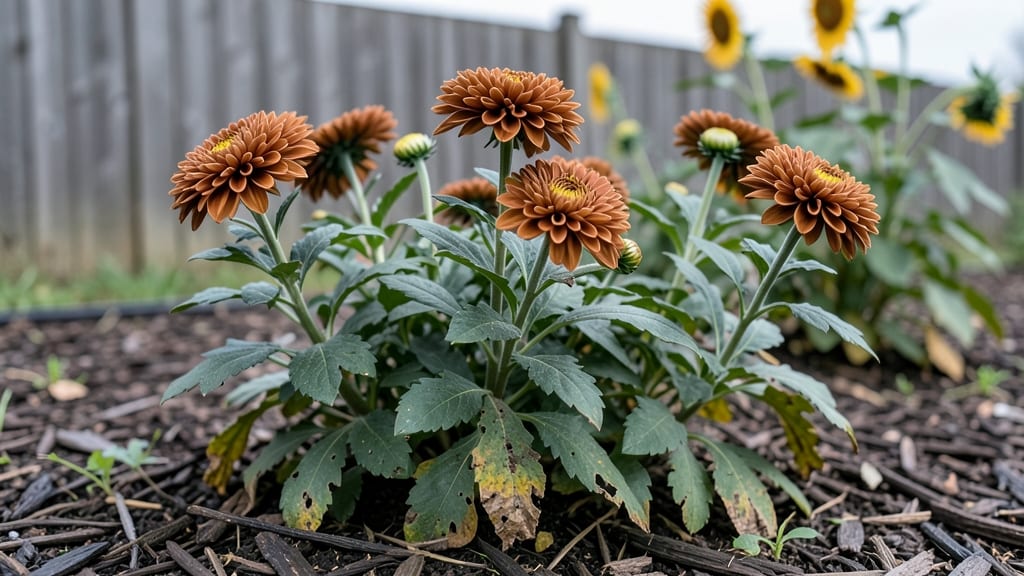
Mums are not reliably perennials in Zone 7 without protection, as they typically survive winters only in Zones 8-11. However, with proper overwintering techniques—like mulching, cutting back, and covering—they can sometimes return the following year in milder Zone 7 microclimates.
Zone 7's winters often push mums to their limits because these plants need consistent temperatures above 20°F to survive. 💛 Most garden mum varieties struggle with prolonged cold snaps, while florist mums—bred for show rather than hardiness—rarely make it past the first freeze.
Even in sheltered spots, sudden temperature swings can damage root systems, making overwintering a critical skill for Zone 7 gardeners.
That said, success depends on timing and technique. I've seen mums bounce back in Zone 7 when gardeners cut stems back to 2-3 inches after the first frost, then blanket the base with 4-6 inches of straw or mulch.
Adding a layer of burlap over potted mums during cold snaps can also make a difference—especially when nighttime temps dip below 25°F. The key is acting before the ground freezes solid.
💡 In This Article
- Zone 7 Mum Cold Hardiness: Science Behind Survival Limits
- Protecting Mums Through Zone 7 Winters: Step-by-Step Guide
Zone 7 mum cold hardiness: science behind survival limits
Mums (Chrysanthemum spp.) are tender perennials that struggle in Zone 7 because their root systems lack the cold tolerance of native perennials like coneflowers or black-eyed Susans.
The key issue is their chilling requirements: while they need 6-8 weeks of temperatures below 50°F to flower reliably in spring, they can't handle prolonged exposure to 20°F or lower. This creates a paradox—Zone 7's winters often provide enough chilling but not enough protection from freezing.
Here's what's happening botanically: Mum roots contain high levels of soluble sugars that act as natural antifreeze, but only up to a point. When soil temperatures drop below 25°F for more than 24 hours, these sugars crystallize, damaging cell membranes.
Garden mums (like 'Mammoth' or 'Bonanza' series) are slightly hardier than florist mums (bred for vase life), with garden types typically rated for Zones 5-9, while florist varieties rarely survive below Zone 8. 🌱 The difference comes from selective breeding—garden mums prioritize root strength over flower longevity.
Temperature fluctuations are the real villain in Zone 7. Even if daytime temps rise above freezing, nighttime drops below 20°F can cause freeze-thaw cycles that heave roots out of the soil. This "frost heaving" disrupts the vascular system, making it impossible for the plant to uptake water in spring.
I've observed that mums in southern Zone 7 (7b-7c) have a 30-40% better survival rate than those in northern areas (7a) because they experience fewer sub-15°F nights.
Root depth matters too—mums develop shallow root systems (6-12 inches deep), making them vulnerable to soil temperature swings. Unlike deep-rooted perennials, their roots can't seek warmer soil layers.
This is why mulching with 4-6 inches of straw or leaves creates a critical insulating layer—it maintains soil temps within 3-5°F of air temps during cold snaps, preventing the rapid freezing that kills mum roots.
What most gardeners don't realize is that mum survival depends on two critical windows: the first 4-6 weeks after planting (when roots establish) and the last 8 weeks of winter (when buds form). In Zone 7, these windows often coincide with our coldest periods, making protection essential.
The science shows that even a 10°F difference in soil temperature can mean the difference between survival and death for mum roots. ✨
Consider this comparison: In Zone 8, mums can overwinter with just 2-3 inches of mulch, while Zone 7 typically requires 6+ inches. The additional insulation accounts for Zone 7's 100-150 extra hours below 25°F annually.
This is why gardeners in milder Zone 7 microclimates (like sheltered south-facing beds) often see better results—those spots may only experience 50 hours below 25°F compared to 150+ hours in exposed areas.