
Plants
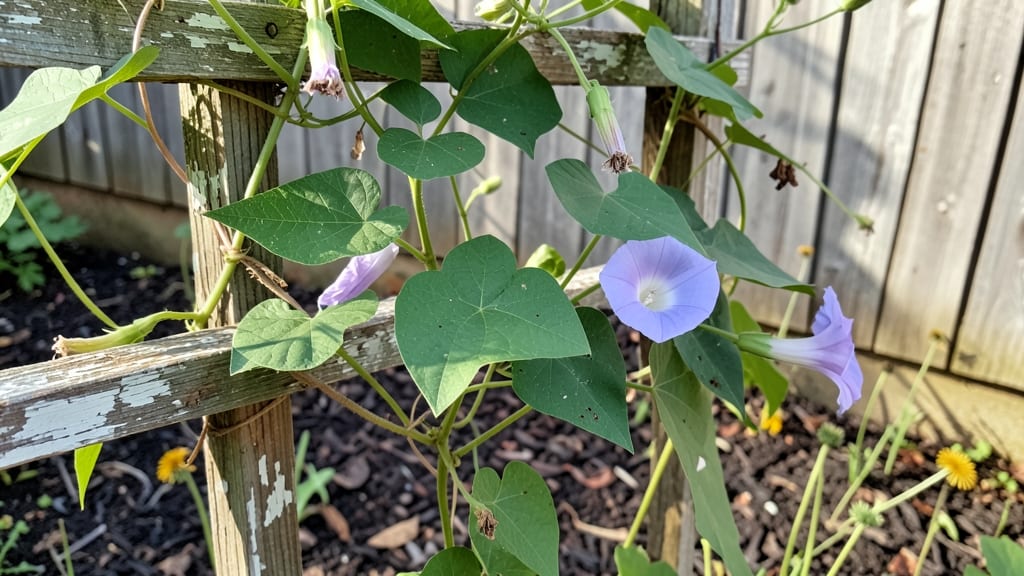
Morning glory plants are not perennial in most climates; they die back after frost and regrow from seeds each spring. However, in warm hardiness zones (9-11), they may self-seed aggressively or persist as tender perennials with winter protection.
Morning glories thrive as annuals in most regions because their delicate vines can't survive freezing temperatures. 🌱 In colder zones, their seeds lie dormant until spring warmth triggers regrowth, which is why they seem to "return" each year without replanting.
The key difference comes in zones 9-11, where some varieties develop deeper root systems that shield them from light frosts, allowing them to persist through mild winters.
This behavior explains why morning glories often spread uncontrollably in warm climates—they're not just returning, they're aggressively reproducing. For gardeners in cooler areas, the annual cycle actually simplifies maintenance since you can control reseeding by deadheading spent blooms or removing seed pods before they mature.
💡 In This Article
- Morning Glory Growth Cycle and Cold Hardiness
- How to Extend Morning Glory’s Season in Cold Climates
Morning glory growth cycle and cold hardiness
Morning glories follow a fascinating lifecycle where their growth pattern shifts dramatically with temperature. In most climates (zones 3-8), these plants complete their entire life cycle in just one growing season.
Here's what's actually happening: when nighttime temperatures drop below 50°F, the plant's metabolism slows dramatically, causing the above-ground vines to turn brown and die back.
However, the real magic happens below ground—if seeds have already formed, they'll remain dormant in the soil until spring warmth (around 60°F) triggers germination.
The key difference in warmer zones (9-11) comes down to root development and frost sensitivity. In these regions, morning glories often develop more robust root systems that can extend 12-18 inches deep, allowing them to access moisture and nutrients that help them survive light frosts down to 28°F.
This deeper root system acts like a natural insulation blanket, protecting the plant's vascular system from freezing damage. 🌱 What most gardeners don't realize is that even in these zones, the plants still experience dormancy—they simply don't die back completely, instead entering a semi-dormant state where growth slows but the plant remains alive.
This behavior explains why morning glories seem to "return" each year in warm climates. The plants aren't truly perennial in the traditional sense (like daylilies or hostas), but they develop survival strategies that make them appear that way.
In zones 9-11, you'll often see morning glories emerging earlier in spring because their roots remain active year-round, giving them a head start on growth. The trade-off is that this persistence comes with aggressive self-seeding—each plant can produce 500-1,000 seeds per season, which explains their reputation for spreading uncontrollably.
In colder climates, the story changes completely. Morning glories lack the cold hardiness of true perennials because their stems contain high moisture content (about 85-90% water), which freezes and ruptures cell walls at temperatures below 28°F.
This is why you'll never see morning glories overwintering successfully in zones 4-8 without protection. The plant's entire energy focus shifts to seed production rather than winter survival, which is why they're classified as annuals in most gardening guides.
Here's an important comparison: true perennials like black-eyed Susans develop specialized storage organs (like rhizomes or tubers) that can survive winter desiccation. Morning glories lack these structures—their survival strategy relies entirely on seed production and early spring germination.
This fundamental difference explains why morning glories behave so differently across climates, from annuals in cold zones to what appears to be perennial growth in warm regions.
The science behind this involves a process called "thermodormancy" in morning glory seeds. When temperatures remain consistently warm (above 75°F for extended periods), the seeds enter a state where they require a period of cooler temperatures before germinating.
This built-in mechanism prevents seeds from germinating during hot summer months, ensuring new plants establish in spring when conditions are optimal. 💫