
Plants
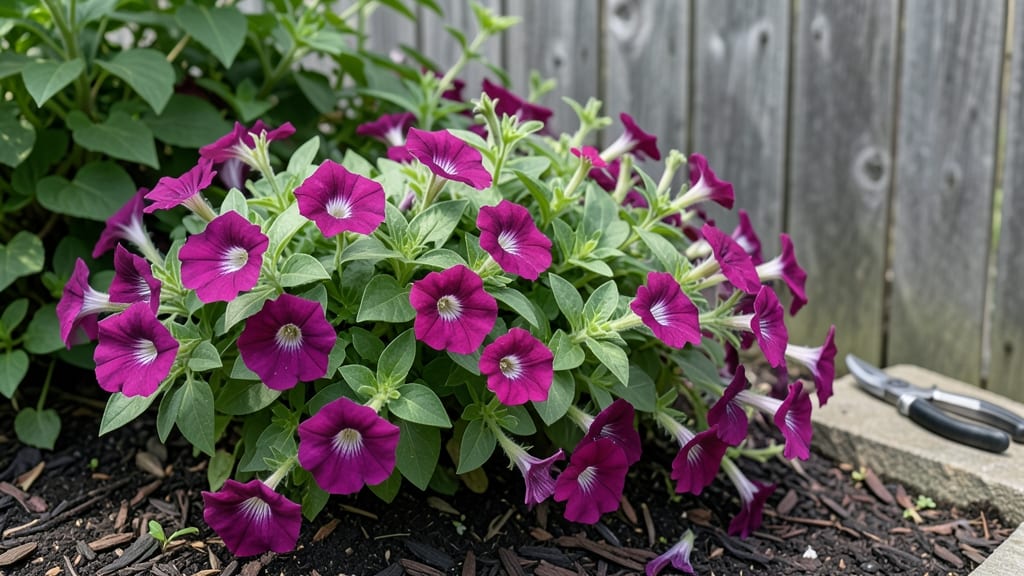
Wave petunias are not perennials in most climates, dying back after frost hits, but they naturally reseed prolifically in warm zones (USDA 9-11) or can survive winters with proper care. In cooler areas (USDA 3-8), they function as annuals unless you protect them with mulch or containers.
Wave petunias behave like annuals in most regions because their tender stems can't survive freezing temperatures—even a light frost will kill them back to the ground. 🌱 However, they've evolved a clever workaround: their seeds germinate eagerly in warm climates, creating dense ground covers that return year after year without human intervention.
The key difference between true perennials and wave petunias lies in their root systems—perennials store energy underground to regrow, while wave petunias rely on seed production for continuity.
This self-seeding habit makes them ideal for gardeners in mild winter zones who want continuous color with minimal effort. In colder areas, you can mimic this behavior by collecting seeds before frost or overwintering cuttings indoors under grow lights—both methods let you enjoy their cascading blooms for multiple seasons.
💡 In This Article
- Wave Petunia Lifespan: Annual vs Perennial Behavior Explained
- How to Extend Wave Petunia Growth Beyond One Season
Wave petunia lifespan: annual vs perennial behavior explained
Wave petunias are classified as tender perennials—a botanical gray area where they behave like annuals in cold climates but could persist longer with protection. Their stems and foliage contain high moisture content (about 80-85% water), making them extremely frost-sensitive.
When temperatures drop below 32°F, cellular membranes rupture, causing irreversible damage within 1-2 hours of exposure. This explains why they die back completely in most regions after winter.
Their true perennial potential lies in their self-seeding strategy rather than root survival. Each flower produces 500-1,000 seeds that remain viable for 2-3 years in ideal conditions. In frost-free zones (USDA 9-11), these seeds germinate naturally each spring, creating dense ground covers that appear perennial.
The key difference from true perennials is their lack of true winter dormancy—they don't store energy in roots but instead rely on seed banks for continuity.
Here's what happens botanically: Wave petunias undergo thermomorphogenesis—a growth response to temperature changes. As nights cool below 55°F, they shift from vegetative growth to flowering, then seed production. This adaptation explains why they thrive in warm climates where winter temperatures rarely drop below 40°F.
In cooler zones, this process gets interrupted by frost before seeds mature, forcing gardeners to treat them as annuals.
Consider these growth habit comparisons:
- True Perennials: Store energy in roots/tubers (e.g., peonies) to regrow annually
- Wave Petunias: Produce seeds that germinate next season (like a biennial strategy)
- Annuals: Complete entire lifecycle (seed→plant→seed) in one season
Their spreading growth habit (up to 18-24 inches wide) also plays a role. In mild climates, established plants create such dense mats that they outcompete weeds, maintaining their presence through seedling recruitment.
This explains why they often volunteer in garden beds year after year without replanting—though technically each generation is new.
What most gardeners don't realize is that wave petunias exhibit apomixis—a form of asexual reproduction through seeds. While not true cloning, this means their offspring maintain similar traits to the parent plant, creating consistent color patterns year after year in frost-free zones.
This genetic stability is why they're often called "perennial" in marketing, though botanically they're annuals with perennial-like behavior in ideal conditions. 🌿