
Plants
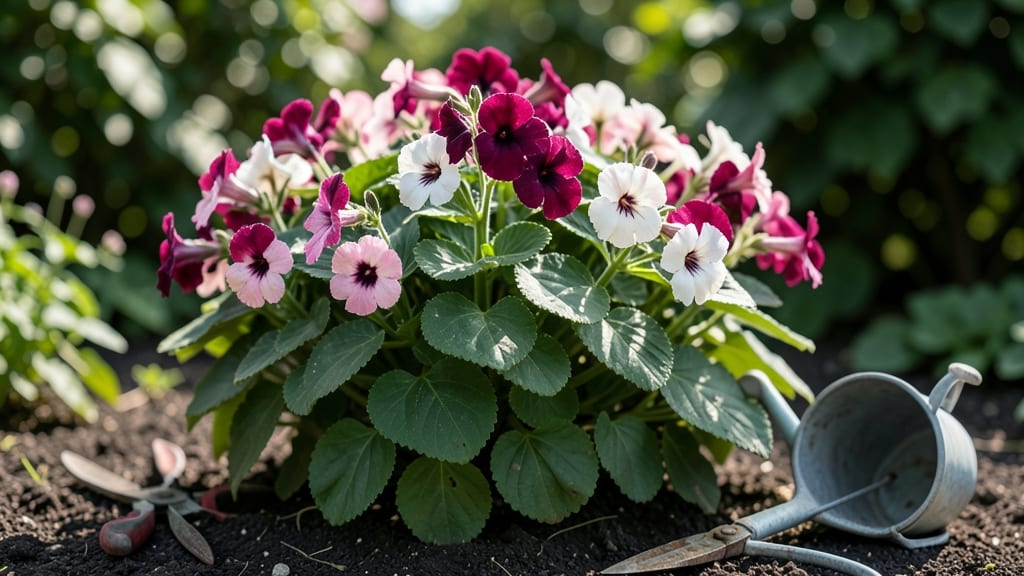
Impatiens' tropical origins explain their sensitivity to cold—even a light frost will blacken their leaves, making them die back completely in cooler zones. 🌱 Their ability to self-seed in mild climates (like Southern California or Florida) creates the illusion of perennial behavior, but this isn't true hardiness.
For gardeners in colder regions, treating them as annuals guarantees vibrant summer blooms year after year without winter stress.
This distinction matters because many gardeners mistakenly assume impatiens will return naturally, only to be disappointed when they don't. The solution? Start seeds indoors in early spring or buy fresh plants each season—this simple adjustment keeps your garden bursting with their signature blooms reliably.
💡 In This Article
- Impatiens Lifespan and Climate Dependence
- Extending Impatiens Season: Growing Tips
Impatiens lifespan and climate dependence
Impatiens originate from tropical regions of East Africa and Southeast Asia, where temperatures rarely drop below 50°F and humidity stays consistently high. This tropical heritage explains why they can't tolerate frost—even a light freeze at 32°F triggers cellular damage in their delicate foliage.
Their inability to enter true dormancy (unlike true perennials such as hostas) means they lack the biological mechanisms to survive winter's cold. 🌿
The key difference between zones 10-11 (where they act like perennials) and cooler zones lies in temperature thresholds. In frost-free climates, impatiens grow continuously, often self-seeding prolifically when temperatures stay above 40°F year-round.
However, in zones 4-9, their growth halts below 45°F, and any frost will kill them back to the ground. Their roots don't survive winter, unlike hardy perennials which store energy in rhizomes or tubers.
What most gardeners don't realize is that impatiens' "perennial" behavior in warm zones comes from their aggressive seed production, not true hardiness. A single plant can drop 5,000-10,000 seeds that germinate eagerly in spring, creating dense stands.
This self-seeding habit gives the illusion of permanence, but it's actually a survival strategy for tropical plants adapted to seasonal droughts—not cold winters. 🌱
In cooler climates, impatiens behave like true annuals because their entire life cycle (germination, flowering, and seed production) must complete within a single growing season. The plants prioritize reproductive energy over root development, making them vulnerable to winter dieback.
This is why gardeners in zones 4-9 must replant each spring—there's no dormant root system to regrow in spring.
Interestingly, impatiens' cold sensitivity extends to their flowers too. Buds form only when daytime temperatures exceed 65°F consistently, explaining why they bloom prolifically in summer but struggle in cooler regions. Their tropical nature means they can't adapt to temperature fluctuations that true perennials handle through specialized tissues like cambium layers.
For gardeners in marginal zones (like zone 9), partial overwintering is possible with heavy mulching, but this rarely succeeds because impatiens lack the cold-resistant structures of true perennials.
Their stems are herbaceous and hollow, offering no protection against freezing. This fundamental biological limitation explains why they're classified as annuals in most gardening contexts. 💫