
Orchid Care
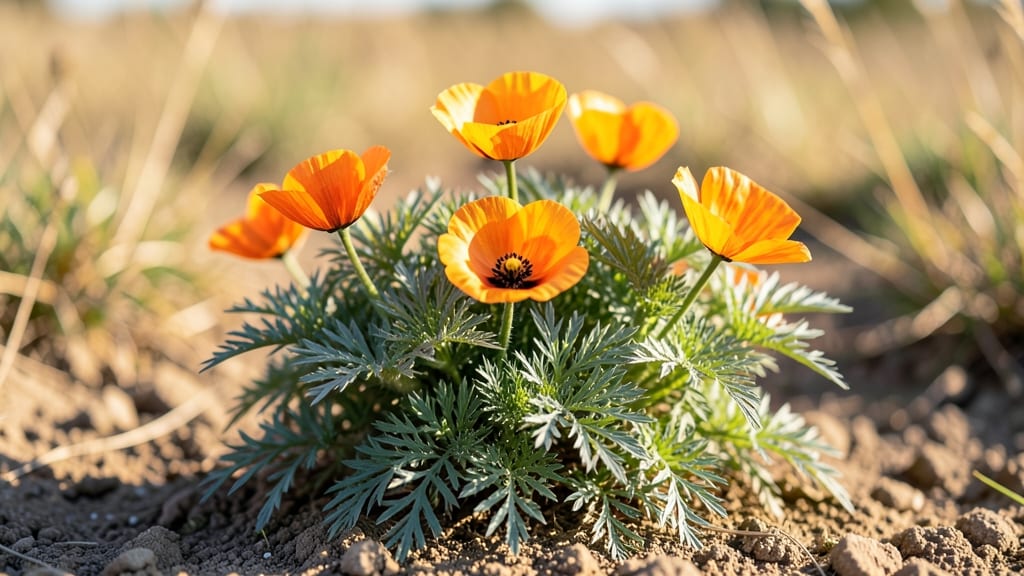
California poppies are annuals in most climates but can behave as short-lived perennials in mild winter zones, reblooming from the same root if conditions allow. Their lifespan depends on frost exposure and regional temperatures.
Whether California poppies act as annuals or perennials comes down to your local climate's chill factor.
In colder regions, they complete their life cycle in a single season, but in frost-free zones like Southern California, their deep taproots survive winters to produce new blooms the following year. 🌸 The key difference lies in how much cold they endure—just 28°F can kill them off, while milder winters let them persist for 2-3 years.
This dual nature makes them incredibly adaptable. In USDA zones 7-10, gardeners often see them return year after year, while northern growers treat them like seasonal stars. The secret? Their roots store energy during dormancy, ready to burst back to life when temperatures rise.
For best results, plant them in well-draining soil and avoid overwatering—they thrive on neglect once established.
💡 In This Article
- California Poppy Life Cycle Explained
- Growing California Poppies Year-Round: Pro Tips
California poppy life cycle explained
Here's what's actually happening beneath the soil: California poppies (Eschscholzia californica) develop a specialized taproot system that can extend up to 3 feet deep within their first growing season. This deep root stores carbohydrates and nutrients, allowing the plant to survive winter dormancy when above-ground growth halts.
The key factor is temperature—when nighttime temperatures drop below 40°F for extended periods, the plant enters a semi-dormant state where only the root remains active. 🌱
In colder climates (USDA zones 5-6), these roots simply can't survive prolonged frost below 28°F, which is why they behave as true annuals.
However, in milder zones (7-10), the roots often persist through winters with temperatures between 30-45°F, allowing new shoots to emerge in early spring. What most people don't realize is that even in perennial-like behavior, these plants typically only live 2-3 years before their root reserves deplete.
The science behind this involves a process called vernalization—the plant's ability to detect cold periods and prepare for regrowth. When exposed to 35-50°F temperatures for 4-6 weeks, the stored energy in the taproot triggers flowering hormones.
This is why you often see second flushes of blooms in mild winters. The trade-off? Their delicate nature means they're easily killed by freezing temperatures or waterlogged soil—both of which can rot their deep roots. 🌡️
Comparing growth patterns reveals fascinating regional differences. In USDA zone 9, where winters rarely drop below 35°F, poppies may bloom continuously if given enough water. But in zone 8, where occasional 25°F dips occur, they'll typically die back completely each winter.
The transition between annual and perennial behavior occurs around zone 7b, where the balance between cold dormancy and root survival becomes precarious.
What makes this even more interesting is their seed germination strategy. Seeds can remain viable in the soil for up to 5 years, waiting for perfect conditions to sprout.
This dual survival mechanism—both through root persistence and seed banking—explains why California poppies often appear in wildflower meadows year after year, even when individual plants don't survive the winter. The plant's entire lifecycle is a masterclass in adaptation to California's famously unpredictable climate patterns. 🌿
For gardeners, this means you can often get multiple seasons of blooms from a single planting if you're in a mild zone. The secret is to plant seeds in fall (they'll germinate in spring) or early spring—giving the roots time to establish before summer heat arrives.
In colder areas, treat them as annuals but collect seeds before the first frost to replant next year. 🌺