
Flowers
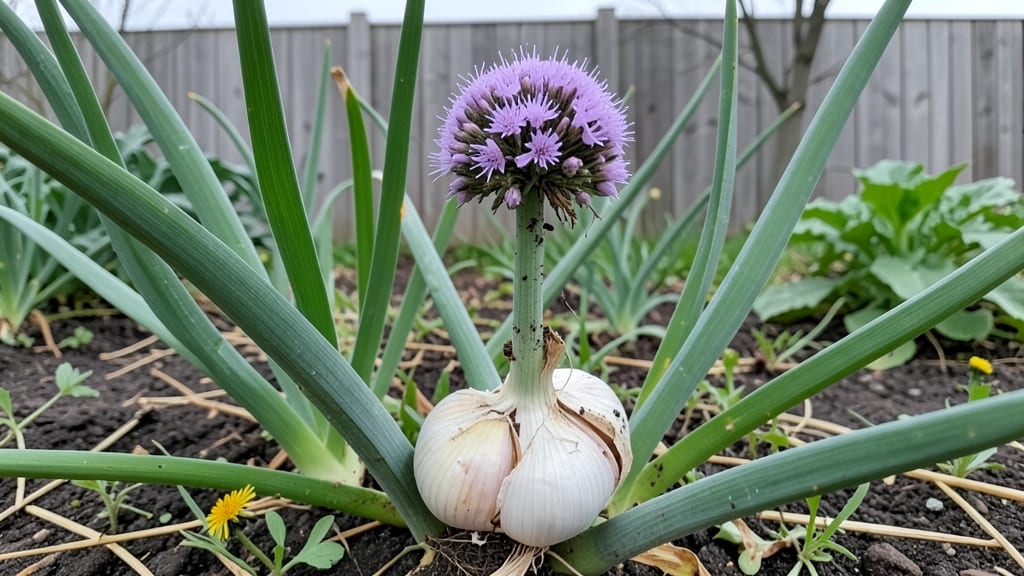
Deciding whether alliums are perennial or annual depends on the variety: most (like chives and ornamental alliums) thrive as perennials across multiple seasons, while others (garlic and shallots) act like annuals or biennials based on climate and growing conditions. Their lifespan typically spans 3-5+ years with proper care.
Most alliums—think chives, leeks, and ornamental varieties—establish deep root systems that let them regrow yearly, making them true perennials in zones 3-10. 🌱 The catch? Garlic and shallots store energy differently: they complete their life cycle in 1-2 years, then rely on replanting.
This isn't a hard rule, though—some gardeners treat garlic as a perennial by leaving bulbs in the ground, which can work in mild winters.
What really matters is your climate. In colder regions (zones 3-5), alliums need heavy mulching to survive winter dormancy, while warmer zones (7-10) may see them bolt prematurely if stressed. I've found that dividing clumps every 2-3 years keeps perennials vigorous—this mimics their natural spread and prevents overcrowding.
For annual types, timing harvest just before flowering ensures you capture their full flavor potential.
💡 In This Article
- Allium Life Cycle: Perennial vs Annual Growth Patterns
- Planting Alliums for Long-Term Success: Zones and Care Tips
Allium life cycle: perennial vs annual growth patterns
Here's what actually happens under the soil: Perennial alliums like chives and ornamental alliums develop a fleshy basal plate that stores carbohydrates year-round, allowing them to regenerate from the same root system.
This structure contains specialized cells that produce fructans—complex sugars that act like antifreeze, protecting the plant during dormancy. In contrast, annual/biennial types like garlic and shallots allocate their energy to bulb formation first, then flower and die back completely after seed production.
The key difference lies in their flowering triggers. Perennial varieties often bloom in their second year but can delay flowering for years if conditions aren't ideal.
For example, chives may take 3-4 years to produce their signature purple flowers, while garlic completes its entire life cycle in just 9-12 months—flowering, seeding, then dying back to the ground.
This explains why garlic "disappears" after harvest: it's not dormant, it's finished its biological mission for that season. 🌱
Climate zones dramatically alter these patterns. In USDA zones 3-5, perennial alliums enter deep dormancy with bulbs shrinking to 20-30% of their summer size to conserve energy. The storage proteins in these bulbs (like alliinase) actually become more concentrated during cold months, making them more frost-tolerant.
Meanwhile, in warmer zones 8-10, many alliums struggle with heat stress, causing premature bolting—where the plant diverts energy to flowering instead of bulb development.
What most people don't realize is how soil temperature affects dormancy timing. The magic number is 40°F—when soil drops below this, perennial alliums trigger their dormancy genes. This is why mulching with 4-6 inches of straw or leaves can extend growing seasons by 2-4 weeks in marginal zones.
Annual types like shallots don't have this luxury; their bulbs must be harvested before first frost or they'll rot in the ground.
Consider these biological adaptations when choosing varieties:
- Perennial advantage: Deep taproots (up to 12 inches) access moisture during droughts
- Annual strategy: Shallow bulb systems maximize energy storage in 6-8 weeks
- Biennial hybrid: Some shallots produce offsets that can overwinter in zones 6+
The science behind frost tolerance involves cryoprotective proteins that bind to cell membranes, preventing ice crystal formation. This is why chives often survive winters with only 2-3 inches of snow cover—their cells remain hydrated even at -10°F.
Annual types lack these proteins, which is why they're typically grown as winter crops in warmer climates. 💫
For gardeners, understanding these patterns means planting perennials in full sun locations with well-draining soil (pH 6.0-7.0) to maximize their lifespan. Annual types, meanwhile, thrive when planted in fall or early spring—timing their growth cycle to avoid summer heat stress.
The bottom line? Your climate dictates whether alliums play the long game or finish their cycle quickly.