
Flowers
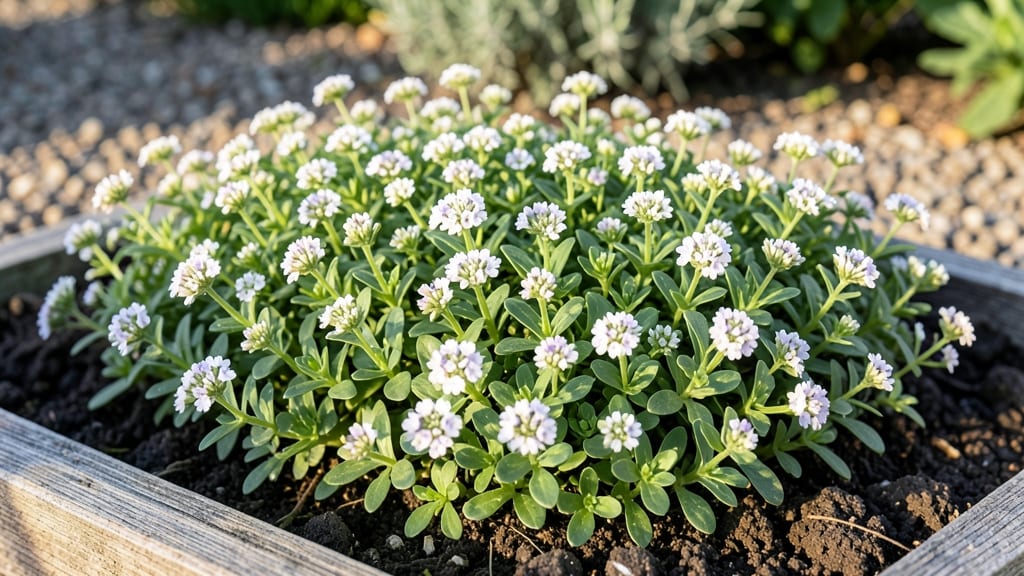
Alyssum perennial grows best in USDA zones 7 through 10, where it handles winters down to 0°F (-18°C), though frost-hardy cultivars can endure zone 6 with protective mulch. Most varieties retreat in freezing weather but bounce back vigorously through self-seeding each spring.
Alyssum's resilience in colder climates boils down to its natural survival strategies. Unlike annual varieties, perennials like sweet alyssum (Alyssum maritimum) can handle light frosts by entering dormancy, while rock alyssum (Alyssum saxatile) thrives in zone 5 with proper winter prep.
The key difference? Perennials store energy in roots, allowing them to regrow faster than annuals from seed. 🌱 For gardeners in marginal zones, combining mulch with evergreen windbreaks can push survival into zone 5, while container growing offers extra insulation.
💡 In This Article
- Alyssum Cold Tolerance: How Winter Zones Affect Growth
- Extending Alyssum's Season: Mulching and Microclimate Hacks
Alyssum cold tolerance: how winter zones affect growth
Alyssum's cold sensitivity stems from its cellular structure and water content. When temperatures drop below 28°F (-2°C), the plant's delicate foliage begins to suffer from ice crystal formation in its cells.
Unlike woody perennials, alyssum lacks thick bark or insulating layers, making its stems and leaves vulnerable to frost damage. The key difference between annual and perennial alyssum? Perennials store carbohydrates in their roots during summer, which fuels regrowth after winter dieback—annuals have no such reserve. 🌿
USDA zone classifications directly correlate with survival rates because they account for average minimum winter temperatures. Zone 7 (0°F to 10°F) is the sweet spot for most perennials, where alyssum can survive light frosts but may still suffer from prolonged cold snaps.
In zone 6 (-10°F to 0°F), varieties like Alyssum saxatile (rock alyssum) show superior hardiness due to its compact, low-growing habit that stays closer to protected soil. The science here involves acclimation: plants gradually adjust to cooler temps by increasing antifreeze proteins in their cells.
What sets Alyssum saxatile apart is its ability to form a protective mat of foliage that insulates the crown from extreme cold. This variety's rosette growth habit traps heat near the soil, while its silvery leaves reflect sunlight—reducing heat absorption during winter.
In contrast, Alyssum maritimum (sweet alyssum) has a more open growth pattern that makes it less cold-tolerant. The difference in survival rates between these varieties can be 30-50% in marginal zones when proper winter care isn't applied. 💡
For gardeners in zones 5-6 (-20°F to -10°F), the battle against cold involves creating microclimates. Evergreen windbreaks can raise temperatures by 5-10°F near plantings, while thick mulch layers (4-6 inches) prevent soil temperature fluctuations.
The secret weapon? Using straw mulch—it's more insulating than pine needles and breaks down slowly, providing continuous protection. Annual alyssum, meanwhile, has zero winter survival strategies beyond seed production, making perennials the clear winner for cold climates.
Here's what actually happens at the cellular level: when alyssum freezes, ice crystals form in the extracellular spaces first. If the plant can't prevent these crystals from growing, they pierce cell walls, causing irreversible damage.
Hardy varieties like Alyssum saxatile produce more proline and glycine betaine—natural antifreeze compounds that lower the freezing point of their cell sap. This biochemical adaptation explains why some alyssum varieties can survive -15°F with proper protection, while others succumb at 25°F. ❄️
One often-overlooked factor is soil moisture levels during winter. Damp soil conducts cold better than dry soil, so maintaining slightly dry conditions under mulch can add 2-3°F of extra protection.
The best approach combines mulch (4-6 inches), wind protection, and elevated planting beds—all of which create a buffer against freezing temperatures. For container-grown alyssum, moving pots to sheltered locations and wrapping containers in bubble wrap can extend survival into zone 4 (-30°F) for brief periods.
The real advantage of perennial alyssum becomes clear in spring: those protected plants emerge 2-3 weeks earlier than annuals grown from seed. This head start means more blooms, more pollinators, and less maintenance—making the winter survival effort worthwhile.
The science of plant hardiness shows us that while alyssum may not be the toughest garden plant, with the right strategies, it can thrive where many others fail. 🌸