
Flowers
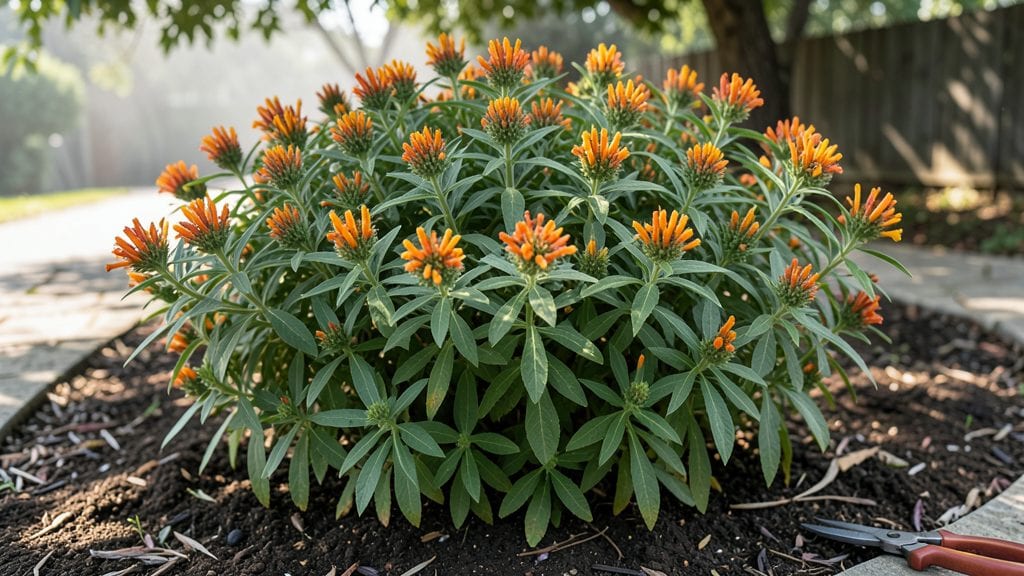
Deciding whether lantana camara is perennial or annual depends on your climate: it thrives as a perennial in warm zones (8-11) but acts as an annual in colder regions, where frost kills it back to the ground before it regrows from roots or seeds in spring.
This hardy shrub’s behavior comes down to temperature thresholds—lantana can’t survive prolonged freezing, but its deep root systems often let it bounce back once warmth returns. 🌱 In frost-prone areas, gardeners often treat it as an annual, replanting each spring from cuttings or seeds.
The key difference lies in its dormancy: while it may look dead after winter, the roots often remain viable until temperatures rise again.
For those in marginal climates, choosing cold-hardier cultivars or overwintering potted plants can extend its lifespan beyond a single season. The plant’s ability to regenerate from roots makes it surprisingly resilient, even when the above-ground growth dies back completely.
💡 In This Article
- Lantana Camara’s Survival Adaptations in Different Climates
- Extending Lantana Camara’s Lifespan in Cold Regions
Lantana camara’s survival adaptations in different climates
Lantana camara's behavior as either a perennial or annual hinges on its hardiness zones 8-11 and how cold temperatures interact with its biological systems. In zones 8-11, where winter temperatures rarely drop below 20°F, the plant maintains active growth year-round, storing energy in its extensive root network.
These roots can extend 3-5 feet deep, allowing the plant to access moisture and nutrients even during dry spells. The key adaptation here is its deep taproot system, which stores carbohydrates and water, enabling regrowth after seasonal dieback in marginal climates.
The transition to annual behavior occurs when temperatures fall below 28°F for extended periods. At this threshold, the plant's above-ground growth freezes and appears dead, but the roots often remain viable.
What's fascinating is how lantana employs dormancy mechanisms similar to bulbs or tubers—it essentially "shuts down" its metabolic processes to conserve energy. Studies show that even after 10-14 days of frost, the root crown can remain dormant but alive, waiting for warmer conditions.
This explains why lantana often reappears in spring from what seemed like dead ground.
The science behind this involves temperature-sensitive enzymes that trigger dormancy. When nighttime temperatures drop below 32°F, the plant's cell membranes become more rigid, slowing water uptake and metabolic activity. This protective response prevents cellular damage while maintaining the root system's viability.
In contrast, in tropical climates (zones 10-11), where temperatures rarely fall below 40°F, lantana continues growing year-round, producing flowers continuously and never entering true dormancy.
What most gardeners don't realize is that lantana's regrowth timing depends on soil temperature more than air temperature. The roots typically begin active growth when soil temperatures reach 55-60°F, which usually coincides with spring air temperatures warming to 65°F.
This explains why lantana often emerges earlier in southern climates than in northern regions, even when both experience similar winter lows. The plant's ability to sense soil warmth through its extensive root network gives it a survival advantage in unpredictable climates.
Another critical factor is the plant's seed germination strategy. While established plants regrow from roots, lantana also produces thousands of tiny seeds that can remain dormant in the soil for years until conditions are favorable.
These seeds are particularly important in colder regions where the parent plant may not survive winter. The seeds have a hard seed coat that requires scarification (like freezing/thawing cycles) to break dormancy, explaining why lantana often reappears in the same spot year after year even after being "killed" by frost.
For visual learners, imagine this: in warm climates, lantana looks like a lush, flowering shrub year-round, while in cold regions it becomes a "zombie plant"—appearing dead but with its roots lurking beneath the surface, ready to spring back to life when conditions improve.
This dual behavior makes it one of nature's most adaptable garden plants. 🌿