
Flowers
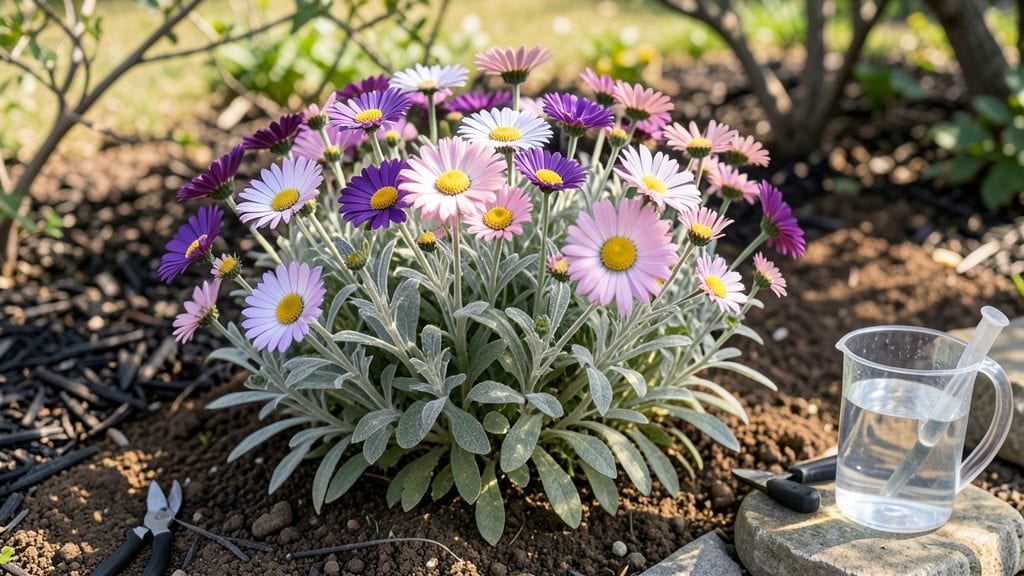
African daisies thrive as annuals because their natural habitat in South Africa's warm climate means they evolved to complete their life cycle quickly before dry seasons arrive. 🌸 In cooler regions, however, some varieties—like Dimorphotheca sinuata—can persist through mild winters if given protection.
The key difference from perennials is their inability to regrow from the same root system after frost damage, though their prolific self-seeding often creates natural multi-year displays. This makes them perfect for gardeners who want vibrant summer color without long-term commitment.
For those in colder zones, selecting frost-tolerant cultivars or using containers lets you move plants indoors before freezing temperatures arrive. Mulching with straw or leaves can also extend their season by insulating roots.
The trade-off? Annuals deliver more dramatic blooms in a single season compared to perennial daisies like gerberas, which may have less showy but longer-lasting flowers.
💡 In This Article
- African Daisy Growth Cycle: Annual vs Perennial Behavior
- Extending African Daisy Season: Cold Protection Tips
African daisy growth cycle: annual vs perennial behavior
African daisies (Dimorphotheca spp.) follow an annual growth cycle because their native South African habitat experiences extreme seasonal shifts. Here's what's actually happening: these plants evolved to complete their entire life cycle—from seed germination to flowering—in just 8-12 weeks during the region's warm, wet summers.
This rapid development ensures they can reproduce before the harsh dry winters arrive, when survival would be nearly impossible. The key factor is their frost sensitivity—most varieties cannot tolerate temperatures below 20°F (-6°C), as ice crystals forming in their cells disrupt critical biological processes. 🔥
Botanically, African daisies differ from perennials like Gerbera daisies because they lack the energy reserves to regrow from the same root system after frost damage. Their roots store minimal starch compared to perennials, which can survive winter dormancy.
Instead, African daisies rely on prolific seed production—some varieties drop 50,000+ seeds per plant—that germinate the following season. This self-seeding behavior creates natural multi-year displays even though individual plants live only one growing season. The trade-off?
Their vibrant blooms appear more dramatically in a single season compared to perennial daisies.
In warm climates (USDA Zones 9-11), African daisies behave more like perennials, often returning year after year without protection. Here's why: consistent temperatures above 50°F (10°C) prevent the cellular damage that triggers annual death cycles.
Their growth pattern accelerates in heat—some varieties grow 2-3 inches per week during peak summer—producing those signature daisy-like flowers with papery petals that can measure 1-2 inches wide.
The contrast with perennials becomes clear when you compare their root systems: African daisies develop shallow, fibrous roots optimized for quick nutrient uptake, while Gerbera daisies have deeper taproots for winter survival. ✨
What most gardeners don't realize is how their growth habits adapt to light cycles. African daisies are short-day plants, meaning they flower in response to decreasing daylight hours—a survival strategy that triggers blooming just as summer transitions to fall in temperate zones.
This photoperiod sensitivity explains why they produce fewer flowers in tropical regions where daylight remains consistent. The result? Their characteristic vibrant displays appear precisely when gardeners in cooler climates crave summer color, making them popular in annual flower beds despite their short lifespan. 💫
Consider these key differences when choosing varieties:
- Cold tolerance: Dimorphotheca sinuata varieties can handle 25°F (-4°C) with protection, while Dimorphotheca pluvialis (rain daisy) typically dies at 32°F (0°C)
- Bloom duration: Annual varieties produce flowers for 6-8 weeks per season, while self-seeding types may extend displays through successive generations
- Height variation: Dwarf varieties reach 6 inches, while standard types grow 12-18 inches, affecting their suitability for borders or containers
The rapid growth cycle also explains why African daisies thrive in poor soils—they complete their life cycle before soil depletion becomes an issue. Their ability to grow in sandy, well-drained soils (pH 6.0-7.5) without heavy fertilization makes them ideal for xeric landscapes. This adaptability contrasts with perennial daisies that require more stable growing conditions year-round. For gardeners in marginal climates, this means African daisies deliver immediate visual impact with minimal maintenance compared to perennials that may struggle in their first year. 🌟