
Flowers
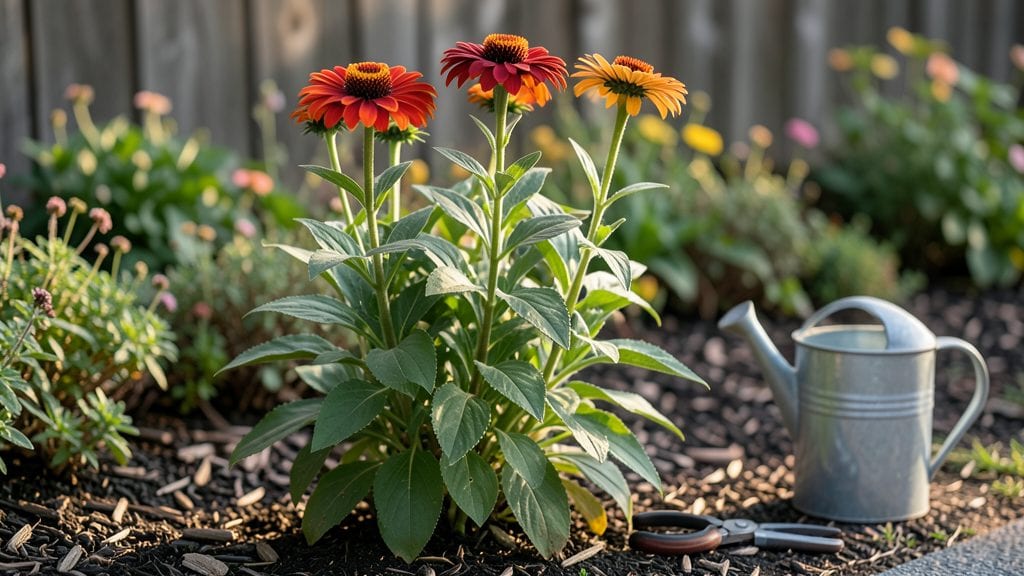
Zinnia flowers are annuals, completing their life cycle in one growing season, though some varieties may self-seed prolifically, creating the illusion of perennial growth in favorable climates. They thrive in warm weather and die back with frost, requiring replanting each spring for continuous blooms.
Zinnias may seem like perennials because they often return year after year in mild climates, but their true nature as annuals comes down to their sensitivity to cold. 🌱 Once frost hits, their tender stems and leaves blacken, and the plants die completely—no regrowth.
The key to their persistence lies in their ability to drop seeds before winter, which sprout fresh in spring. I've seen gardens where zinnias pop up like clockwork each year without any human intervention, thanks to this natural reseeding habit.
What sets them apart from true perennials is their complete dependence on seasonal warmth. Unlike perennials that store energy underground, zinnias focus all their resources on producing vibrant blooms and seeds during their single growing season.
This makes them perfect for summer containers or cutting gardens, where you can enjoy their bold colors without worrying about winter survival.
💡 In This Article
- Zinnia Life Cycle: Why They Die After One Season
- Zinnia Self-Seeding Secrets for Year-Round Color
Zinnia life cycle: why they die after one season
Here's what's actually happening botanically: zinnias are classified as cool-season sensitive annuals because their entire life cycle—from seed germination to seed production—is triggered and completed within a single warm season. Their growth begins when soil temperatures reach 60°F or higher, which typically occurs in spring.
The plant then enters a rapid flowering phase, producing seeds within 60-90 days depending on variety, before frost sensitivity kicks in.
The key factor is their thermoperiodic response—zinnias are day-neutral but temperature-sensitive. Their flowering mechanism activates when nighttime temperatures consistently stay above 55°F, while daytime temps between 70-85°F optimize growth.
This creates a perfect storm for summer blooms, but once temperatures drop below 40°F, their cellular membranes begin to rupture, causing irreversible damage to stems and leaves. Unlike perennials that develop hardy root systems or underground storage organs, zinnias allocate nearly all their energy to above-ground growth and reproduction.
What most people don't realize is how this compares to true perennials like coneflowers or black-eyed Susans. Those plants develop corm-like storage structures or deep taproots that survive winter dormancy, regrowing from the same biological structure year after year.
Zinnias, however, have a monocarpic life strategy—they produce seeds once and then die, similar to many desert annuals that complete their life cycle during brief rainy seasons. Their seeds contain abscisic acid, a hormone that triggers dormancy until temperatures rise again.
This life cycle explains why zinnias thrive in USDA Hardiness Zones 3-10 but only as annuals—even in warm climates, they can't survive winter. The exception occurs when seeds drop before frost and remain viable in the soil.
Some varieties like 'Benary's Giant' or 'Profusion' produce 10,000+ seeds per plant, creating dense seed banks that sprout when conditions are right. This natural reseeding is why they appear perennial in mild winters, though technically each plant only lives one season.
The science behind their frost sensitivity involves ice nucleation proteins that form in their cells when temperatures drop below freezing. These proteins create ice crystals that puncture cell walls, leading to the characteristic blackening you see after frost.
The process happens within 12-24 hours of exposure to 28°F or lower temperatures. This rapid die-off contrasts with perennials that may show winter damage but can recover from dormant structures.
For gardeners, this means zinnias offer a high-reward, low-commitment flowering option. Their complete life cycle aligns perfectly with summer's warmest months, producing 50-100 flowers per stem in vibrant colors that attract pollinators.
The trade-off is their seasonal limitation, but this also makes them ideal for cut flower production where you want consistent blooms without perennial maintenance. 💫