
Flowers
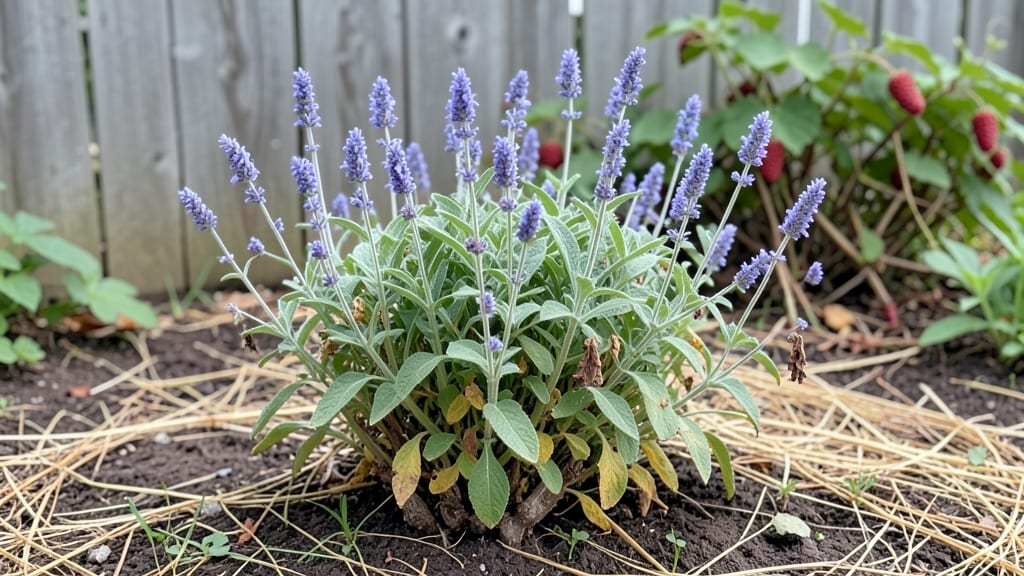
Victoria Blue Salvias are hardy perennials that thrive in USDA zones 7-10, offering striking blue blooms and attracting pollinators like hummingbirds and bees. Plant in well-draining soil with full sun, water moderately, and prune spent flowers to encourage continuous blooming throughout the growing season.
These vibrant perennials stand out for their long-lasting blooms—some varieties flower from early summer through fall, providing a continuous nectar source. 🌸 The deep blue flowers aren't just beautiful; they're specifically shaped to funnel pollinators like hummingbirds directly to the nectar, making them one of the most effective garden plants for supporting local ecosystems.
Unlike annual salvias that need replanting, Victoria Blue Salvias return year after year with minimal care once established.
What makes them particularly resilient is their adaptability to different soil types, though they do best in sandy or rocky soils that prevent root rot. I've found they handle drought surprisingly well once their roots establish, though consistent moisture during their first growing season helps them take hold faster.
The key to their success lies in their self-cleaning habit—spent flowers drop naturally, reducing maintenance while keeping the plant looking tidy.
💡 In This Article
- Why Victoria Blue Salvias Excel as Pollinator Magnets
- Step-by-Step Guide to Planting and Maintaining Victoria Blue Salvias
Why Victoria Blue salvias excel as pollinator magnets
The secret behind Victoria Blue Salvias' pollinator appeal lies in their specialized flower structure and nectar production. These plants produce tubular flowers with a 1.5- to 2-inch depth that perfectly accommodates hummingbird beaks while guiding bees to their nectar rewards.
The deep blue color isn't just visually striking—it's a UV pattern that pollinators see as a beacon, directing them to the flower's center where nectar hides. 🌿 Unlike many salvias that offer nectar only in the morning, Victoria Blue varieties produce nectar continuously throughout the day, creating a reliable food source for pollinators during their active foraging periods.
What sets them apart from other salvia varieties is their extended bloom window. While many salvias bloom for just 4-6 weeks, Victoria Blues can flower continuously from late spring through fall in optimal conditions.
This prolonged flowering period means pollinators have a steady food supply when other native plants might be finishing their bloom cycles. The flowers also contain high sugar concentrations in their nectar—often 20-30% sucrose—which provides substantial energy for pollinators during migration or nesting periods.
These plants play a crucial ecological role by supporting both early and late-season pollinators.
Early in the season, they provide resources when many other flowers are still dormant, while their fall blooming extends support when other nectar sources become scarce. 🐝 The plant's self-cleaning habit—where spent flowers drop naturally—keeps the plant looking attractive while maintaining continuous blooming potential.
This makes them particularly valuable in gardens designed to support pollinator populations throughout the entire growing season, unlike many ornamental plants that offer only brief periods of interest.
Their pollinator magnetism extends beyond just hummingbirds and bees. Butterflies are also drawn to these flowers, particularly the monarch butterfly which relies on milkweed and other nectar sources.
The salvia's compact growth habit (typically 2-3 feet tall) makes it ideal for small gardens while still providing ample landing space for pollinators. In comparison, larger salvia varieties might offer more nectar but can be less accessible to smaller pollinators like solitary bees.
What most gardeners don't realize is how these plants contribute to local ecosystem health. A single mature Victoria Blue Salvia plant can support dozens of pollinator visits daily during peak bloom, creating a positive feedback loop that benefits other plants in your garden.
The increased pollinator activity leads to better fruit set on nearby vegetables and more robust flowering on other perennials. 🌱 This makes them an excellent choice for native plant gardens where biodiversity is a priority—far more effective than many hybrid ornamental plants that offer little ecological value.