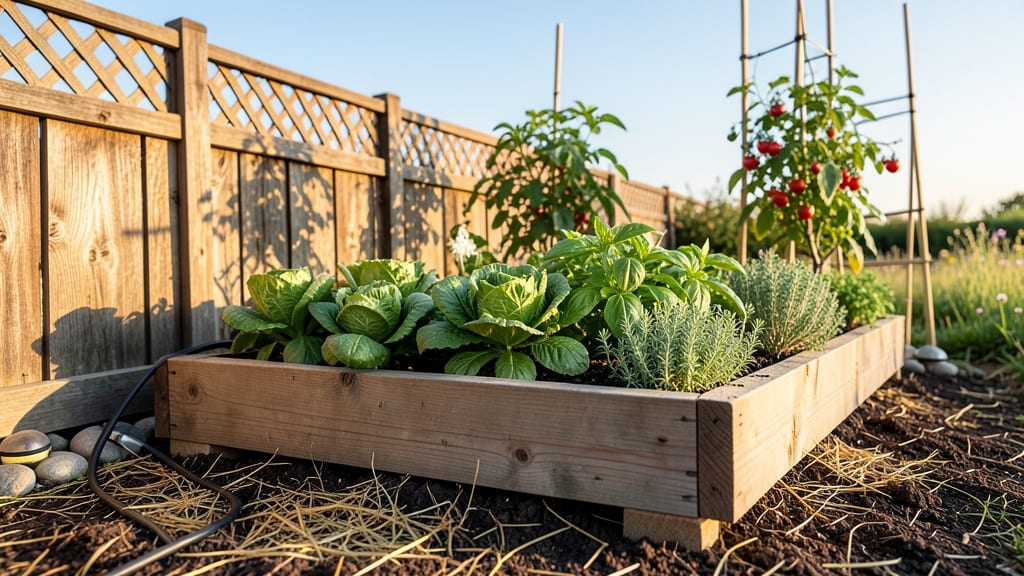
Buying guide: how to choose the right raised bed garden fence design
1. Material Durability and Weather Resistance 🛡️
Your fence’s material determines its lifespan, maintenance needs, and how well it holds up to weather. Wood (like cedar or redwood) offers natural beauty and a rustic charm but requires sealing/staining every few years to prevent rot or warping. Metal (steel or aluminum) is ultra-durable and low-maintenance but can be heavy and expensive. Polyethylene or fabric options are lightweight and budget-friendly but may degrade faster under intense sun. Bamboo is eco-friendly and naturally resistant to pests but can splinter over time.
I recommend pressure-treated cedar or UV-resistant polyethylene for the best balance of durability and low upkeep.
2. Privacy Height and Modularity Options ⚡
Privacy needs vary—3 to 4 feet is ideal for small gardens or deterring pets, while 5 to 6 feet blocks neighbors’ views.
Look for modular designs that let you adjust heights per section (e.g., taller panels on street-facing sides). Lattice or slat panels offer partial privacy while allowing light and airflow, perfect for trellises.
Counter-intuitively, shorter fences (3 feet) with dense planting (like tall sunflowers) can create just as much privacy as a 6-foot wall! For raised beds, prioritize adjustable heights to fit your layout.
3. Plant Support Features (Trellis, Grooves, or Netting) ✅
A great fence doubles as a trellis—look for integrated lattice, grooves, or netting to support climbing plants like beans, cucumbers, or roses. Pre-drilled holes (common in wood or bamboo) make it easy to tie vines, while modular lattice panels (like polyethylene kits) offer built-in support without extra hardware.
Avoid fences with smooth surfaces unless you’re only growing ground crops. Pro tip: Metal trellis systems with drip irrigation channels let you water climbing plants directly, saving time and water.
4. Ease of Assembly and Customization for Raised Bed Shapes 🔍
Not all fences fit raised beds—modular panels (like snap-together lattice kits) adapt to irregular shapes, while pre-assembled sections speed up installation. Avoid bulky materials (e.g., thick wood) that require power tools. Roll-out fabric fences are the easiest for DIYers but may need staking.
For curved or multi-level beds, opt for flexible metal frames or bamboo panels that bend without breaking. Always check if the fence needs additional hardware (like screws or brackets) to attach to your raised bed’s frame.
5. Budget vs. Long-Term Value 💰
Budget-friendly options (fabric or cedar slats) start under $50 but may need replacing every 2–3 years. Mid-range kits (polyethylene lattice) run $100–$200 and last 5+ years with minimal care. Premium metal or bamboo can cost $300+ but offer decades of use. Ask yourself: Will you rent long-term (fabric is best), or is this a permanent fixture (metal or wood)? I recommend cedar slats or polyethylene panels for most gardeners—they balance cost, durability, and versatility.
Frequently asked questions
Q: What’s the best raised bed garden fence design for small spaces?
For small gardens, I recommend modular lattice panels or roll-out fabric fences. These designs maximize vertical space while providing privacy and plant support. The polyethylene lattice kit (mid-range) offers adjustable heights (3-5 feet) to fit compact layouts, while the fabric trellis (budget-friendly) rolls out easily for instant privacy. Both work well for raised beds under 4x4 feet.
Q: Can I install a raised bed fence design without power tools?
The cedar slat panels and polyethylene lattice kit both feature pre-drilled holes and snap-together designs, requiring only a screwdriver or stakes. For fabric options, no tools are needed—just roll and secure with landscape pins. Always check the manufacturer’s instructions for specific assembly tips, especially if your raised bed has an irregular shape.
Q: How do I choose between wood, metal, and fabric for my fence?
Consider your priorities: Wood (cedar/bamboo) is best for natural aesthetics and durability but needs maintenance. Metal offers long-term strength and modern looks but is heavier and pricier. Fabric is ideal for temporary setups or renters due to its affordability and ease of removal. For most gardeners, cedar slats or polyethylene panels strike the best balance of cost, durability, and versatility.
Q: What’s the difference between a lattice panel and a slat fence for raised beds?
1
Lattice panels
(like polyethylene kits) provide partial privacy with open spaces for airflow and light, making them perfect for trellises. Slat fences (wood or bamboo) offer full privacy but may block sunlight. Lattice is better for climbing plants, while slats work well for ground crops or decorative borders. Choose lattice for vertical gardening and slats for solid privacy.
Q: How long will my raised bed fence design last?
Durability varies by material: wood (cedar/bamboo) lasts 5–10 years with proper sealing, metal can exceed 15 years, and polyethylene/fabric typically lasts 2–5 years. For long-term use, invest in pressure-treated cedar or metal frames. If you rent or want flexibility, fabric or bamboo are great temporary solutions. Always check UV resistance ratings for outdoor exposure.
Q: Are there any DIY-friendly alternatives to pre-made fence kits?
Yes! For a custom look, use bamboo stakes or trellis wire wrapped around your raised bed’s frame. You can also repurpose chicken wire or lattice sheets with zip ties for a budget-friendly solution. For a polished finish, stain pressure-treated lumber and add pre-drilled trellis grooves. Just ensure any DIY design meets your privacy and plant support needs.
Q: How do I prevent my fence from warping or rotting?
To avoid warping, choose UV-resistant materials like polyethylene or treated cedar. For wood, apply a waterproof sealant annually and elevate panels slightly off the ground. Metal fences should have powder-coated finishes to resist rust. Avoid direct soil contact for all materials, and store fabric fences in a dry place when not in use. Proper ventilation (e.g., lattice gaps) also reduces moisture buildup.
★★★★★4.8(12 reviews)