
Landscaping
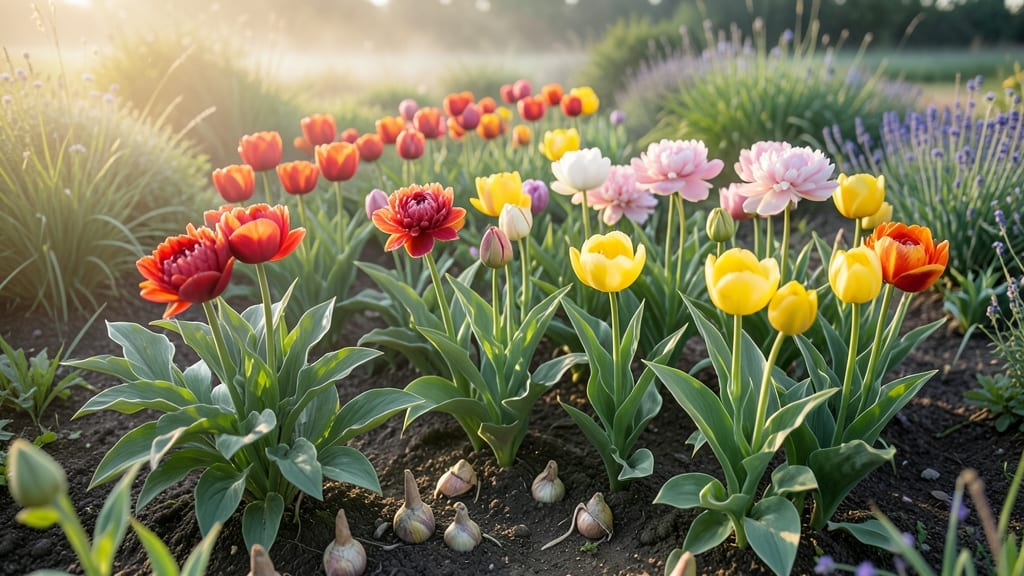
Transform your garden into a vibrant spring spectacle with these 10 tulip flower bed ideas. Strategic plant pairings extend blooms beyond spring, creating year-round interest and effortless beauty.
Classic Parterre Tulip Garden With Boxwood Edging
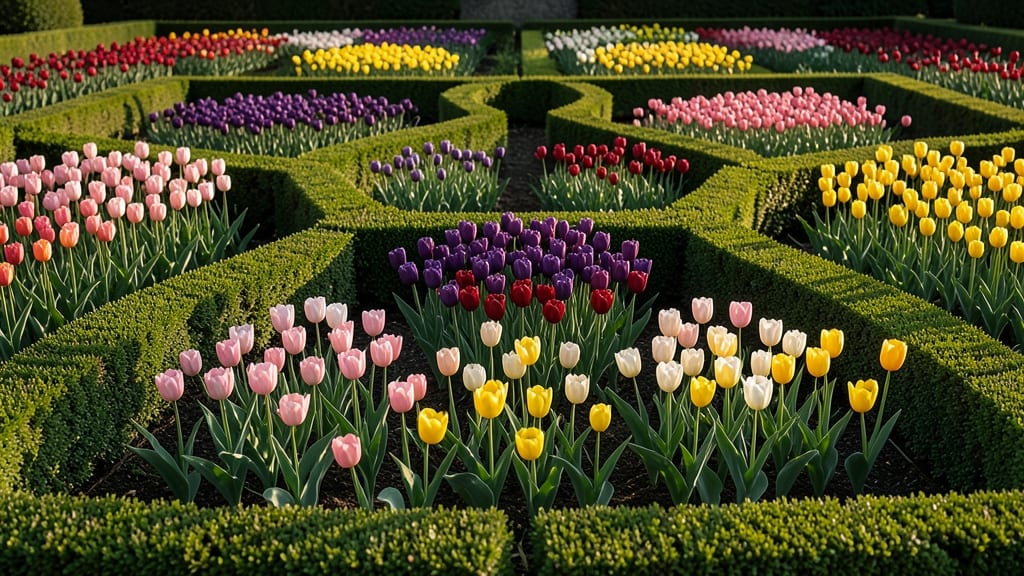
For gardeners who love wedding-worthy elegance, a classic parterre tulip garden with boxwood edging delivers unmatched curb appeal. This symmetrical design transforms any entrance into a showstopper, blending timeless charm with seasonal color. The key? Planting tulips in geometric patterns—like diamonds or chevrons—while keeping boxwood hedges neatly sheared to create crisp, clean lines.
Start by choosing early-, mid-, and late-blooming tulip varieties (e.g., 'Queen of Night' for drama, 'Apeldoorn' for cheerful yellow) to extend your display from April through May. Space bulbs 6 inches apart in well-draining soil, then top with gravel or sand to prevent rot. Boxwood thrives in full sun to partial shade—prune it twice yearly (spring and summer) to maintain its structured shape. For extra impact, add lavender or thyme along the edges to soften the formality.
This design isn’t just for show—it’s perfect for traditional gardens, historic homes, or wedding venues where polished aesthetics matter. With minimal upkeep (weekly watering during bloom season and annual bulb division), you’ll enjoy years of effortless elegance. ✨
Wildflower Meadow-Style Tulip Border
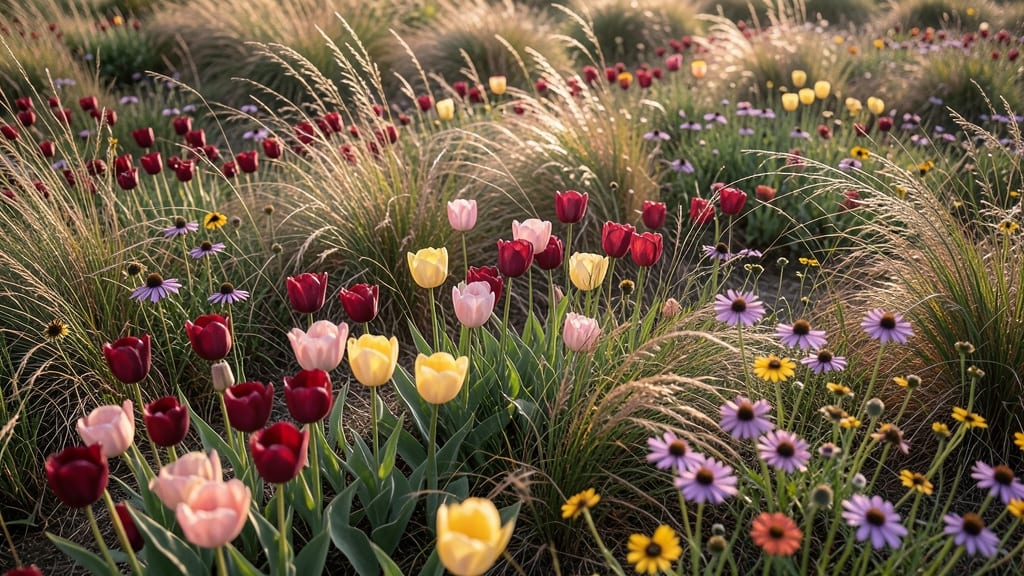
Skip the manicured perfection and embrace the charm of a wildflower meadow-style tulip border—where structured beauty meets effortless nature. This design lets tulips shine alongside native grasses and wildflowers, creating a pollinator paradise that thrives with minimal fuss.
Plant tulip bulbs in clusters among drought-tolerant wildflowers like purple coneflowers or orange poppies, spacing them 4-6 inches apart. Add tall ornamental grasses (like switchgrass) to the back for movement and texture. The key? Let the wildflowers naturalize—once established, they’ll self-seed and reduce weeding to almost nothing.
Perfect for gardeners who love low-maintenance designs, this border attracts bees, butterflies, and hummingbirds while keeping your spring color vibrant. It’s ideal for cottage gardens, rural properties, or even urban edges where a touch of wild beauty is welcome. 🌻
Tulip And Pansy Spring Combo With Foliage Accents
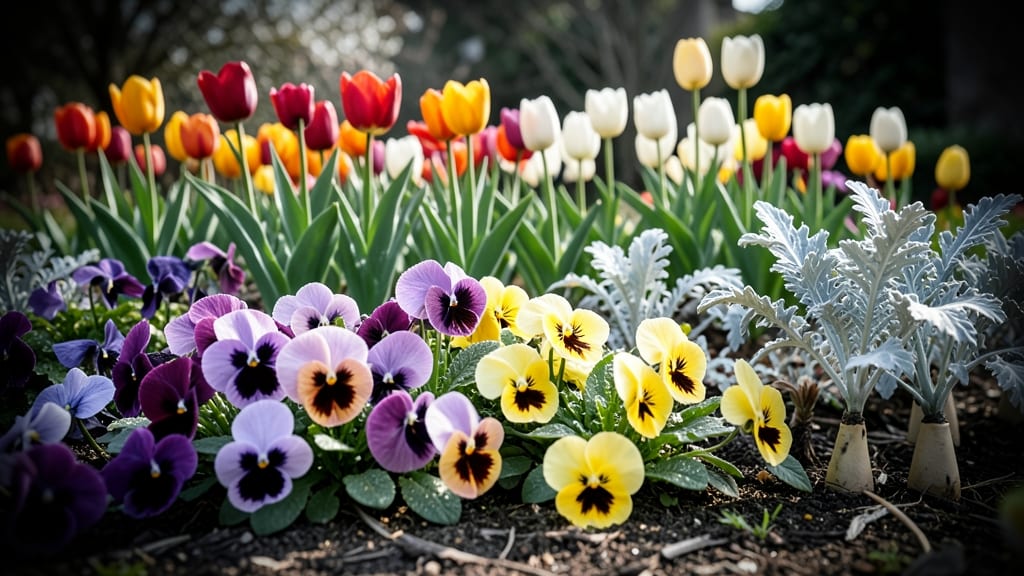
Tired of spring gardens that fade too soon? This tulip and pansy combo gives you three months of color—starting in February—while keeping maintenance simple. The secret lies in timing: plant pansies in fall (they bloom early) and tulips in late summer/fall for staggered blooms.
Add silver foliage plants like lamb’s ear or dusty miller to create contrast and fill gaps as tulips fade. Pansies thrive in cooler temps, while tulips take over as warmth arrives. This combo works in full sun to partial shade and even containers—ideal for urban gardeners or small spaces.
Perfect for beginners or anyone craving low-fuss spring color, this design ensures your garden stays lively from the first thaw until late April. 🌷
Vertical Tulip Garden On Trellis With Clematis
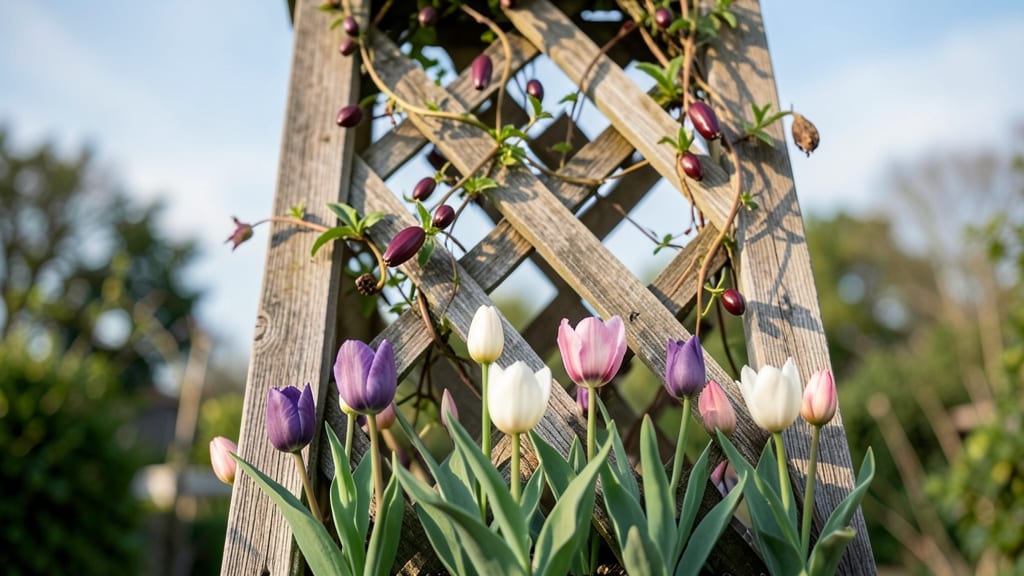
Turn your small garden into a vertical masterpiece by combining tulips with clematis on a trellis. This space-saving design maximizes impact in tight areas while creating a stunning seasonal display that starts with tulips in spring and continues as clematis climbs upward.
Plant tulip bulbs at the base of your trellis in early fall, choosing varieties like 'Darwin Hybrid' or 'Parrot' for bold colors. Install a sturdy trellis (at least 6 feet tall) and train clematis vines to climb as they grow. The tulips provide early color while the clematis takes over in late spring and summer, creating a seamless transition. This combo works beautifully in urban gardens, balconies, or along fences.
Perfect for gardeners with limited space who still want dramatic seasonal interest. The vertical design also makes maintenance easier while adding architectural interest to your landscape. ✨
Tulip And Daffodil Layered Planting For Early Spring
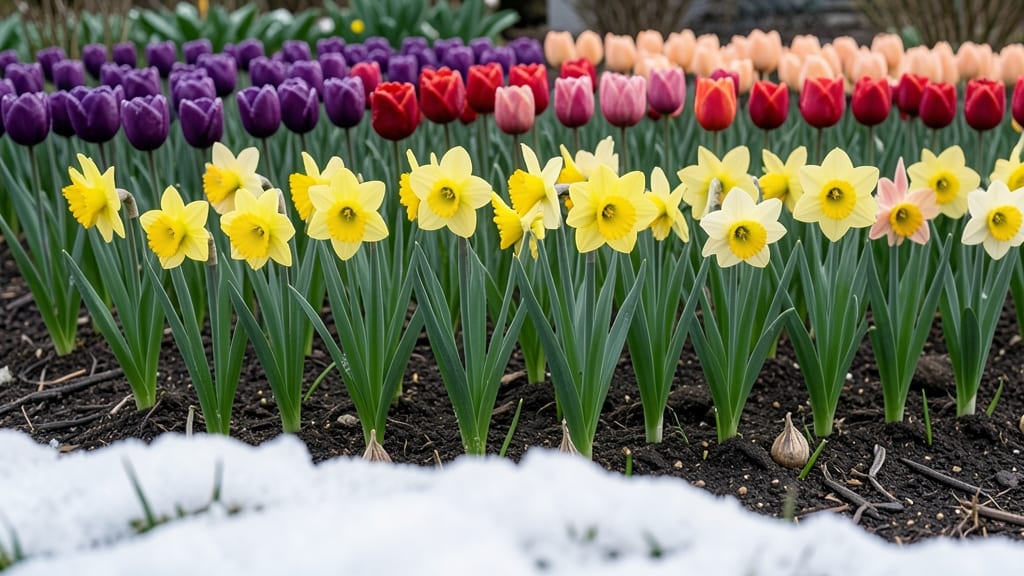
Want a garden that bursts into color as soon as snow melts? Layered tulips and daffodils create a three-month spring show with minimal effort. This smart succession planting strategy ensures your bed never looks bare—daffodils bloom first in February, tulips take over in March, and late varieties extend the display through May.
Start by planting daffodil bulbs first (they're hardier and bloom earlier), then add tulip bulbs around them in staggered heights. Choose early-blooming tulips like 'Early Harbinger' alongside mid-season varieties like 'Apeldoorn' for continuous color. The key is spacing: place taller daffodils in back and shorter tulips in front to create natural depth. Mulch with compost to protect bulbs through winter and retain moisture.
This approach works especially well for gardeners in USDA zones 3-8 who want vibrant early spring color without high maintenance. The layered effect also hides fading foliage beautifully, keeping your bed looking fresh all season. 🌷
Monochromatic Tulip Bed With Silver Foliage Plants
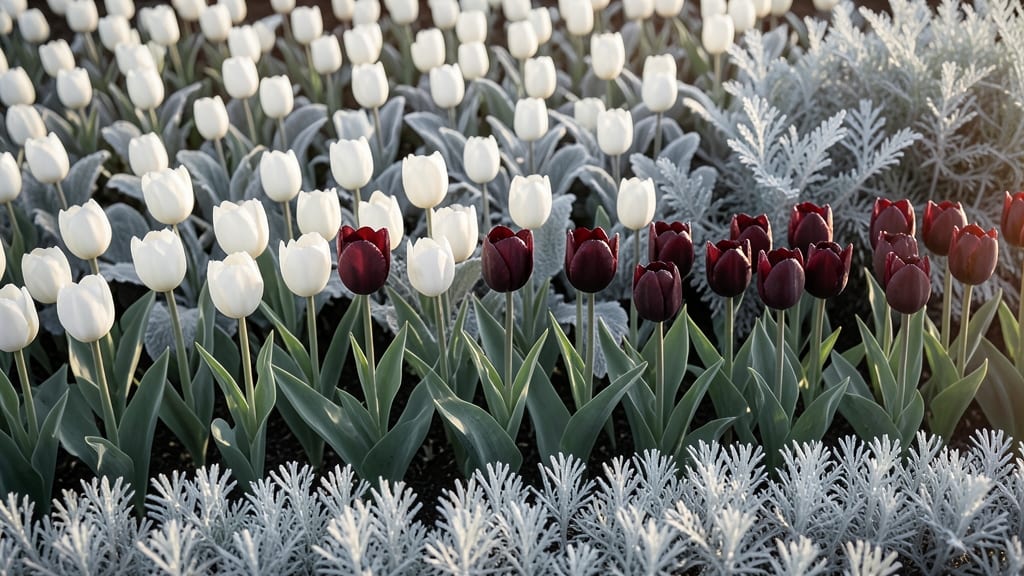
Tired of clashing colors and busy garden beds? A monochromatic tulip bed with silver foliage plants creates a striking, modern look that’s easier to maintain than you’d think. This minimalist design uses a single tulip hue—like crisp white or deep burgundy—paired with silver lamb’s ear or artemisia for high-contrast drama that feels effortlessly chic.
Start by planting tulip bulbs in clusters (6-8 per square foot) for a lush, uniform look. Tuck silver foliage plants like lamb’s ear (Stachys byzantina) or wormwood (Artemisia) around the edges or between tulip rows—their velvety texture contrasts beautifully with the smooth petals. For extra drama, add a few low-growing ornamental grasses like blue fescue (Festuca glauca) to soften the edges.
This design is perfect for gardeners who love clean lines and modern aesthetics—it requires minimal upkeep while delivering year-round interest (silver foliage stays attractive even after tulips fade). Plus, the monochromatic palette makes it easy to coordinate with your home’s exterior. 💚
Tulip And Hostas Shade Garden Combo
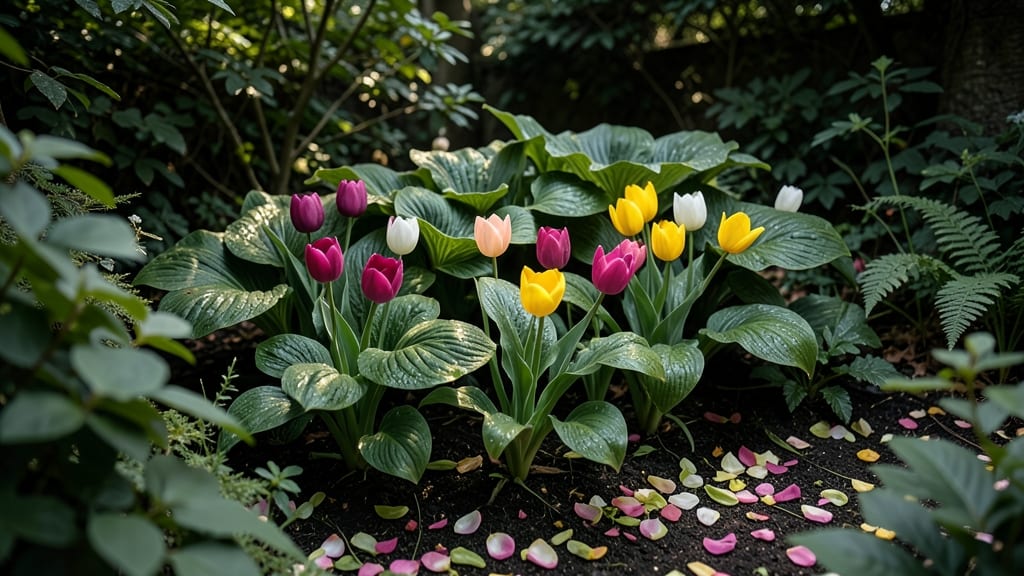
Tired of shady spots that feel like afterthoughts in your garden? A tulip and hostas shade garden combo turns dull corners into lush, layered displays that thrive where sunstruck plants struggle. This dynamic duo delivers spring blooms followed by year-round foliage interest, making it the ultimate solution for woodland gardens, north-facing beds, or tree-shaded areas.
Start by planting tulip bulbs (like 'Queen of Night' or 'Fosteriana') in well-draining soil mixed with compost, then tuck hostas (such as 'Blue Angel' or 'Francee') around them for their broad, textured leaves. The hostas' deep green foliage will frame the tulips' vibrant blooms in spring, while their clumping habit keeps weeds at bay. For extra depth, add ferns or coral bells to fill gaps—these shade-lovers will keep the bed lively even after tulips fade.
This combo is ideal for urban gardeners with limited sun, woodland gardeners, or anyone who wants low-maintenance beauty without sacrificing color. With minimal upkeep (just occasional watering and mulching), you’ll enjoy a four-season garden that feels like a secret retreat. 🌿
Tulip And Allium Border For Pollinators
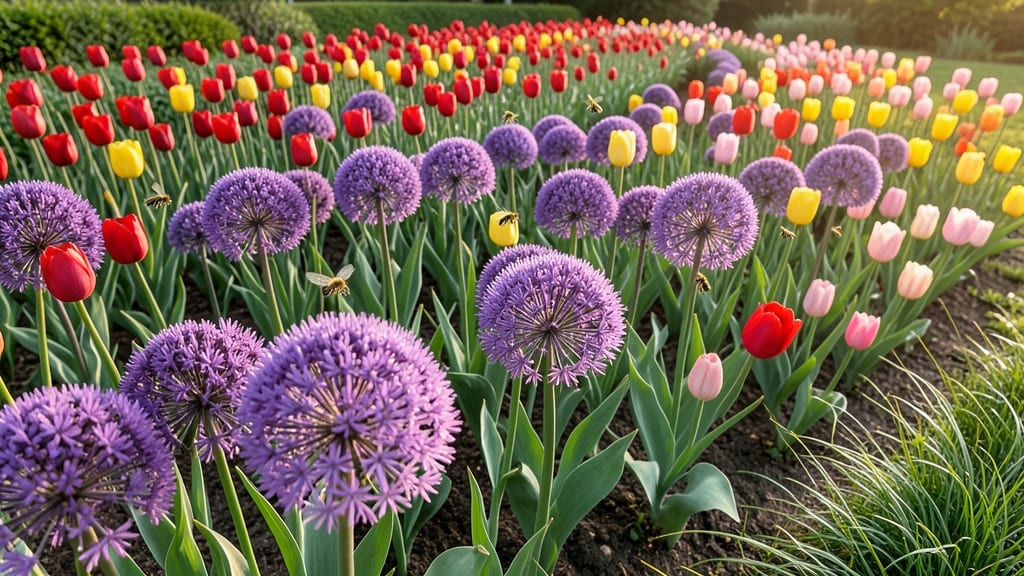
Turn your garden into a buzzing hub for bees with a tulip and allium border that extends your blooming season while supporting pollinators. This dynamic duo combines the classic elegance of tulips with the bold, globe-shaped blooms of alliums, creating a visual and ecological powerhouse that thrives from late spring through summer.
Start by planting tulip bulbs in early fall, choosing varieties like 'Purple Prince' or 'Darwin Hybrid' for their height and durability. Pair them with alliums such as 'Globemaster' or 'Purple Sensation', which bloom in late spring to early summer, just as tulips fade. Space alliums 12-18 inches apart in well-draining soil, and place tulips 6 inches apart in front for a layered effect. Both plants love full sun and tolerate dry conditions once established, making this combo perfect for low-maintenance gardens.
This design is ideal for gardeners who want to support pollinators while adding striking visual interest. The alliums' spherical blooms create a stunning contrast against tulips' delicate petals, and their late-season flowers provide nectar when other blooms have faded. Plus, the combination attracts bees, butterflies, and other beneficial insects. 🌟
Container Tulip Garden With Succulents
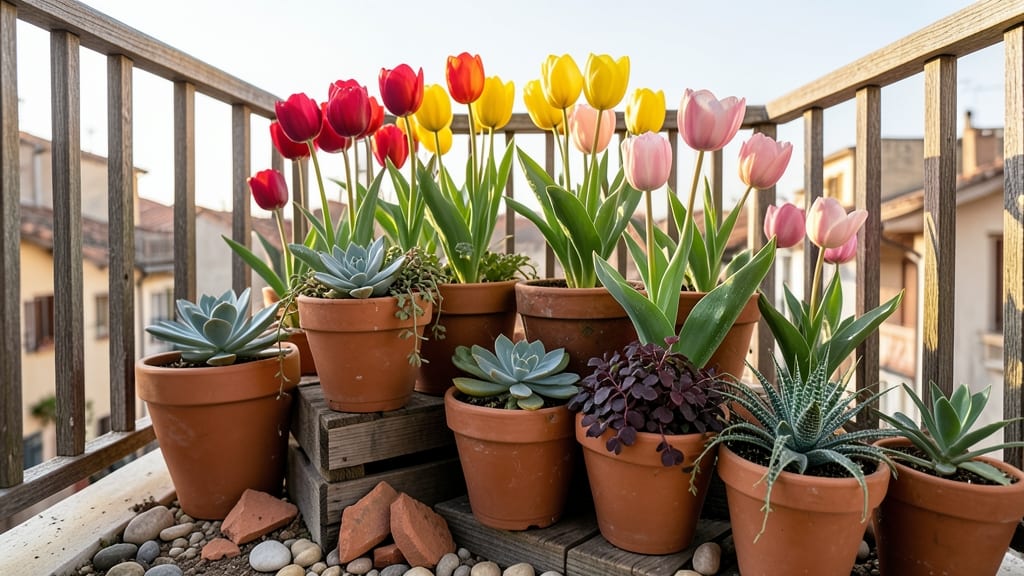
Bring the charm of a Mediterranean patio to your urban space with a container tulip garden paired with succulents—the perfect solution for small balconies or city rooftops. This combo delivers bold spring color followed by year-round greenery, all while demanding almost no water once established. The secret? Planting tulip bulbs in the center of a large container surrounded by drought-tolerant succulents like sedum or echeveria, which thrive in the same sunny conditions.
Start by choosing a terracotta pot (at least 12 inches deep) with drainage holes, then layer well-draining soil mixed with perlite. Plant tulip bulbs 6-8 inches deep in early fall, then tuck succulents around the edges in spring. Place the container in full sun (6+ hours daily) and water only when the top inch of soil feels dry—succulents will signal their needs by shrinking slightly. For extra drama, mix pink or purple tulips with blue-green hen-and-chicks for a striking contrast.
This design is ideal for urban gardeners, renters, or anyone with limited space who still crave seasonal color. The succulents stay lush all year, while tulips return annually with minimal care—just lift and divide bulbs every 3-4 years. It’s the ultimate low-maintenance, high-impact solution for small-scale beauty. 🌻
Tulip And Peony Undergarden For Long-Term Beauty

Ready to create a low-maintenance garden that delivers color from spring through summer? A tulip and peony undergarden is your secret weapon—planting tulip bulbs beneath peony roots gives you early spring blooms while peonies take over in summer, creating a seamless seasonal transition. This "investment planting" strategy reduces future work since peonies suppress weeds and tulips fade neatly beneath their lush foliage.
Start by planting tulip bulbs (like 'Darwin Hybrid' or 'Fosteriana') 6-8 inches deep and 6 inches apart in fall, then add peony roots (such as 'Sarah Bernhardt' or 'Bowl of Beauty') 2-3 inches below the soil surface in early spring. The key is spacing: place taller peonies in back and shorter tulips in front. Both thrive in full sun to partial shade and well-draining soil—mulch with compost to retain moisture and deter weeds.
This combo is perfect for gardeners who want year-round interest with minimal upkeep. Once established, the peonies will outcompete weeds, and you’ll enjoy decades of blooms with almost no replanting. It’s ideal for traditional gardens, cottage-style beds, or even urban backyards where space is limited but beauty is endless. 🌷