
Landscaping
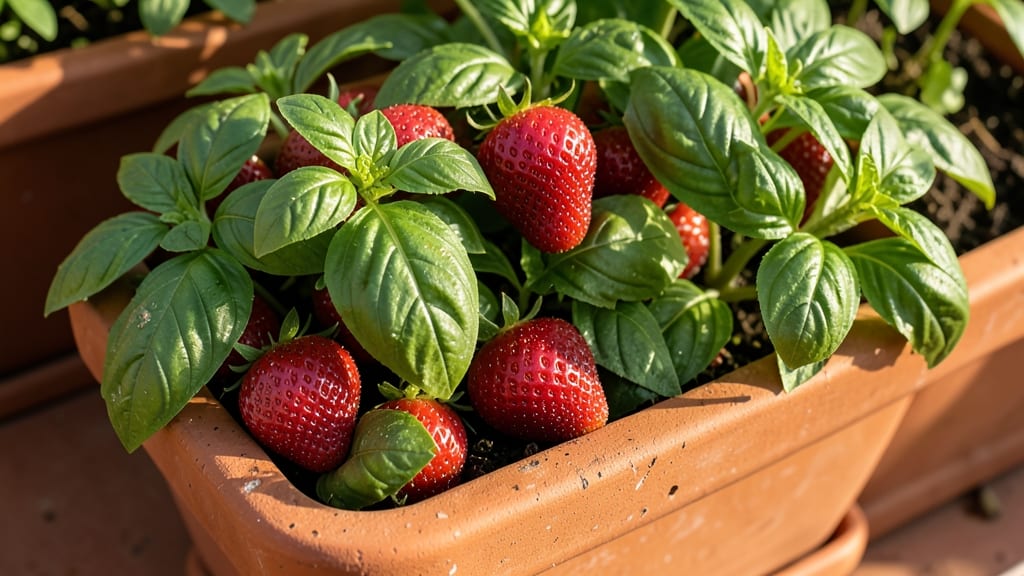
Transform your garden into a lush, pollinator paradise with these strawberry bed designs that combine sweet fruit production with vibrant, year-round blooms. These creative pairings maximize space, beauty, and biodiversity while keeping maintenance simple.
Classic Strawberry And Thyme Border
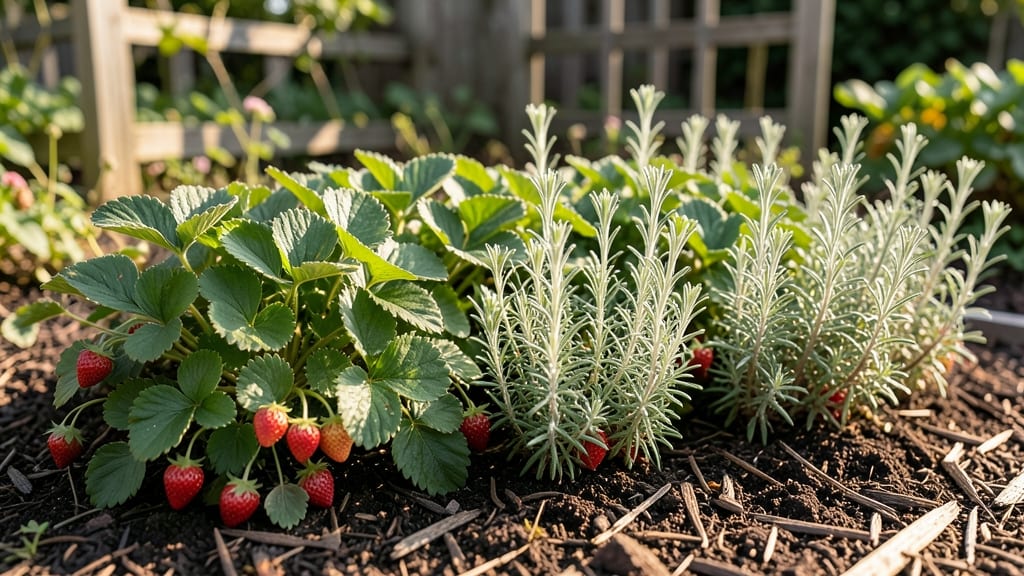
Step into your kitchen garden and create a fragrant, pest-repelling border that doubles as a culinary treasure trove. The classic strawberry and thyme border is a timeless combination that keeps aphids at bay while filling your home with an intoxicating aroma—perfect for gardeners who love both beauty and utility.
Plant everbearing strawberries along the edges of your bed, spacing them about 12 inches apart to allow room for thyme to spread between them. The thyme’s woody scent deters pests naturally, while its low-growing habit prevents weeds from taking over. Harvest fresh strawberries in summer and snip thyme leaves year-round for cooking or tea.
This design is ideal for kitchen gardeners who want easy access to both fruit and herbs, plus the added bonus of a fragrant, low-maintenance border. 🌱
Sunflower And Strawberry Tower Planters
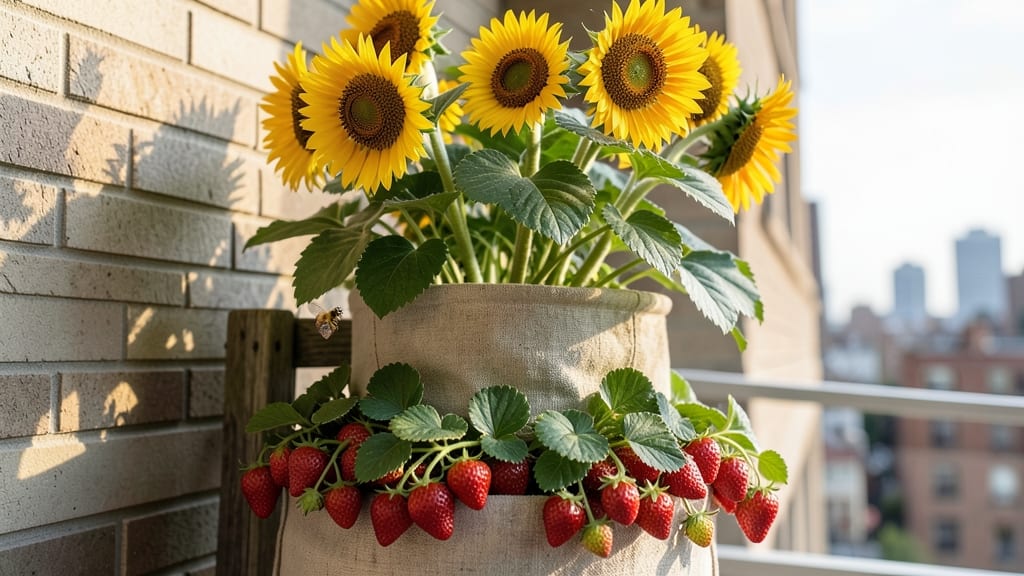
Turn your balcony or tiny urban plot into a pollinator magnet with sunflower and strawberry tower planters—a two-in-one solution that saves space while boosting your harvest. These vertical planters let sunflowers tower overhead, providing afternoon shade for heat-sensitive strawberries below, all while their bright blooms lure bees and butterflies to your garden.
Start with a 5-foot-tall planter (wood or fabric) filled with fast-draining soil. Plant strawberries in the lower half, spacing them 12 inches apart, then tuck sunflower seeds (like 'Moulin Rouge' for compact growth) in the upper section. The sunflowers will shade strawberries during peak afternoon sun, reducing stress and extending fruiting season. Water from the top to keep roots hydrated, and watch as strawberries cascade over the sides while sunflowers reach for the sky. 🌻
This design is ideal for renters, small-space gardeners, or anyone craving instant curb appeal. The vertical setup maximizes fruit production in minimal footprint, while the pollinator action ensures healthier plants and better yields year after year. 💡
Lavender And Strawberry Pollinator Haven
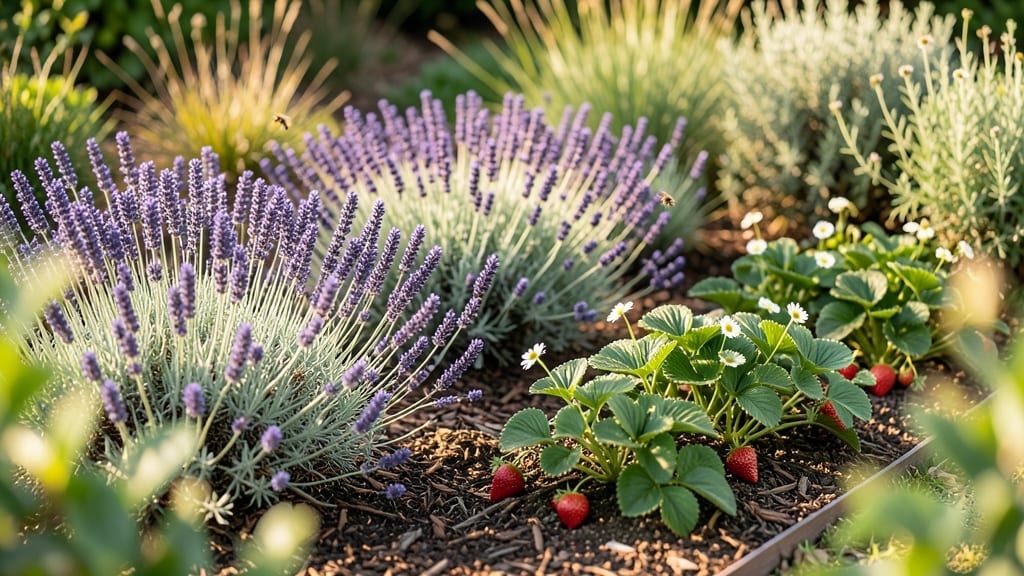
Craving a low-water garden that thrives in hot climates while buzzing with pollinators? Pair lavender and strawberries for a fragrant, drought-tolerant haven that doubles as a bee magnet. This duo not only survives with minimal irrigation but creates a soothing purple-and-green palette that elevates any landscape.
Plant lavender in clusters around the edges of your strawberry bed, where its silver-green foliage and purple blooms will frame the harvest. Both plants love full sun (6-8 hours daily) and well-draining soil, making them ideal companions for arid regions. The lavender’s fragrance deters pests like aphids, while its vertical growth habit prevents shading the strawberries below.
This combination is perfect for Mediterranean-style gardens or water-conscious gardeners who want beauty and productivity without excessive upkeep. Plus, the year-round interest—lavender’s blooms in summer, strawberries in spring—keeps your garden thriving. 🌿
Strawberry And Nasturtium Edible Flower Bed
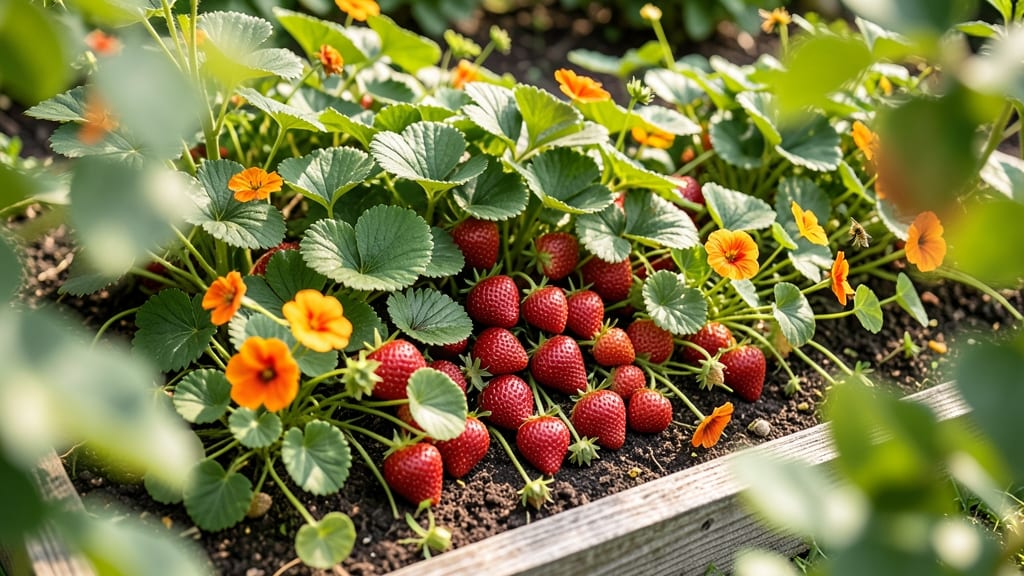
Want a garden bed that’s as beautiful as it is useful? Nasturtiums and strawberries create the perfect edible landscape—one that deters pests, adds vibrant color, and even boosts your salad bowl with peppery greens. This self-seeding annual combo is ideal for beginners who crave low-maintenance yet productive gardening.
Plant nasturtiums around the edges of your strawberry bed—their bright orange and red blooms repel squash bugs, aphids, and even rabbits, while their edible leaves add a spicy kick to salads. The self-seeding nature means fewer gaps in your bed each year, and their trailing vines create a natural border that frames your strawberries beautifully. For best results, give them full sun to partial shade and well-draining soil.
This pairing is especially great for urban gardeners or those with small spaces who want to maximize their harvest without extra work. Plus, kids love picking the flowers and leaves—making it a fun, educational addition to any garden. 🌻
Blueberry Bush Strawberry Underplanting
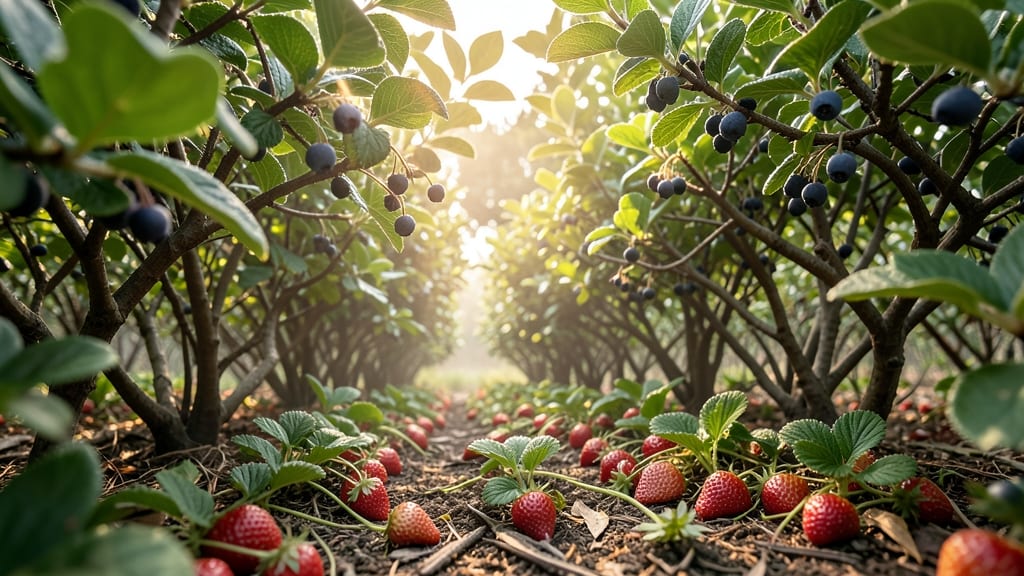
Imagine a berry thicket that gives you two harvests a year with minimal effort—blueberry bushes act as natural shade providers while strawberries thrive beneath them in spring and fall. This perennial pairing eliminates the need for temporary shade structures while creating a lush, low-maintenance garden bed.
Start by planting everbearing or day-neutral strawberry varieties (like 'Albion' or 'Seascape') in well-draining soil beneath established blueberry bushes that receive 6-8 hours of sunlight daily. The blueberries' dense canopy protects strawberries from summer heat while their shallow roots don't compete for nutrients. Mulch with pine needles (to acidify soil for blueberries) and keep the area weed-free for optimal growth.
This setup is perfect for gardeners who want year-round interest without annual replanting—ideal for woodland edges, cottage gardens, or any space where you can plant perennials. The early strawberry harvests arrive before blueberries ripen, giving you a staggered berry feast. 🌱
Strawberry And Marigold Pest-Repellent Border
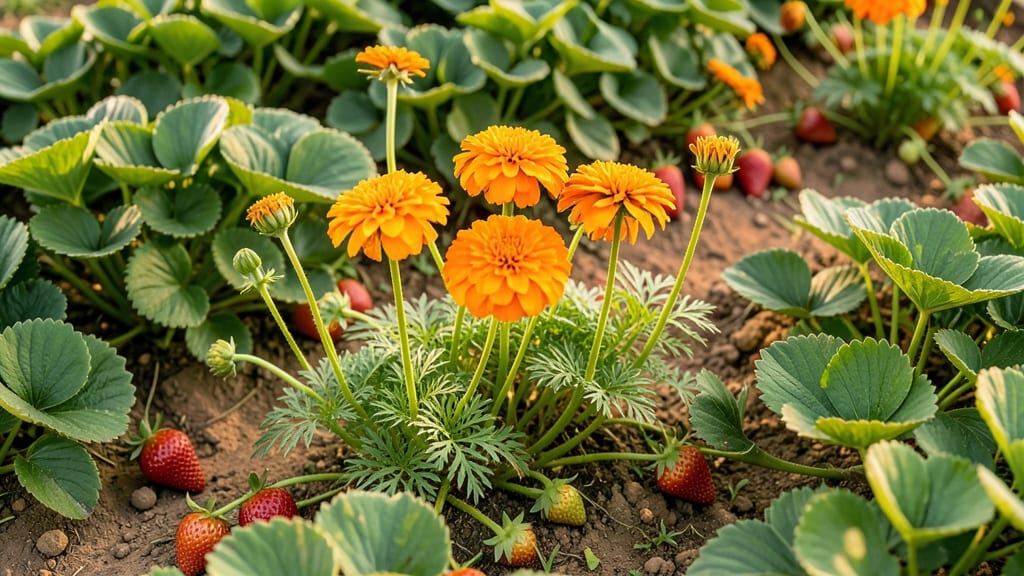
Tired of battling aphids and nematodes in your strawberry patch? Marigolds are the secret weapon you’ve been missing—these bright orange flowers don’t just look stunning, they actively confuse pests and create a natural barrier against soil-borne threats.
Plant French marigolds (the best variety for this job) around the perimeter of your strawberry bed, spacing them about 12 inches apart. Their strong scent masks the smell of strawberries, throwing off aphids, while their roots release compounds that deter nematodes. For extra protection, interplant calendula or basil in the center—this three-layer defense keeps pests away without chemicals.
This approach is perfect for organic gardeners who want vibrant color and fewer pests. Plus, the marigolds self-seed, so you’ll have even more blooms next year to support pollinators. 🌻
Strawberry And Clover Living Mulch
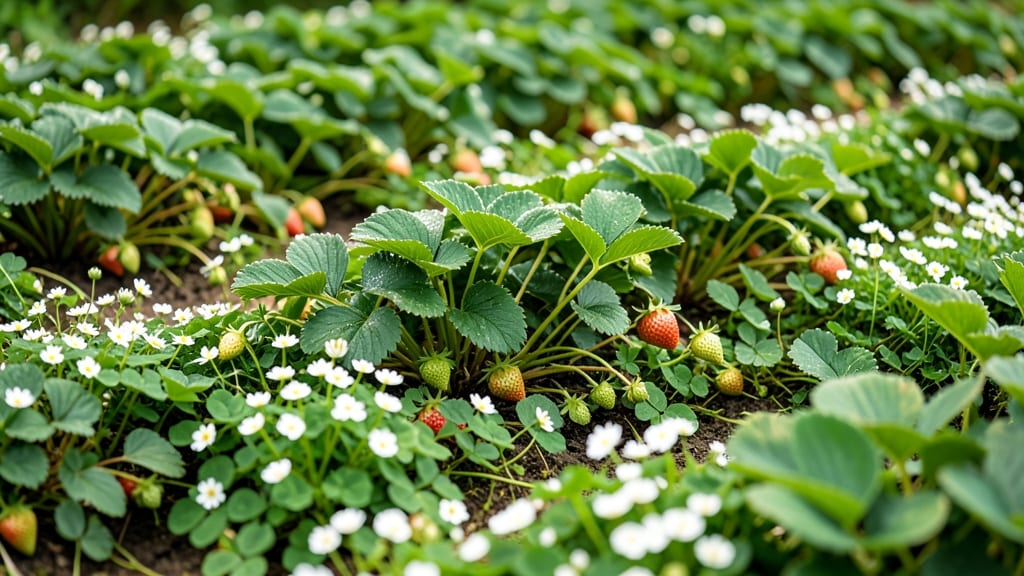
Skip the backbreaking weeding and synthetic fertilizers—strawberries and clover create a self-sustaining ecosystem where the ground cover does the heavy lifting for you. This no-till living mulch system smothers weeds while fixing nitrogen in the soil, giving your berries a nutrient boost without extra work.
Plant white Dutch clover between strawberry rows in early spring, letting it spread naturally. The clover’s deep roots break up compacted soil, while its dense growth blocks sunlight from weed seeds. You’ll still harvest plenty of strawberries—just thin the clover slightly in late summer to prevent competition. This method works best in full sun to partial shade and thrives in well-draining soil.
Organic gardeners and permaculture enthusiasts will love this low-maintenance approach, as it eliminates tilling while building soil fertility over time. Your strawberries will reward you with sweeter fruit and fewer pests—all while creating a lush, green carpet. 🌱
Strawberry And Calendula Cut-Flower Mix
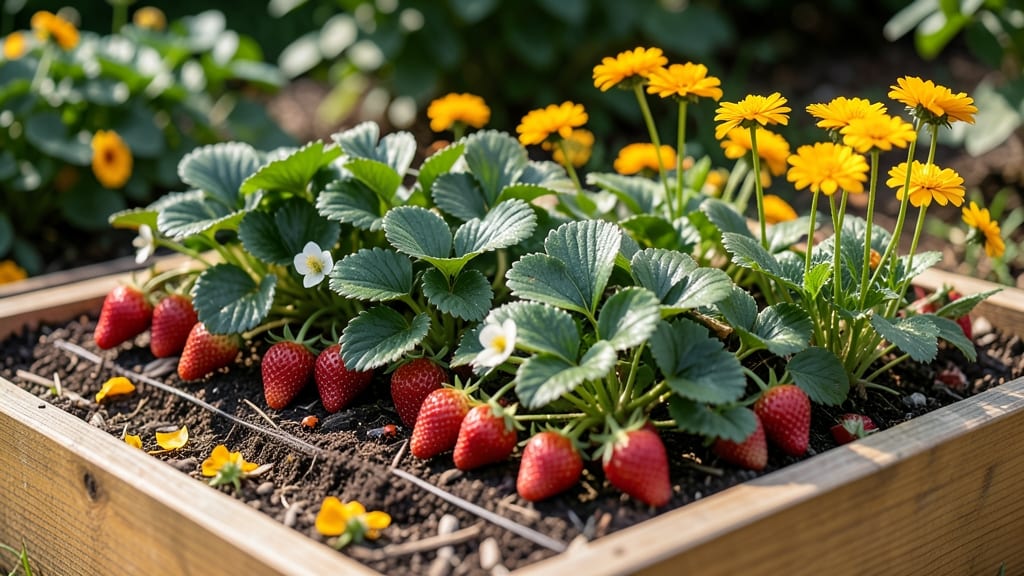
Want a garden bed that doubles as both a fruit patch and a bouquet source? A strawberry and calendula mix delivers year-round beauty and harvests—without sacrificing either. The bright yellow calendula blooms last for weeks in vases while attracting ladybugs and hoverflies that keep pests away from your strawberries.
Plant calendula around the edges of your strawberry bed, spacing them 12-18 inches apart to avoid shading the fruit plants. Both thrive in full sun to partial shade and prefer well-draining soil. Calendulas self-seed generously, so you’ll get fresh blooms year after year with minimal effort—just deadhead spent flowers to encourage more production.
This combo is perfect for gardeners who love cut flowers but don’t want to dedicate separate space to them. The cheerful blooms add a pop of color to your harvest baskets while supporting pollinators, making it a win-win for both your table and the ecosystem. 🌻
Strawberry And Chive Perennial Border
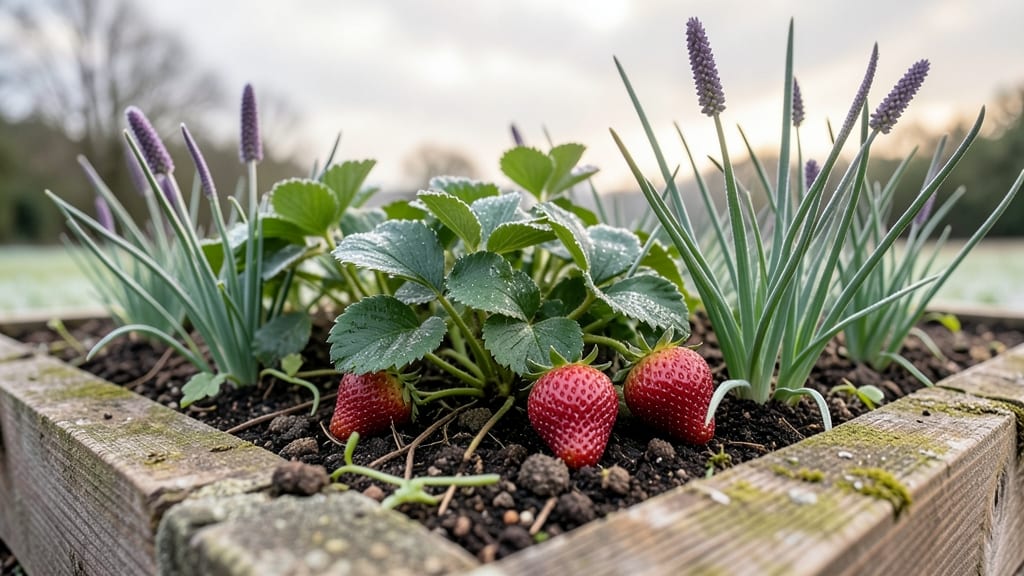
If you're in a northern climate where frost lingers late into spring, this cold-hardy duo delivers flavor and function before most gardens even wake up. Plant strawberries alongside chives to create a fragrant, pest-deterring border that thrives in early spring conditions—when many other plants are still dormant.
The mild onion scent of chives naturally repels slugs, aphids, and even deer, while their purple blooms add striking vertical interest. You'll also get a bonus harvest: snip chive leaves to sprinkle over strawberries for a subtle, onion-garlic flavor that enhances their sweetness. This pairing works best in full sun to partial shade and requires minimal maintenance once established.
Perfect for gardeners who want a low-effort perennial border that doubles as both a decorative edge and a productive food source. 💚
Strawberry And Basil Container Garden

Turn your tiny balcony or windowsill into a dual-purpose harvest with this strawberry and basil container combo. The aromatic basil not only repels flies that plague ripe berries but also enhances their sweetness—making each bite more flavorful while keeping pests at bay.
Use a wide, shallow container (at least 12 inches deep) with well-draining soil and place it where both plants get 6-8 hours of sun daily. Space 3-4 June-bearing strawberry plants around the edges and tuck 6-8 basil plants in the center. The basil’s shade helps prevent strawberries from overheating, while its strong scent masks the fruit’s natural attractants to flies.
This setup is perfect for urban gardeners or anyone with limited space who wants fresh produce and pest control without chemicals. Plus, you’ll have homegrown pesto ingredients ready when the strawberries are ripe! 🌱