
Planting
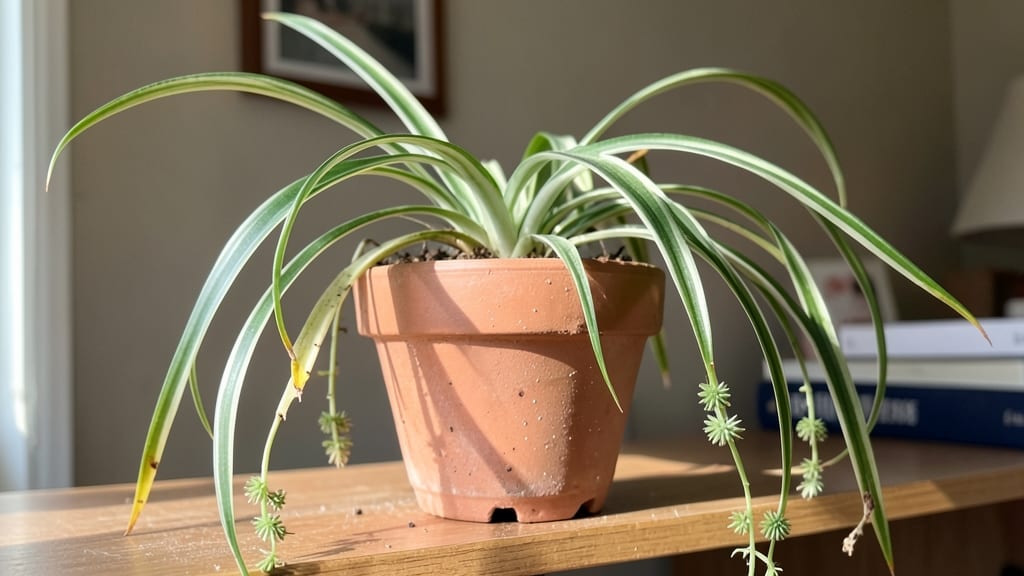
As a spider plant perennial, it thrives indoors year-round but can survive outdoors only in USDA zones 9-11. In colder regions, winter protection or indoor relocation is essential to prevent frost damage and maintain spring regrowth.
This hardy houseplant earns its perennial classification because it lives for multiple years, producing new foliage and offsets (baby plants) season after season. 🌱 Unlike annuals that die after one growing cycle, spider plants continue growing indoors indefinitely, while outdoor varieties in warmer climates return each spring with minimal care.
The key to their longevity lies in their adaptability—whether basking in bright indirect light or thriving under fluorescent bulbs.
For outdoor growers in zones 9-11, winter isn't a concern, but those in colder areas must act before temperatures drop below 32°F. Moving potted plants indoors or insulating garden beds with mulch creates a protective barrier against frost.
I've seen spider plants bounce back beautifully after winter dormancy when given proper shelter—just watch for brown leaf tips, which signal stress from cold exposure.
💡 In This Article
- Spider Plant Lifespan and Growth Cycle Explained
- Winter Survival Guide for Outdoor Spider Plants
Spider plant lifespan and growth cycle explained
Here's what makes spider plants true perennials: their ability to regenerate through underground rhizomes and produce new growth annually. Unlike annuals that complete their life cycle in one season, spider plants (Chlorophytum comosum) develop a network of fibrous roots that store nutrients year-round.
This allows them to push out fresh leaves continuously indoors or resume growth each spring outdoors in warm climates. Their growth cycle typically follows a 3-4 month leaf production window, where each mature plant can generate 4-6 new leaves during peak seasons.
The key to their perennial nature lies in their photosynthetic efficiency. Spider plants operate with C3 photosynthesis, meaning they convert sunlight to energy even under moderate light conditions (about 1,000-3,000 foot-candles).
This adaptability explains why they thrive indoors under fluorescent lighting while still producing offsets (baby plants) that can be propagated. What most people don't realize is that these offsets are actually clonal replicates of the mother plant, ensuring genetic consistency while expanding the colony. 🌿
In colder climates where outdoor growth isn't possible, spider plants enter a dormant phase during winter months. This isn't true dormancy like bulbs, but rather a slowed metabolic state where they conserve energy.
The plant's leaves may grow more slowly or even stop entirely when temperatures drop below 50°F, but the rhizome system remains active underground. This explains why indoor spider plants can live for decades with proper care—some specimens in botanical gardens exceed 10 years of continuous growth.
Comparing spider plants to true annuals reveals their botanical advantage. Annuals like marigolds complete their entire lifecycle in one season, producing seeds before dying. Spider plants, however, allocate energy to both foliage and reproduction simultaneously.
Their offsets develop at leaf axils, creating a continuous propagation system that ensures survival through multiple growing seasons. This dual growth strategy is why they're classified as perennials despite their common use as houseplants.
What sets spider plants apart from other perennials is their flexible growth pattern. While many perennials have distinct dormant periods, spider plants can maintain active growth year-round indoors. Outdoors in zones 9-11, they experience natural seasonal cycles but still produce new leaves during mild winters.
The plant's ability to thrive in both scenarios—continuous indoor growth or seasonal outdoor cycles—demonstrates its remarkable adaptability as a perennial species.
The science behind their longevity involves their crassulacean acid metabolism (CAM) pathway, which allows them to store water and photosynthesize efficiently. This trait, combined with their ability to propagate through offsets, creates a self-sustaining system that explains why spider plants can live for years with minimal intervention.
Even when leaves yellow and die back (a natural process), the rhizome system remains viable, ready to produce new growth when conditions improve. 💫