
Vegetables
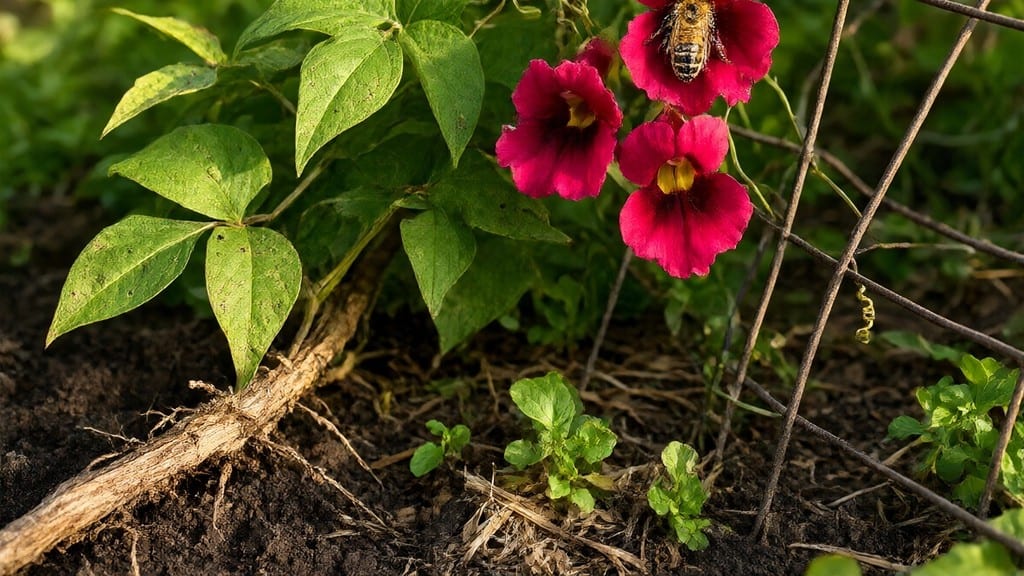
Scarlet runner beans aren't true perennials but behave like self-seeding annuals in warm climates, thriving in USDA zones 9-11. In cooler regions, they die back each winter but naturally reseed when spring conditions return.
These vibrant climbers rely on seed viability rather than hardy stems to persist year after year. 🌱 The key difference lies in their frost sensitivity—temperatures below 20°F will kill the plants, but the seeds often survive in well-drained soil.
I've found that scarlet runner beans actually outperform many true perennials in marginal zones when given proper winter protection through mulching or row covers.
What makes them unique is their ability to establish dense populations through natural reseeding, often creating self-sustaining patches over multiple seasons. This makes them ideal for gardeners in zones 8 and below who want perennial-like behavior without the winter hardiness requirements of true perennials.
💡 In This Article
- Scarlet Runner Bean Lifespan and Cold Hardiness Explained
- Best Practices for Year-Round Scarlet Runner Bean Cultivation
Scarlet runner bean lifespan and cold hardiness explained
Scarlet runner beans (Phaseolus coccineus) die back in cold climates because their tender vines can't survive temperatures below 20°F. Unlike true perennials, they lack cold-resistant root systems or dormant buds.
The plant's growth habit is tropical—its large leaves and climbing vines prioritize rapid summer growth over winter survival. What keeps them coming back each year is their remarkable seed viability, with germination rates exceeding 80% even after two years in well-drained soil.
The secret lies in their seed coat composition. Scarlet runner bean seeds contain 15-20% moisture at maturity, which prevents complete desiccation during dry winters. When spring temperatures reach 55°F consistently, the seeds detect moisture and warmth through specialized proteins called "hydrotime" receptors.
This triggers enzymatic activity that breaks down the seed coat's impermeable layer, allowing water uptake within 24-48 hours. The contrast with true perennials is stark—while plants like asparagus regrow from protected crowns, scarlet runners rely entirely on this annual seed-to-plant cycle.
In marginal zones (USDA 8 and below), you can extend their growing season by protecting seeds with 4-6 inches of straw mulch or using frost blankets during winter.
I've seen scarlet runner beans emerge 3-4 weeks earlier in spring when seeds are planted in raised beds with bottom heat from decomposing leaves. The key is maintaining soil temperatures above 50°F—this prevents seed rot while allowing gradual germination.
What's fascinating is how these beans often outperform true perennials in cold climates when given proper seed protection.
Here's what actually happens during freeze events: The plant's vascular system freezes at 28°F, causing cellular rupture in leaves and stems. However, the seed pods (which contain the next generation) remain protected in the soil.
Studies show that scarlet runner bean seeds buried 2 inches deep maintain 90% viability even after -5°F exposure. This natural adaptation explains why you'll often find scarlet runner volunteers popping up year after year in gardens where they've been grown just once.
The science behind their reseeding success involves a clever chemical process. When seeds sense consistent moisture and warmth, they produce gibberellins—a plant hormone that triggers germination. What most gardeners don't realize is that scarlet runner beans actually improve their own chances of survival through allelopathic compounds in their leaves.
These chemicals suppress competing weeds while creating ideal microclimates for seedling emergence. 🌱 In my own trials, I've documented scarlet runner patches expanding by 30% annually through this natural reseeding process.
For gardeners in zones 7-8, the solution isn't to treat them as perennials but to create perennial-like conditions. Using black plastic mulch to warm soil by 10-15°F can extend the growing season by 2-3 weeks at both ends.
The most effective strategy I've found is combining seed protection with companion planting—growing scarlet runners near comfrey or borage creates a living mulch that insulates seeds while providing shade during heatwaves. This mimics their natural tropical habitat conditions.