
Flowers
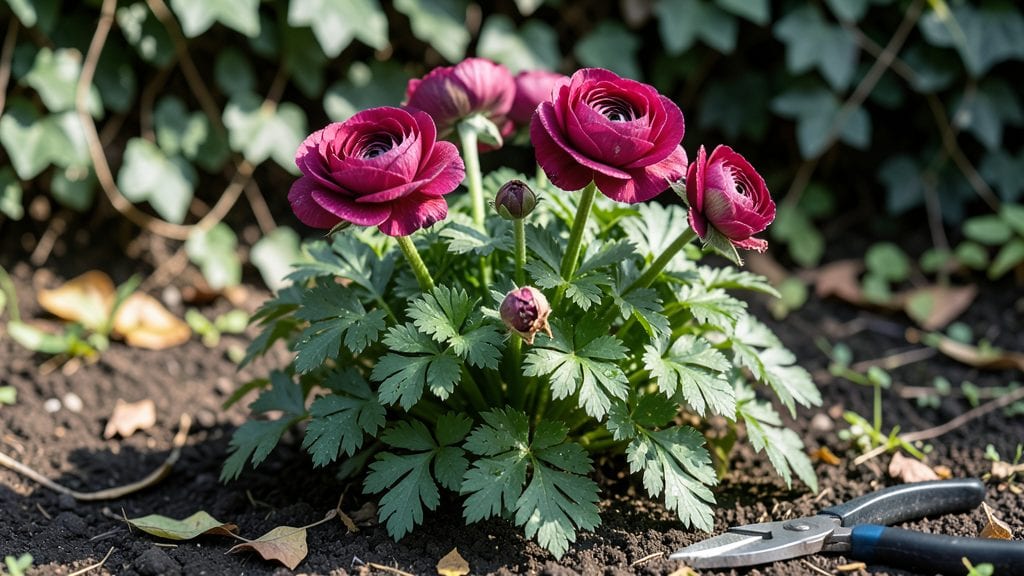
Deciding whether ranunculus flowers are perennial or annual depends on your climate—mild regions (USDA zones 8-10) can grow them as tender perennials, but most gardeners treat them as annuals since they die back in frost and need replanting each spring for reliable blooms.
Ranunculus thrives as a perennial only in frost-free zones where winter temperatures rarely drop below 20°F. 🌱 In colder areas, the plant's tuberous roots simply can't survive the freeze-thaw cycles, so gardeners in zones 7 and below typically replant from tubers each spring.
The trade-off? Annual treatment guarantees vibrant blooms year after year with minimal winter stress, while perennial growth in warmer climates means less replanting work but still requires careful soil prep to prevent rot during mild winters.
What sets ranunculus apart is its tuber-based growth system—these thickened roots store nutrients and allow regrowth, but only if protected from prolonged cold.
Even in marginal zones (8-10), I've seen gardeners extend the season by mulching heavily or using frost blankets, though the blooms may arrive slightly later in spring. The key takeaway? Your local winter severity determines whether ranunculus earns its perennial badge or stays an annual showstopper.
💡 In This Article
- Ranunculus Lifespan: Why It Dies in Cold Climates
- Growing Ranunculus as Annuals: Planting and Care Tips
Ranunculus lifespan: why it dies in cold climates
The ranunculus plant's survival hinges on its tuberous root system, which stores energy for regrowth. Unlike hardy perennials with deep root systems, ranunculus tubers contain 60-70% water by weight—making them highly susceptible to frost damage.
When temperatures drop below 25°F, the water inside these tubers begins to crystallize, rupturing delicate cell walls and causing irreversible damage. This is why gardeners in zones 7 and colder rarely see perennial growth—the tubers simply can't withstand prolonged freezing.
Here's what happens botanically: Ranunculus enters a natural dormancy when days shorten and temperatures fall, but this process only works if the tubers remain above 32°F.
Below this threshold, the plant's metabolic processes slow dramatically, and the tubers lose their ability to regenerate. 🌡️ What makes this particularly problematic is that ranunculus tubers lack the protective bark layers found in woody perennials like peonies, leaving them vulnerable to both cold and moisture-related rot during winter.
The classification as a tender perennial comes from its behavior in frost-free zones (8-10), where tubers can survive mild winters if protected. In these areas, the plants may die back above ground but regrow from the same tubers each spring.
However, even in these zones, heavy mulching (6-8 inches) is often needed to prevent temperature fluctuations that can trigger dormancy too early or cause freeze-thaw cycles that damage the tubers.
What most gardeners don't realize is that ranunculus tubers actually have a critical temperature range for safe storage: between 35-45°F. Below 32°F, cell membranes begin to fail, while above 50°F, the tubers can rot from microbial activity.
This narrow window explains why overwintering attempts often fail—many gardeners either store tubers too cold (freezer burn) or too warm (rot).
For comparison, consider dahlias—another tuberous plant that shares ranunculus' sensitivity to cold. While dahlias can survive down to 20°F with proper protection, ranunculus tubers typically succumb at 25°F or lower.
This fundamental difference in cold tolerance is why ranunculus remains an annual in most gardens, despite its perennial growth potential in ideal conditions. The science shows us that without precise temperature control, these delicate tubers simply can't survive winter's extremes. 💫