
Tools
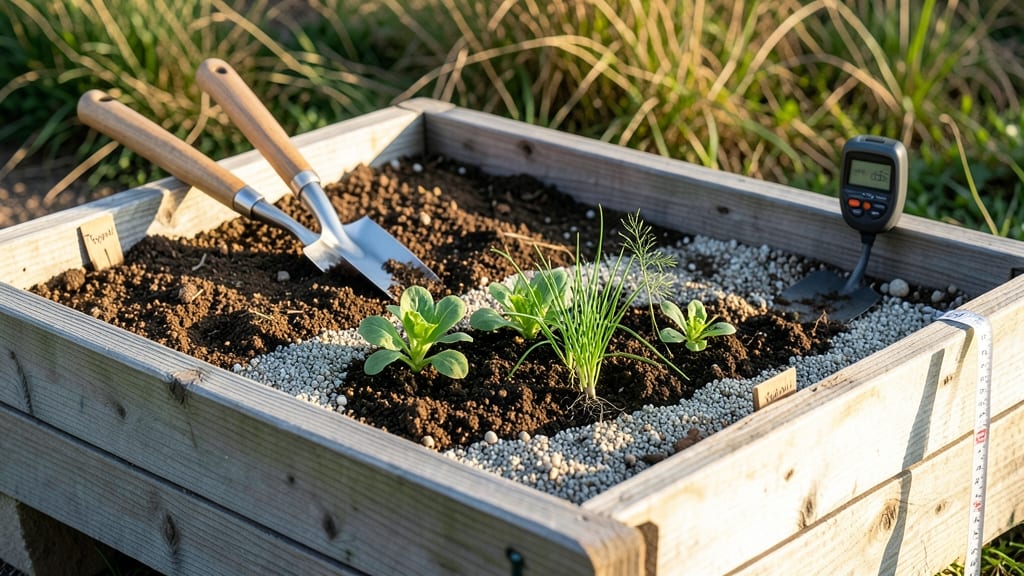
Getting the right raised garden bed soil depth is the difference between lush plants and struggling seedlings—because what happens below ground sets the stage for everything above.
Struggling with stunted plants or poor root development in your raised garden beds? The secret to thriving crops lies beneath the surface—in the science of soil depth that supports strong root zones.
Too shallow, and your deep-rooted veggies like tomatoes or carrots will fight for space. Too deep, and you waste soil, money, and effort. The ideal depth depends on what you’re growing, but most gardeners need 6 to 12 inches of quality soil to get it right.
In this guide, I’ll break down the exact soil depths for vegetables, herbs, and flowers, how to adjust for different bed materials, and the common mistakes that sabotage root growth before they even start.
Optimal raised garden bed soil depth by plant type: root-zone science
When planning your raised garden beds, soil depth isn't just about how much dirt you shovel in—it's the foundation for your plants' root development and overall health. Too shallow, and your tomatoes will struggle to anchor; too deep, and you're wasting space and resources.
The key lies in matching the soil depth to each plant's root system requirements, which directly impacts their ability to absorb nutrients and water.
Most gardeners assume a one-size-fits-all approach, but shallow-rooted herbs like basil or deep-rooted vegetables like carrots have wildly different needs. For instance, lettuce thrives in just 6 inches of soil, while asparagus demands 12+ inches to establish its robust root system.
Understanding these differences ensures your raised beds become a thriving ecosystem rather than a battleground for struggling plants.
Here's the science: Root zones need three critical things—oxygen for respiration, moisture for nutrient transport, and stability to anchor the plant. A well-structured raised bed with proper depth provides all three.
Without it, you risk compacted soil, poor drainage, or roots circling at the bottom instead of growing downward—leading to stunted growth and weak stems.
| Plant Type | Min Soil Depth | Ideal Depth | Root System | Drainage Needs |
|---|---|---|---|---|
| Leafy Greens (Lettuce, Spinach) | 6 inches | 8-10 inches | Shallow, fibrous | Fast-draining |
| Herbs (Basil, Parsley, Chives) | 6 inches | 8-12 inches | Moderate, spreading | Well-draining |
| Root Vegetables (Carrots, Beets, Radishes) | 10 inches | 12-18 inches | Deep, taproot | Loose, stone-free |
| Fruiting Plants (Tomatoes, Peppers, Cucumbers) | 12 inches | 18-24 inches | Deep, extensive | Moderate, mulched |
| Flowers (Marigolds, Zinnias, Sunflowers) | 6 inches | 10-12 inches | Moderate, fibrous | Well-draining |
| Perennials (Asparagus, Rhubarb) | 12 inches | 18+ inches | Very deep, woody | Rich, organic |
For shallow-rooted plants like lettuce or herbs, a 6- to 10-inch soil depth is perfect. Their roots spread horizontally, so depth isn't as critical as soil quality. Focus on loose, nutrient-rich soil that encourages lateral growth.
I’ve found that adding a layer of compost at the bottom helps retain moisture while preventing compaction—ideal for these quick-growing crops.
On the other hand, deep-rooted vegetables like carrots or asparagus demand 12+ inches of soil to avoid stunted growth. Their roots grow downward to access moisture and nutrients, so shallow beds force them to crowd at the surface.
I once tried growing carrots in a 10-inch bed and ended up with forked, misshapen roots—until I deepened the bed to 16 inches
How to adjust soil depth for different raised garden bed materials
Not all raised garden beds are created equal—and neither are their soil depths. The material you choose for your bed—whether it's cedar wood, galvanized metal, or fabric-lined containers—directly impacts how much soil you can use and how you should adjust it.
For example, a wooden raised bed might naturally hold more soil than a thin metal trough, but all beds can benefit from strategic layering to maximize root space.
If your current bed isn't providing enough depth for your plants—or if you're working with limited space—don't worry. With a few simple adjustments, you can create the perfect root zone for even your deepest-rooted crops.
The key lies in understanding how to layer materials, integrate compost, and troubleshoot common depth-related issues.
- 1 Wooden beds: Add 6-12 inches of compost-rich soil on top of existing layers. Use cardboard barriers to contain soil if needed.
- 2 Metal beds: Install internal dividers to create deeper pockets. Mix in perlite or vermiculite to lighten heavy soils.
- 3 Fabric beds: Use heavy-duty landscape fabric to prevent soil loss, then top with 4-6 inches of mulch to retain moisture.
- 4 Shallow beds: Plant shallow-rooted crops (like lettuce or radishes) and use container gardening for deeper needs.
- 5 Too-deep beds: Add organic matter (like straw or leaves) to fill gaps and improve aeration.
For wooden raised beds, you can often add extra soil depth by simply layering new soil on top of the existing base. Start with a 4-inch layer of coarse material, like branches or twigs, to improve drainage, then add a 6-inch layer of compost.
This creates a nutrient-rich environment while preventing compaction. If your bed is too shallow for deep-rooted plants like tomatoes, consider installing internal dividers made from untreated wood or plastic to create separate planting zones.
Metal raised beds, on the other hand, are often shallower due to their lightweight construction. To compensate, use internal dividers or pockets to segment the bed into deeper sections. Mixing in perlite or vermiculite can also help lighten heavy soils, making them easier for roots to penetrate.
For fabric-lined beds, focus on retaining moisture by adding a 4-6 inch layer of mulch on top of the soil. This not only conserves water but also prevents soil erosion.
If your bed is too shallow for the plants you want to grow, don't despair. You can still achieve great results by focusing on shallow-rooted crops, such as lettuce, spinach, or herbs. For deeper-rooted plants, consider using container gardening alongside your raised bed.
For example, grow carrots or potatoes in large pots placed within the bed, giving them the depth they need without altering the bed's structure.
On the flip side, if your raised bed has too much depth, you can fill the extra space with organic matter, like straw, leaves, or even shredded newspaper. This not only improves aeration but also adds valuable nutrients to the soil over time.
Just be sure to mix it well to avoid creating pockets of air or waterlogged areas.
Remember, the goal is to create a balanced root zone that supports healthy plant growth. Whether you're adjusting for material constraints or optimizing for specific crops, these techniques will help you make the most of your raised garden bed—no matter what it's made of. Happy gardening! 🌱