
Landscaping
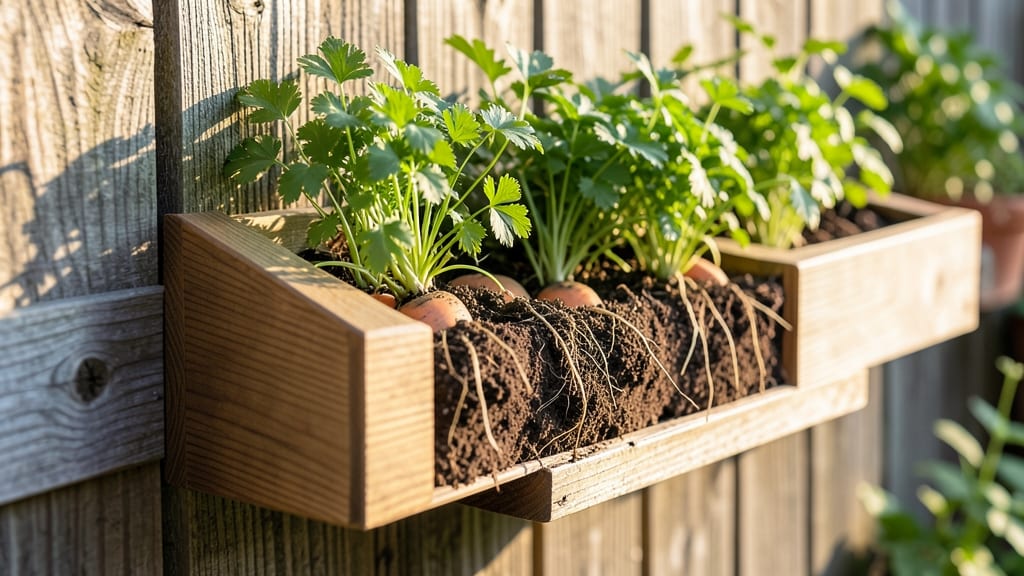
Maximizing small spaces while adding privacy and beauty? These 10 creative raised garden bed designs along fences transform narrow areas into productive, sunlit growing zones that enhance your outdoor space.
Tiered Vertical Garden Along Chain Link
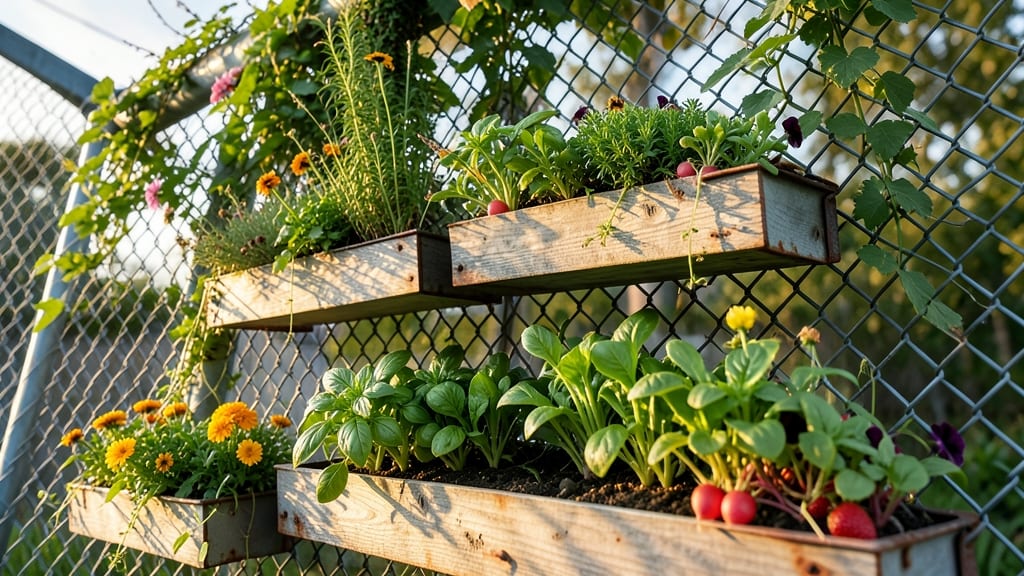
Transform your chain link fence into a privacy-boosting vertical garden without sacrificing sunlight or space. This tiered design turns an otherwise overlooked area into a lush, multi-level growing zone perfect for herbs, flowers, and shallow-rooted veggies like lettuce, radishes, and strawberries.
Start with a wooden or metal frame attached directly to the fence, creating 3-4 shelves at varying heights. Use lightweight, well-draining soil in each tier to accommodate plants with different water needs. Trailing plants like nasturtiums or creeping thyme soften the look while adding color, while compact basil or chives thrive in the upper layers. The staggered design ensures even sunlight exposure and easy access for harvesting.
Urban gardeners with limited space will love this solution—it maximizes growing area while adding a living privacy screen that softens the industrial look of chain link. Plus, the modular design lets you expand or rearrange tiers as your plants grow. 🌱
L-Shaped Corner Garden Bed Design
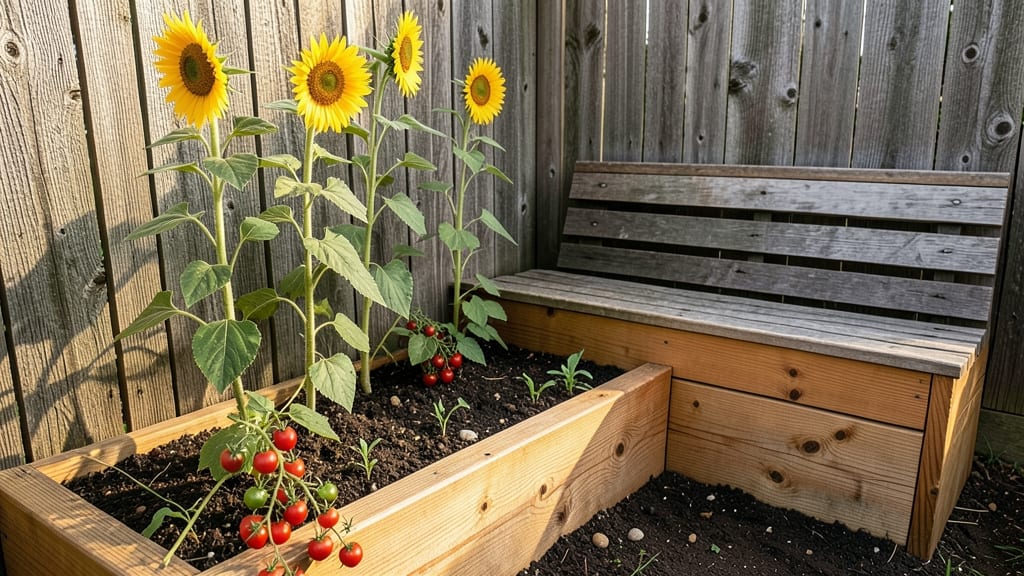
Turn that awkward corner of your yard into a functional garden oasis with an L-shaped raised bed that hugs your fence. This design isn’t just space-efficient—it creates a built-in seating nook while maximizing vertical growing space for sun-loving plants like sunflowers and compact cherry tomatoes.
Build the bed with cedar or composite lumber to resist rot, and position it so the long side runs along the fence while the short side extends into the corner. Plant tall varieties (like sunflowers or pole beans) along the fence side to maximize sunlight exposure, and tuck shorter plants (bush beans, marigolds) in the inner curve. Add a simple wooden bench along the inner edge to create a cozy spot for morning coffee or afternoon reading.
This design works beautifully for urban gardeners with limited space or anyone who wants to blend functionality with aesthetics. It’s also beginner-friendly, requiring minimal tools and offering quick visual rewards. 🌻
Privacy Screen with Edible Hedges
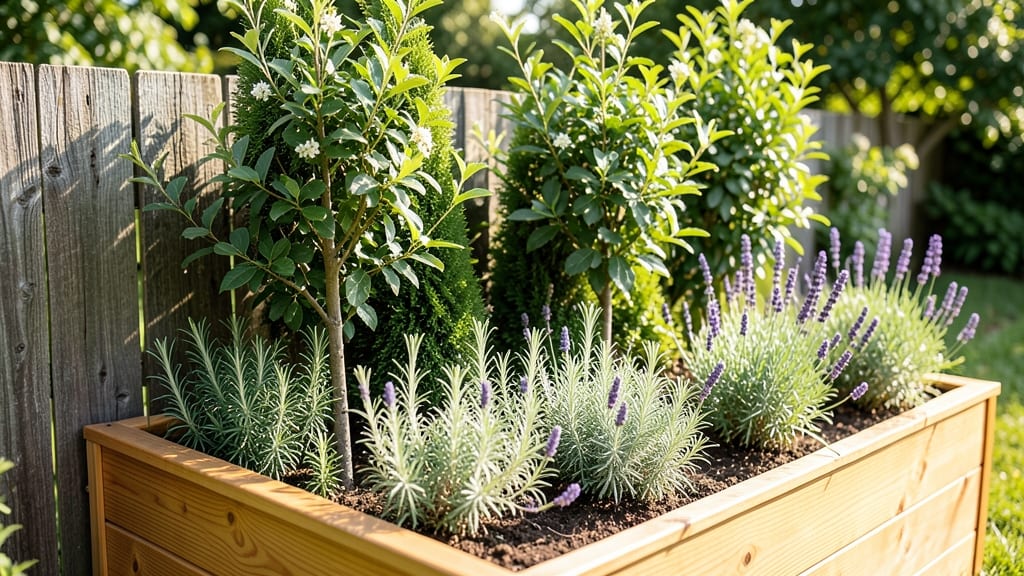
Turn your fence line into a functional, fragrant, and food-producing privacy screen with a dual-purpose edible hedge. Instead of traditional privacy plants, opt for rosemary, lavender, or dwarf fruit trees like columnar apples or pears—these create a lush, aromatic barrier while giving you fresh harvests.
Plant rosemary and lavender in a staggered pattern for a dense, evergreen screen that blooms with purple flowers. Dwarf fruit trees like 'Columnar Apple' or 'Patio Pear' grow vertically, offering shade and fruit without taking up extra space. Space plants 12-18 inches apart for full coverage, and prune lightly after harvest to maintain shape. This design thrives in full sun to partial shade and works beautifully in cedar or metal raised beds for durability.
Perfect for urban gardeners or anyone with limited space, this approach eliminates the need for separate privacy screens while adding value to your harvest. Plus, the fragrant foliage doubles as a natural pest deterrent. 🌿
Arched Trellis Raised Bed Combo
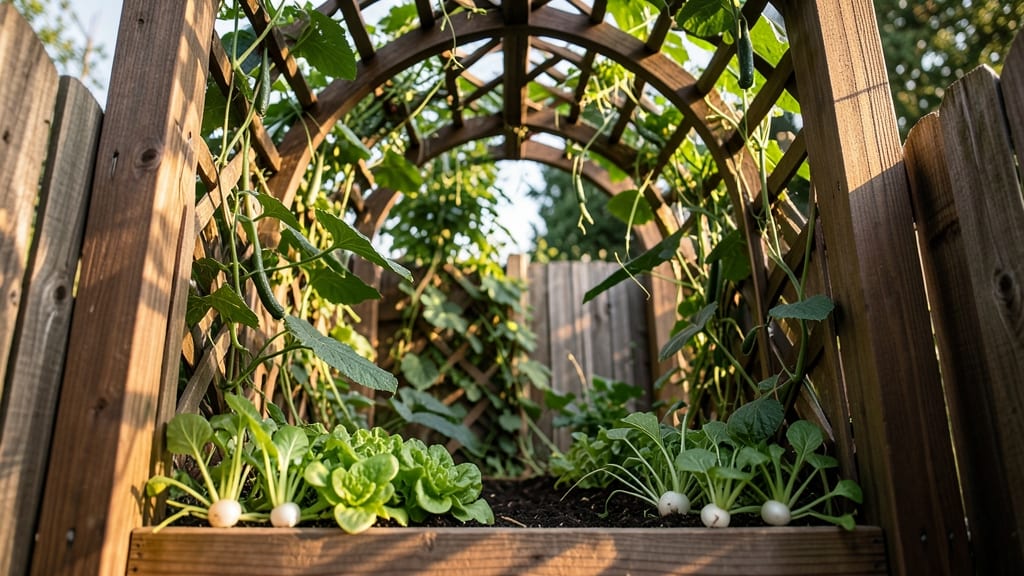
Transform your narrow fence line into a whimsical, productive living archway with an arched trellis raised bed combo. This design marries climbing vines like cucumbers and pole beans with low-growing companions such as lettuce or radishes, creating a vertical garden that adds height, texture, and a fairy-tale charm to your space.
Install a curved trellis along the back of your raised bed, then plant fast-growing vines at the base to climb upward. Pair them with shade-tolerant greens like spinach or arugula at the front, which thrive in the dappled sunlight filtering through the foliage. For extra drama, add morning glories or nasturtiums to cascade over the arch. This combo works best in full sun to partial shade and requires minimal maintenance—just prune vines regularly to encourage upward growth.
Ideal for small urban yards or suburban backyards, this design maximizes limited space while creating a stunning focal point that doubles as a harvest. The vertical growth also improves airflow, reducing pest issues for your crops. 🌻
Slatted Wooden Privacy Fence Planter
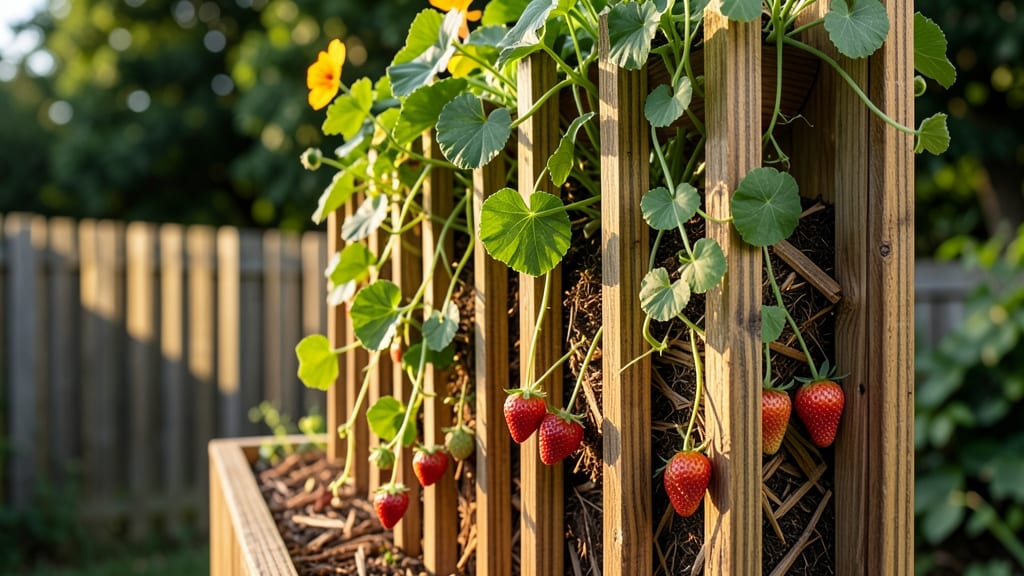
Skip the traditional fence and go for a living privacy barrier with this innovative slatted cedar planter design. Instead of solid panels, these vertical slats create a permeable screen where trailing plants like nasturtiums or strawberries spill through the gaps, blending beauty with function. The natural airflow prevents mold while still blocking unwanted views.
Construct the planter using cedar slats spaced 3-4 inches apart, allowing roots to grow through while creating a lush, organic look. Plant fast-growing nasturtiums for vibrant blooms or everbearing strawberries for edible privacy. Water from the top ensures even moisture distribution, and the vertical design maximizes space in narrow yards. This system thrives in full sun to partial shade and requires minimal maintenance beyond occasional pruning.
Perfect for urban gardeners or anyone with limited space, this design transforms an ordinary fence into a productive, decorative feature that grows with your plants. The rustic cedar adds natural charm while the edible plants give you a harvest. 🌻
Retaining Wall Garden Bed Hybrid
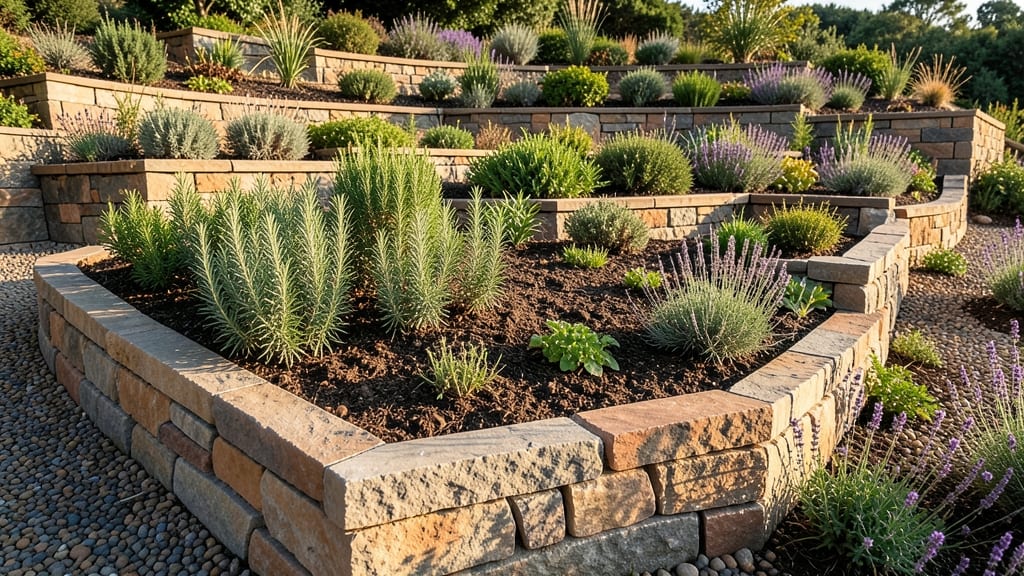
If your yard battles erosion or awkward slopes, a retaining wall garden bed hybrid turns a problem area into a productive, terraced paradise. This clever combo stabilizes soil while creating layered growing zones—ideal for plants with varying sun and water needs, from drought-tolerant rosemary to moisture-loving lettuce.
Build with stacked stone or cedar blocks to create 2-3 terraced levels, filling each with well-draining soil tailored to your plants. Place tall peppers or sunflowers at the back for sun access, medium-height herbs like basil in the middle, and low thyme or strawberries along the front edge. The cascading design prevents soil runoff while adding visual drama—perfect for sloped backyards or hillsides.
This solution is a game-changer for eco-conscious gardeners or those with erosion-prone yards, offering both functional beauty and long-term soil protection. Plus, the layered structure makes weeding and harvesting easier than flat beds. 🌿
Hanging Basket Rail System
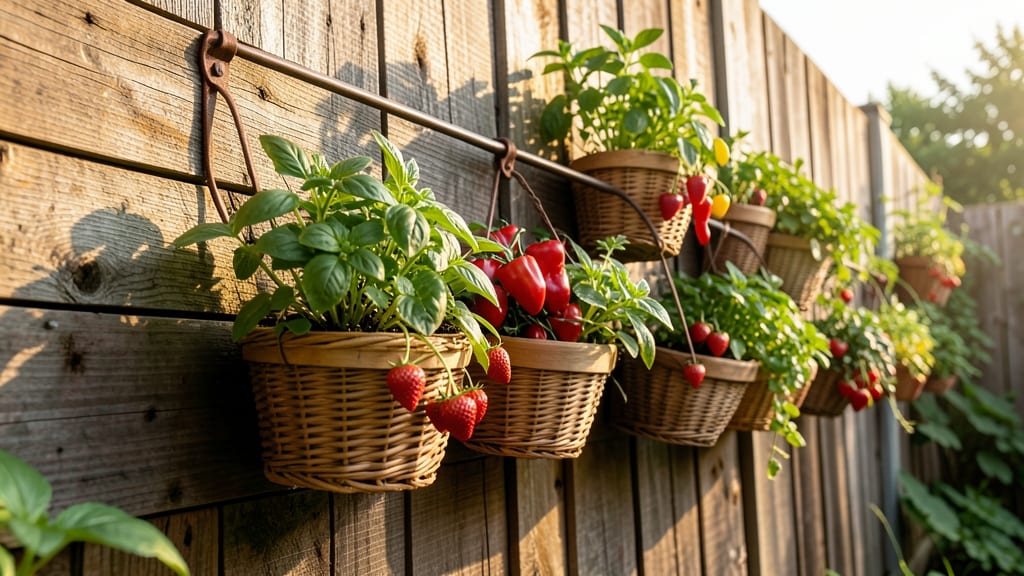
Turn your fence rails into a multi-level growing zone without sacrificing ground space. A hanging basket rail system lets you add herbs, peppers, and strawberries to your existing fence line, perfect for balconies, patios, or narrow yards where traditional beds won’t fit.
Install sturdy metal or cedar rails along your fence, then attach lightweight baskets with macramé hangers or wire hooks. Choose trailing strawberries for sweet summer harvests, compact pepper varieties like 'Shishito' for vertical growth, or herbs like thyme and oregano that thrive in small pots. Watering is easy—just place baskets on a drip irrigation line or use self-watering planters to keep roots consistently moist.
This system is ideal for renters, urban gardeners, or anyone with limited square footage. It maximizes sunlight exposure while keeping plants within easy reach, and you can swap out baskets seasonally for flowers or seasonal veggies. 🌱
Living Green Wall Planter
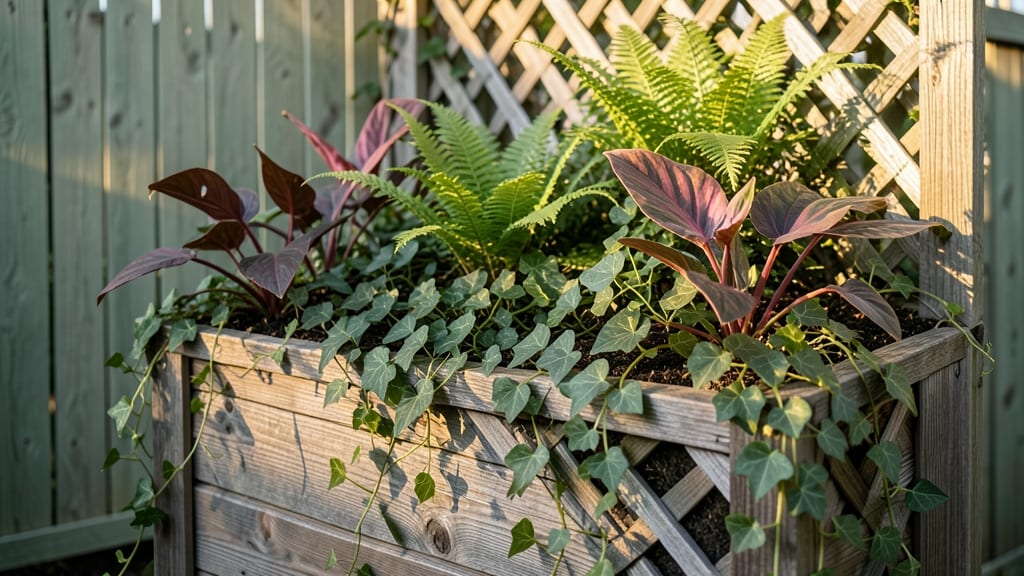
Create a serene, sound-dampening retreat with a living green wall planter—a deep raised bed with a lattice back panel designed to cultivate dense, lush foliage like English ivy, Boston ferns, or caladiums. This vertical garden transforms your fence line into a privacy screen that absorbs noise while adding texture and year-round greenery to your space.
Build the frame using cedar or composite lumber for durability, ensuring the bed is at least 12-18 inches deep to accommodate root systems. Install a lattice panel at the back to support climbing plants, then fill with moisture-retentive potting mix enriched with compost. Plant fast-growing ivy at the base and trailing ferns along the lattice for a cascading effect. Water consistently to keep the foliage dense, and fertilize monthly with a balanced liquid feed. This design thrives in partial to full shade, making it ideal for fences that cast afternoon shadows.
Perfect for urban gardeners or anyone seeking a low-maintenance privacy solution, this green wall planter reduces noise pollution while creating a cool, shaded microclimate for your plants. The deep roots also help stabilize soil, preventing erosion near your fence line. 🌿
Mobile Raised Bed on Wheels
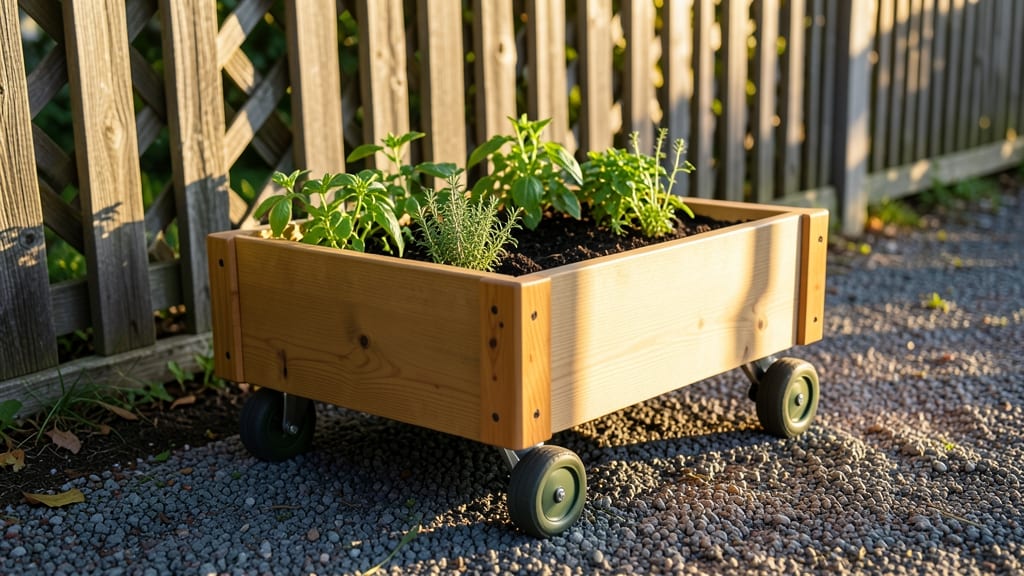
If you’ve ever struggled with changing sunlight patterns or limited space along your fence, a mobile raised bed on wheels is the answer. This compact, portable design lets you move your entire garden in minutes—whether you need to chase the sun, avoid afternoon shade, or protect plants from strong winds. Perfect for renters, small patios, or urban balconies, it turns any spot into a flexible growing zone.
Start with a lightweight frame (cedar or composite lumber) mounted on four sturdy casters for smooth movement. Fill it with a well-draining soil mix and plant sun-loving crops like cherry tomatoes, lettuce, or herbs—these thrive in the bed’s mobility, as you can reposition it daily if needed. For shade lovers, swap in spinach or kale and park the bed under a tree or awning. The key is keeping the bed under 3 feet wide for easy maneuvering, and adding a drip irrigation system to simplify watering while on the move.
This design is a game-changer for renters or gardeners with temporary spaces, as it eliminates the need to dig or permanently install beds. Plus, the portability means you can rotate crops seasonally or protect plants during extreme weather—no tools or heavy lifting required. 💪
Underground Window Box Planter

Tired of sacrificing fence-line space to bulky raised beds? An underground window box planter solves this by burying half its depth below ground—creating a sleek, modern look while giving root crops like carrots and potatoes the room they need to thrive without taking up extra yard space.
Build a rectangular planter with one side flush against your fence, then dig a trench along the back edge to bury half the box. Fill with loose, well-draining soil and plant carrots, beets, or potatoes directly in the buried section, where their roots can spread freely. Top with mulch or gravel for a polished finish, and add fast-growing greens like radishes or lettuce in the upper portion for quick harvests. This design works beautifully in full sun and requires minimal maintenance beyond regular watering.
Perfect for urban gardeners with limited space or anyone who loves minimalist designs, this planter keeps your yard looking clean while maximizing productivity. The semi-buried style also helps regulate soil temperature, giving you healthier crops. 🌱