
Flowers
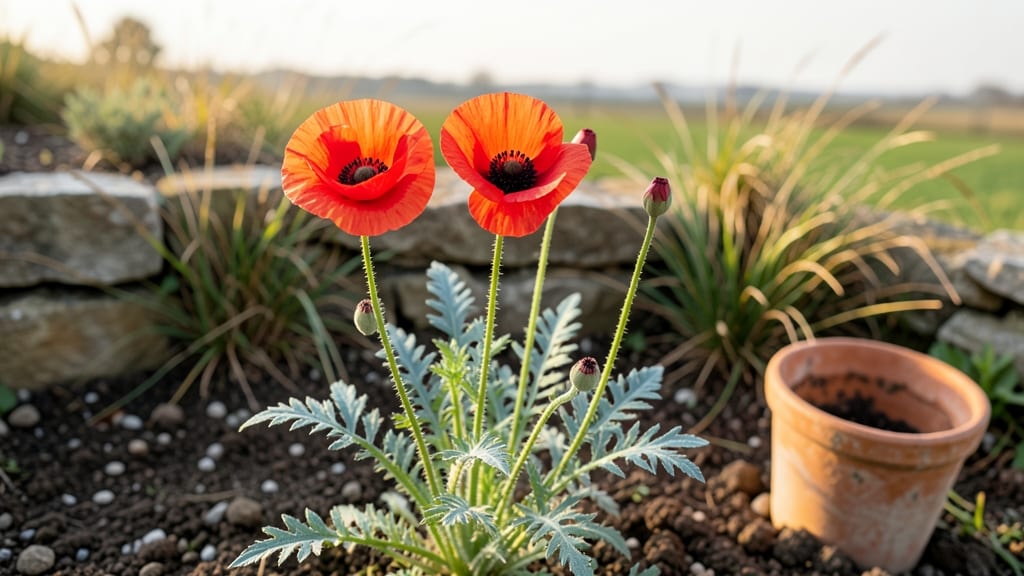
Poppy flowers thrive on their fast-paced life cycle, dedicating all their energy to producing vibrant blooms and seeds within a single season. 🌸 This rapid growth makes them perfect for quick garden transformations, but it also means they won't return year after year from the same plant.
The self-seeding habit of certain varieties—like the cheerful Iceland poppy—can create dense clusters, giving gardeners the impression of perennial behavior when it's actually just nature's way of renewing itself.
Understanding this distinction helps gardeners plan better. Instead of expecting poppies to persist like daylilies or peonies, you can focus on creating ideal conditions for their annual cycle—rich soil, proper sunlight, and timely watering—to maximize their stunning displays each spring and summer.
💡 In This Article
- Why Poppy Flowers Die After One Season
- How to Extend Poppy Blooms in Your Garden
Why poppy flowers die after one season
Poppy flowers follow a biological strategy called monocarpic reproduction, where they allocate nearly all their energy to a single reproductive cycle before dying. This means their entire focus shifts from leaf and stem growth to producing vibrant blooms and seeds within 60-90 days.
Unlike perennials like peonies, which develop deep root systems to survive multiple seasons, poppies invest their resources in rapid above-ground growth and seed production instead. 🌱
The key trigger is daylight length. Poppies are short-day plants, meaning they respond to decreasing daylight hours in late summer or early fall by accelerating their flowering process. This adaptation ensures seeds mature before frost kills the plant.
In contrast, true perennials like daylilies spread energy between seasonal growth and underground storage organs (rhizomes, bulbs) to regenerate each year. Poppies simply don't have this storage capacity—their entire biomass becomes reproductive tissue.
Temperature plays a crucial role too. Poppy seeds germinate best at 55-65°F, and seedlings thrive in cool spring conditions. Once temperatures rise above 75°F, the plants prioritize flowering over vegetative growth, accelerating their life cycle.
This heat sensitivity explains why poppies often bloom and die back by midsummer in warm climates, while cooler regions may see extended displays. The trade-off is striking: poppies sacrifice longevity for explosive seasonal color.
Here's where the self-seeding illusion comes in: varieties like Iceland poppies produce thousands of seeds per plant, which scatter to create next year's crop. What looks like perennial growth is actually a new generation emerging from fresh seeds—not the same plants returning.
This strategy ensures genetic diversity but requires gardeners to actively collect seeds or allow natural dispersal for repeat displays.
Compare this to peonies, which develop woody stems and thick roots that persist through winters. A peony plant can live for decades, producing flowers annually from the same root system. Poppies, by contrast, are ephemeral specialists, designed to dominate a season before passing their torch to the next generation.
Their rapid life cycle makes them perfect for temporary garden displays but requires annual replanting for consistent beauty. 🌸
What most gardeners don't realize is that this annual strategy actually makes poppies more resilient in disturbed environments. Their quick life cycle allows them to colonize bare soil faster than perennials, making them ideal for wildflower meadows or areas recovering from construction.
The trade-off—losing the plant itself—is worth it for the dramatic seasonal impact they create.