
Flowers
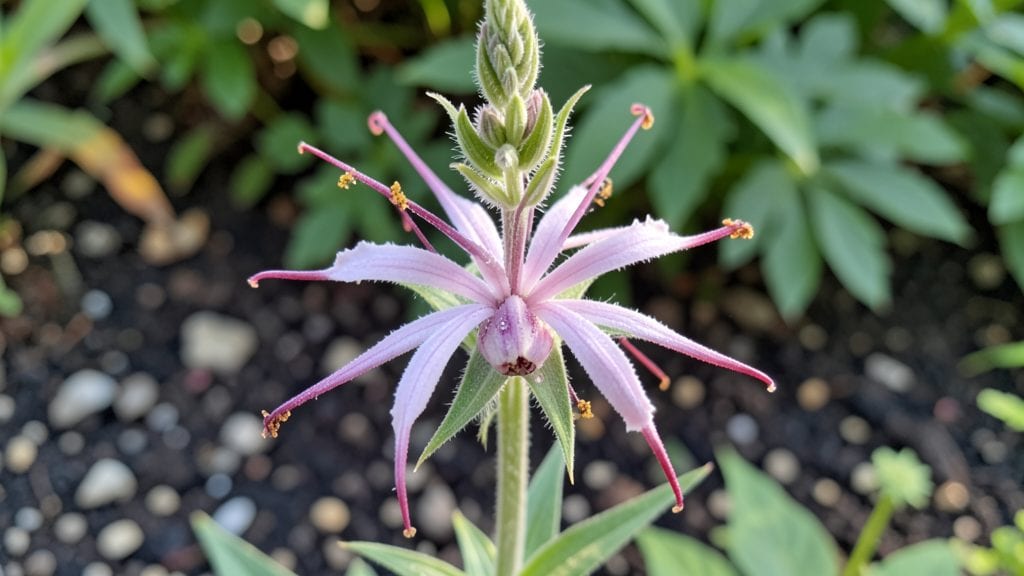
Growing perennial spider flower (Cleome hassleriana) is like inviting a whimsical airbrush artist into your garden—its towering spikes of delicate blooms and spidery seed pods add drama without fuss. 🌿 I’ve watched mine go from floppy seedlings to 5-foot-tall statement pieces in just three months, even in partial shade where other plants struggle.
The key? Rich, well-draining soil and a spot where it won’t get blasted by wind—these plants lean hard when they’re happy.
Spider flowers are surprisingly adaptable, thriving in full sun to partial shade, making them perfect for borders, cottage gardens, or even container pots. They’re drought-tolerant once established but reward consistent moisture with lush foliage and nonstop blooms from mid-summer to frost.
The trick is to deadhead spent flowers—it keeps them flowering longer and prevents those iconic seed pods from popping up everywhere (yes, they’re cute, but they’re also invasive if you’re not careful).
What you’ll love most is how effortless they are. No staking needed—their wiry stems hold their own, and they’re practically pest-proof. Deer and rabbits leave them alone, and diseases rarely touch them. By late summer, your garden will be buzzing with bees and butterflies, all drawn to the nectar-rich blooms.
The only real challenge? Deciding whether to save seeds for next year or let the birds have first dibs on those quirky pods.
Whether you’re filling a sunny border or adding height to a shady corner, spider flowers deliver bold, airy texture that no other perennial quite matches. Start with seeds in early spring or transplant young plants, and you’ll have a garden centerpiece that’s as tough as it is beautiful.
Ready to grow yours?
📚 In This Guide
- What you need
- Instructions
- Tips and common mistakes
- Wrapping up and next steps
What you need
- ● Seeds: 1–2 packets of Cleome hassleriana seeds (or saved seeds from a previous season). Pro tip: 💡 Start indoors 6–8 weeks before the last frost or sow directly outdoors after soil warms.
- ● Growing medium: Well-draining potting mix (for containers or seed-starting trays).
- ● Garden soil amended with compost (for in-ground planting).
- ○ Containers (optional): 4–6" deep pots with drainage holes (if starting indoors).
- ● Fertilizer: Balanced 10-10-10 or 5-10-10 granular fertilizer (follow package rates).
- ● Hand trowel or small shovel for transplanting.
- ● Watering can or hose with a gentle spray nozzle.
- ○ Gloves (optional—spider flowers can be slightly prickly!).
- ● Sunlight: Full sun (6+ hours) to partial shade (4–6 hours). Pro tip: 🌡️ Tolerates heat but appreciates afternoon shade in hot climates.
- ● Water: Consistent moisture (but avoid soggy soil).
- ● Mulch (straw or shredded leaves) to retain moisture.
- ● Pruning shears for deadheading spent blooms (encourages more flowers!).
- ● Trellis or stake (if plants lean—though spider flowers often self-support).
- ● Epsom salt (1 tbsp per gallon of water) for a magnesium boost if leaves yellow.
Step-by-Step instructions for planting and caring for perennial spider flower
Here’s how to cultivate these striking, drought-tolerant blooms with minimal fuss.
🌱 Step 1: Select the Right Location and Prepare the Soil
Spider flower thrives in both sun and shade, but its boldest blooms appear in partial shade—think dappled sunlight or filtered light from trees. Avoid deep, dense shade, which can lead to leggy growth and fewer flowers. Test your spot by observing how sunlight shifts throughout the day; aim for 4-6 hours of indirect light for the best results.
Loosen the soil to a depth of 12 inches with a garden fork, breaking up compacted layers. Amend the native soil with 2-3 inches of compost to improve drainage and fertility. Spider flower despises soggy roots, so if your site drains poorly, mix in 1 part perlite to 3 parts soil to create air pockets. A quick soil test for pH—ideal range is 6.0-7.5—will help you adjust with lime or sulfur if needed.
🪴 Step 2: Plant Divided Roots or Bare-Root Plants
Dig holes twice as wide as the root ball but only as deep as the crown (where roots meet stems). Gently tease apart any tangled roots if dividing clumps, ensuring each section has 3-5 healthy stems. Place the plant so the crown sits just below soil level—burying it too deep invites rot, while exposing it risks drying.
Backfill with the amended soil, pressing lightly to eliminate air pockets. Water deeply until moisture reaches 6 inches down, then let the soil settle for 24 hours before adding a 2-inch layer of mulch (like shredded bark) to retain moisture and suppress weeds. Space plants 18-24 inches apart to allow airflow and reduce disease risk.
☀️ Step 3: Water and Fertilize for Strong Establishment
Keep the soil evenly moist but not soggy for the first 4-6 weeks after planting. Water in the early morning to reduce evaporation and fungal risks. You’ll know you’ve got the balance right when the top 1 inch of soil feels damp but not wet to the touch. Overwatering here is the fastest way to smother new roots.
Apply a balanced, slow-release fertilizer (10-10-10) at half-strength 4 weeks after planting, then again in early spring the following year. Spider flower is light on nutrients—too much fertilizer encourages leafy growth at the expense of those signature spider-like blooms. Stop fertilizing entirely in late summer to encourage dormancy prep.
✂️ Step 4: Prune and Divide for Longevity
Deadhead spent blooms by snipping stems ½ inch above the next set of leaves to redirect energy into new flowers. Do this weekly during peak bloom (late spring to early fall) to prolong the season. Avoid heavy pruning in fall—let the foliage yellow naturally to feed the roots for winter.
Every 3-4 years, divide mature clumps in early spring before new growth emerges. Use a sharp spade to slice through the center, ensuring each section has at least 3 stems. Replant divisions immediately in fresh soil and water thoroughly. This rejuvenates the plant and prevents the center from becoming woody and bare.
🌿 Step 5: Overwinter and Protect for Next Season
In colder climates (below Zone 5), mound 4-6 inches of mulch around the base in late fall to insulate roots. Spider flower is hardy but benefits from this extra layer in harsh winters. In milder zones, simply reduce watering once growth slows in late fall—let the soil dry slightly between waterings.
Resist the urge to prune back in winter. The dormant foliage acts as insulation. Come spring, remove any dead leaves and apply a thin layer of compost over the soil surface. You’ll see fresh shoots emerge within 3-4 weeks, signaling it’s time to resume regular care.
Tips & tricks for perfect perennial spider flower cultivation
These game-changing tips will help you coax the most vibrant blooms from your spider flower—without the guesswork.
Lighting Secret: That 4-6 hours of indirect light in Step 1 is non-negotiable for those signature spider-like blooms. If your garden gets harsh afternoon sun, provide afternoon shade with a sheer curtain or nearby tree—direct sun can scorch the delicate petals. I've seen spider flowers in full sun produce fewer blooms, but with afternoon shade, they thrive and multiply. Think of it as giving your plants a spa day from the midday heat.
Soil Prep Pro Tip: When amending your 12-inch deep soil in Step 1, don't skimp on the perlite mix if you have clay soil. I learned this the hard way—my first attempt with just compost led to root rot during our rainy spring. That 1 part perlite to 3 parts soil ratio creates perfect drainage while still holding enough moisture. Test your amended soil by squeezing a handful—it should hold shape but crumble easily when touched.
Planting Precision: The 24-hour settling period after planting in Step 2 is crucial for root establishment. During this time, gently water the base (not the leaves) to encourage roots to seek moisture downward. I've found that adding a handful of mycorrhizal fungi to the planting hole can boost root growth by 20%—worth the small investment for plants that spread slowly at first.
Fertilizer Strategy: That half-strength 10-10-10 application at 4 weeks in Step 3 is perfect timing—applying too early can burn tender new roots. For even better results, mix the fertilizer into the soil rather than top-dressing. And here's what nobody tells you: if your spider flowers produce mostly leaves with few blooms, you're over-fertilizing. These plants are naturally low-maintenance; they'll reward you with bold blooms when you let them be.
Pro Tips for Perennial Spider Flower
- These game-changing tips will help you coax the most vibrant blooms from your spider flower—without the guesswork.
- Lighting Secret: That 4-6 hours of indirect light in Step 1 is non-negotiable for those signature spider-like blooms.
- Soil Prep Pro Tip: When amending your 12-inch deep soil in Step 1, don't skimp on the perlite mix if you have clay soil.
Frequently asked questions
Got questions about growing perennial spider flower (Cleome hassleriana)? You’re not alone! Here are some of the most common queries—and their answers—to help you cultivate these striking blooms with confidence.
How do I start growing spider flower from seed?
Spider flower thrives from seed! Sow directly in the garden after the last frost (when soil is at least 55°F). Press seeds lightly into well-draining soil—no need to cover them. Keep the soil moist but not soggy, and expect germination in 7–14 days. For a head start, start seeds indoors 4–6 weeks before transplanting.
How long does it take for spider flower to bloom?
From seed to flower, spider flower is a fast grower! With ideal conditions (full sun to partial shade and warm soil), you can see blooms as early as 6–8 weeks after sowing. Tall varieties may take slightly longer but reward you with dramatic spikes of flowers by midsummer.
Can spider flower grow in shade?
While spider flower prefers full sun (6+ hours daily), it can tolerate partial shade (3–6 hours of sun), especially in hot climates. In deep shade, however, blooms may be sparse, and stems can become leggy. If shading is unavoidable, choose a moist, well-draining spot and deadhead spent flowers to encourage more blooms.
What pests or diseases should I watch for?
Spider flower is generally pest-resistant, but keep an eye out for aphids (sap-sucking insects) and spider mites in dry conditions. Treat with a strong spray of water or insecticidal soap. Overwatering can lead to powdery mildew, so ensure good airflow. If leaves yellow, check for root rot—a sign of soggy soil.
Are there dwarf or compact varieties of spider flower?
Yes! While most spider flowers grow 3–5 feet tall, look for ‘Senorita Rosalita’ (2–3 feet) or ‘Pink Queen’ for shorter options. These varieties are perfect for containers or small gardens. Just ensure they still get at least 4–6 hours of sun to thrive.
Pro Tip:
Want extra-long blooms? Pinch back young plants by 1/3 when they’re 12 inches tall. This encourages bushier growth and more flowers! Bonus: Deadhead spent blooms regularly to keep the plant producing until frost.
Wrapping up and next steps
Ready to transform your garden into a vibrant, low-maintenance haven? The perennial spider flower is your perfect partner—its striking blooms and adaptability make it a joy to grow, whether basking in full sun or thriving in shade.
With the right care, you’ll enjoy years of bold color and effortless beauty. Now’s the time to grab those seeds or plants and get started! 🌸
🌱 Your Next Step:
- Pick your preferred variety (like Cleome ‘Spider Flower’ or Cleome hassleriana).
- Check your hardiness zone and plant in spring or summer.
- Share your progress—or blooms!—with fellow gardeners for tips and inspiration.