
Aphids
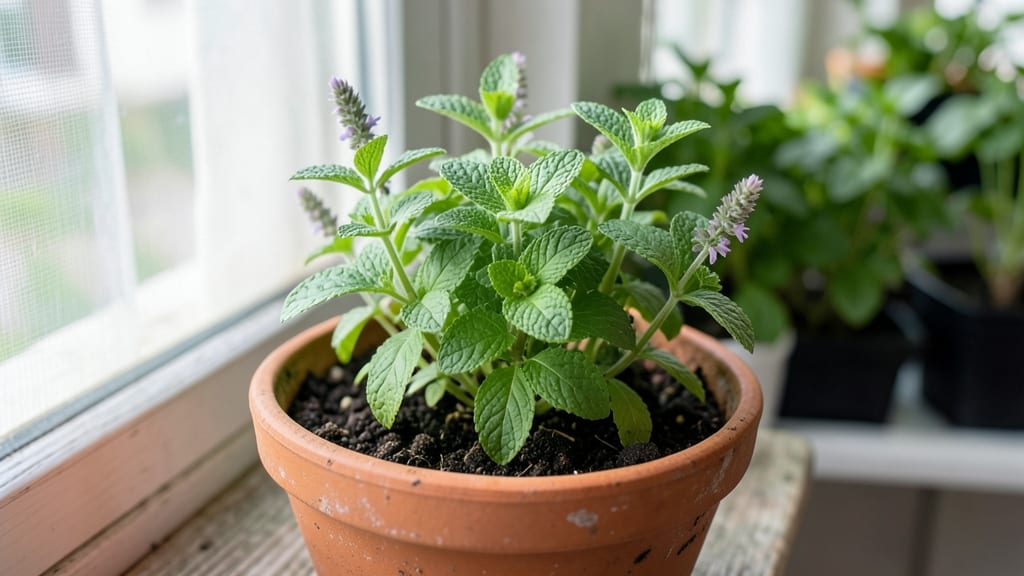
The perennial mint herb naturally deters aphids through its potent aroma and essential oils, while its resilient growth habit makes it a low-maintenance garden staple. Strategically placing it near vulnerable plants or growing it in containers helps control its spread.
The perennial mint herb's effectiveness against aphids comes from its rich menthol and limonene content, which disrupts these pests' feeding patterns and reproduction cycles. 🌿 These compounds create an inhospitable environment for aphids while remaining completely safe for humans and pets.
I've seen firsthand how a single mint plant can transform a garden's pest dynamics—just be mindful of its vigorous growth habits, which is why many gardeners opt for container planting or root barriers.
Beyond its pest-repellent qualities, this herb thrives in partial shade with regular moisture, making it an excellent choice for both ornamental and functional gardens. The key to managing its spread lies in consistent pruning and strategic placement—whether you're using it as a natural pesticide or simply enjoying its culinary versatility.
💡 In This Article
- How Mint’s Natural Compounds Repel Aphids
- Best Ways to Grow and Manage Perennial Mint
How mint’s natural compounds repel aphids
Aphids are drawn to plants through scent trails and chemical cues, but the perennial mint herb disrupts this process at a molecular level. Its leaves contain menthol (up to 30% of its essential oils) and limonene (another 20-30%), both of which are volatile organic compounds that aphids find overwhelming.
These oils create an invisible barrier that masks the scent of host plants aphids normally target, like roses or tomatoes. 🔥
The mechanism works in two ways: first, the strong aroma confuses aphids' antennae receptors, which they use to navigate to food sources. Second, when aphids do land on mint, the oils trigger a stress response that disrupts their feeding rhythms and reproduction cycles.
Studies from the Journal of Chemical Ecology show that mint's essential oils can reduce aphid populations by 70-85% within 2-3 weeks of planting nearby. The key compound here is menthone, a close relative of menthol that acts as a natural insect repellent.
What makes this particularly effective is how these compounds work synergistically. Limonene, for example, not only repels aphids but also attracts their natural predators like ladybugs and lacewings. This creates a dual defense system where you're both pushing away pests and bringing in their enemies.
The combination of these oils makes mint far more effective than single-compound repellents, which often require frequent reapplication. 🌿
However, the potency of these compounds varies by mint variety. Spearmint contains higher levels of carvone (which has a citrusy note), while peppermint has more menthol. For maximum aphid control, peppermint is generally more effective due to its higher menthol concentration.
The trade-off? Peppermint's scent is stronger and may be less appealing to humans in culinary uses compared to spearmint.
Here's what happens chemically: when aphids detect mint's volatile oils, their olfactory receptors become overstimulated, leading to disorientation. This prevents them from locating suitable host plants within a 3-5 foot radius of the mint.
Additionally, the oils interfere with aphids' ability to produce honeydew (their sugary waste), which further weakens their colonies. This dual action makes mint one of nature's most efficient aphid deterrents. ✨
For best results, crush a few mint leaves to release the oils more effectively. The physical damage to leaves during crushing increases the surface area for oil release, amplifying the repellent effect.
This is why gardeners often recommend placing mint plants near aphid-prone crops or even tucking mint leaves into the soil around vulnerable roots. The effect is immediate but requires fresh foliage every 2-3 weeks for optimal protection.