
Companion Plants
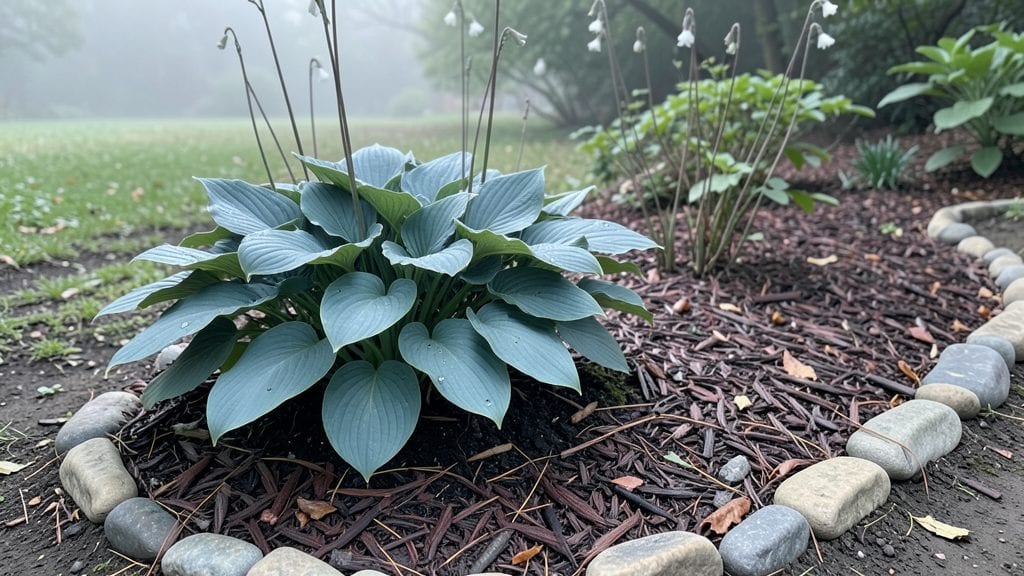
The perennial border plants for shade I’ve designed stay lush all season—hostas with their deep green leaves, ferns that dance in the breeze, and astilbes that burst into feathery plumes. The secret isn’t just picking shade-lovers; it’s layering them by height, texture, and bloom time to keep interest year-round.
Start with 3-5 plants that play well together: tall astilbes (2–3 feet) behind mid-height heucheras (1–2 feet), with low-spreading ajugas or lamium at the front. Mix broadleaf hostas with delicate ferns like Matteuccia struthiopteris for contrast—velvety against feathery.
Most thrive in 4–6 hours of dappled light, but some, like Helleborus (Lenten rose), handle deep shade like a champ.
By mid-summer, your border will hum with life: hosta blooms in July, astilbe plumes in August, and evergreen foliage holding strong through winter. The best part? Once established, these perennials multiply and fill gaps naturally, cutting back on work.
I’ve seen borders like this thrive for 10+ years with almost no effort—just a little pruning and mulch in spring.
Add companion plants like Carex sedges for vertical interest or Ligularia for bold yellow blooms to bridge gaps. The key is color harmony: pair purple heucheras with silver variegated hostas, or white astilbes with burgundy foliage. Start small, then expand—your shade garden will thank you.
Shady Truths Behind Plant Struggles
When your perennial border plants for shade fail to thrive, it’s rarely just about the lack of sunlight. Instead, a mix of environmental, soil, and care-related factors often lurks behind the scenes.
Understanding these causes helps you diagnose issues quickly and create the ideal conditions for lush, healthy growth. Let’s break down the science behind why shade-loving plants sometimes struggle—and how to fix it.
Shade plants aren’t just "low-light survivors"—they have specific light requirements. While they tolerate less sunlight than sun-worshipers like lavender or daylilies, they still need some light to photosynthesize effectively.
- Too little light: If your garden is deep shade (e.g., under dense trees with <1-2 hours of dappled light), plants like Hosta or Astilbe may grow leggy, pale, and weak. Their leaves might develop yellowing (chlorosis) because chlorophyll production slows down.
- Wrong type of shade: Reflective shade (e.g., from a white fence or building) can actually increase heat stress, while dense evergreen shade (like from a pine tree) can deplete soil nutrients over time by competing for resources.
- Seasonal shifts: Deciduous trees drop leaves in winter, suddenly exposing plants to more light than they’re adapted for. If your shade plants get sudden sun exposure (e.g., 4+ hours), their leaves may scorch or bleach.
💡 Pro Tip: Use a light meter or observe your garden’s light patterns over a week. If plants look stretched out or weak, they’re likely light-deprived. If they burn or wilt in spring, they’re getting too much sun.
Shade plants often suffer because their soil isn’t tailored to their needs. Unlike sun-lovers, which can tolerate drier, well-draining soil, most shade perennials prefer moist, rich, and slightly acidic to neutral soil. If these conditions aren’t met, roots suffocate or starve.
| Problem | What Happens to Plants | How to Fix It |
|---|---|---|
| Compacted or Clay Soil | Roots can’t breathe; water pools, leading to root rot or fungal diseases (e.g., powdery mildew). Leaves may turn yellow or brown at the edges. | Amend with compost, peat moss, or perlite to improve drainage. Avoid walking on the soil when wet. |
| Poor Nutrient Balance | Nitrogen deficiency = pale, slow-growing leaves. Phosphorus deficiency = purple stems or weak roots. Potassium deficiency = yellow edges on leaves. | Test soil pH (ideal: 5.5–7.0 for most shade plants). Add organic matter (compost, worm castings) or a balanced fertilizer (10-10-10) in early spring. |
| Too Much Organic Matter (Over-Fertilizing) | Excess nitrogen = soft, rapid (but weak) growth, making plants prone to pests or disease. | Use slow-release fertilizers or mulch lightly (1–2 inches) to avoid overwhelming roots. |
🌡️ Warning: Some shade plants, like Ferns or Hellebores, thrive in acidic soil (pH 5.0–6.0). If your soil is alkaline (pH >7.0), amend with pine needles, sulfur, or coffee grounds to lower pH.
Shade plants have delicate water needs. Unlike drought-tolerant sun plants, they often prefer consistently moist (but not soggy) soil. Get the balance wrong, and you’ll see wilting, mold, or stunted growth.
- Underwatering:
- Leaves curl or crisp at the edges (a sign of transpiration stress).
- Soil pulls away from pot edges (if container-grown) or feels bone-dry 1–2 inches deep.
- Common in sandy or fast-draining soils.
- Overwatering:
- Yellowing leaves that stay soft (unlike crispy underwatered leaves).
- Mushy stems or blackened roots (root rot from Phytophthora or Pythium fungi).
- Pests like slugs and snails thrive in damp, shaded conditions.
- Poor Drainage:
- Even shade plants need aerated soil. If water sits for >24 hours, roots suffocate.
- Test drainage: Dig a hole, fill it with water, and time how long it takes to drain. If it’s slow (>6 hours), amend soil.
⏰ Watering Schedule Hack:
- Water deeply 2–3 times per week (not daily light sprinkles).
- Use drip irrigation or soaker hoses to keep moisture at root level.
- Mulch with 3–4 inches of shredded bark or leaves to retain moisture and regulate temperature.
Shade creates a cooler, damper microclimate—perfect for pests and pathogens that wouldn’t survive in full sun. Here’s what’s likely lurking:
| Pest/Disease | Signs | Why It Thrives in Shade | Solution |
|---|---|---|---|
| Slugs & Snails | Irregular chewed holes in leaves; slimy trails at dawn/dusk. | High humidity and decaying mulch provide hiding spots and moisture. | Use copper tape barriers, diatomaceous earth, or beer traps. Handpick at night. |
| Fungal Leaf Spot (e.g., Septoria, Anthracnose) |