
Flowers
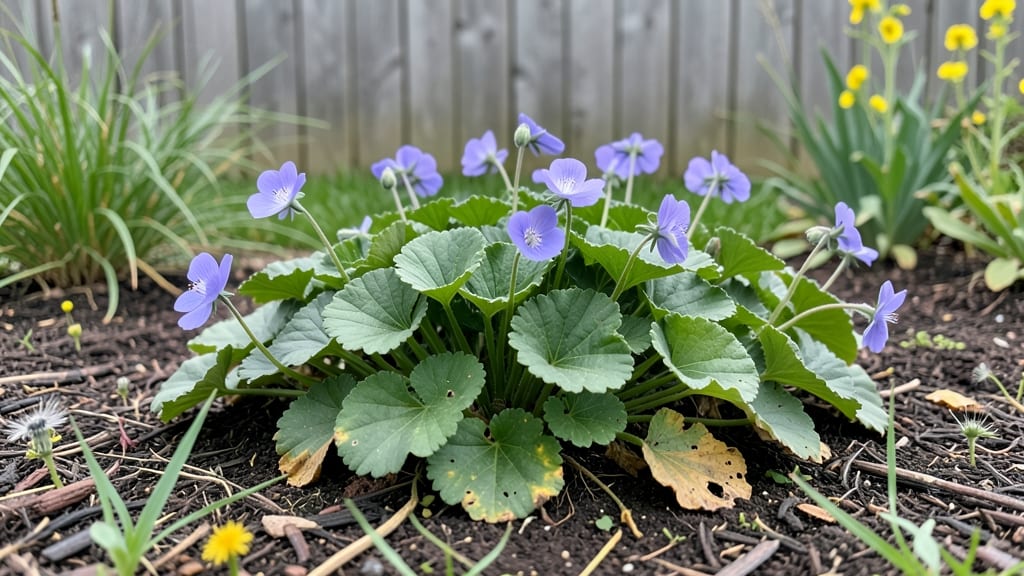
Perennial blue geraniums turn my shady garden corner into a cool-toned oasis that blooms from spring until frost. 🌿 These hardy plants—like Geranium macrorrhizum—thrive where others fail, spreading like a living carpet with silvery foliage and clusters of blue-purple blooms that hummingbirds adore.
The secret lies in their love for dry shade and well-draining soil, making them the perfect low-maintenance star for beginners and busy gardeners alike.
You’ll need just three essentials: a spot with 4-6 hours of morning sun, loose soil amended with compost, and a watering can—because these plants despise soggy roots. Plant them in spring or fall, spacing them 12-18 inches apart to let their trailing habit do its magic.
The first year focuses on root establishment, but by year two, you’ll have a self-sustaining ground cover that outshines annuals and demands almost no attention.
Pruning is simple: trim back leggy stems in early spring to encourage fresh growth, and deadhead spent blooms to prolong flowering. These plants handle drought, deer, and even light foot traffic, making them ideal for slopes, borders, or under trees.
The real reward? A garden that looks effortlessly polished, with vibrant blue blooms that keep coming back year after year.
Whether you’re filling a shady spot or adding textural contrast to your landscape, these perennials deliver foolproof beauty with minimal fuss. Let’s get yours planted—your future garden self will thank you.
📚 In This Guide
- What you need
- Instructions
- Tips and common mistakes
- Wrapping up and next steps
What you need
- ● Perennial blue geranium plants: 3–5 healthy nursery-grown plants (or seeds if starting from scratch). Look for Geranium macrorrhizum (crawling geranium) or Geranium phaeum (dusky geranium) varieties.
- ● Well-draining soil: 10–15 bags (50 lbs each) of garden loam mixed with compost (ratio: 2 parts soil, 1 part compost). Perennial geraniums hate soggy roots!
- ● Mulch: 2–3 bags of organic mulch (e.g., shredded bark or straw) to retain moisture and regulate temperature.
- ● Fertilizer: 1 bag of balanced, slow-release fertilizer (10-10-10) or organic options like fish emulsion or compost tea.
- ● Watering can or hose: With a gentle spray nozzle (avoid blasting roots).
- ○ Gloves & hand trowel: For planting and soil prep (optional but helpful!).
- ● Pruning shears: For shaping and deadheading spent blooms.
- ● Plant stakes or cages: If your variety tends to flop (e.g., Geranium macrorrhizum can spread aggressively).
- ● Soil pH test kit: Ensure your soil is slightly acidic to neutral (pH 6.0–7.0)—geraniums thrive here!
- ● Frost cloth or row covers: For early spring/fall protection in colder zones (USDA 5–9).
Step-by-Step instructions for planting and cultivating perennial blue geraniums
Here's my battle-tested approach to establishing hardy blue geraniums that bounce back every spring.
🌱 Step 1: Select and Prepare the Planting Site
Choose a location with at least 6 hours of sunlight daily—blue geraniums thrive in full sun but tolerate partial shade in hot climates. I dig a hole twice as wide as the root ball but only as deep as the container's base. The crown should sit just above soil level—burying it too deep suffocates the plant and invites rot.
Amend the native soil with 2 gallons of compost mixed into the bottom of the hole. This improves drainage while retaining moisture—critical since blue geraniums hate soggy roots. Tap the surrounding soil firmly after planting to eliminate air pockets around the roots. You'll see the plant settle slightly as you press down; this ensures good root-to-soil contact.
💧 Step 2: Water Deeply and Establish a Mulch Barrier
Water immediately after planting with 1 gallon of water per plant, letting it soak in completely. The soil should feel moist 6 inches down—stick your finger in to check. For the first two weeks, water every 2-3 days until new growth appears. Overwatering now causes crown rot, while underwatering stresses young roots.
Spread 3 inches of mulch (like shredded bark) around each plant, keeping it 2 inches away from the stem. This conserves moisture, regulates soil temperature, and suppresses weeds. I always use organic mulch—it breaks down slowly and adds nutrients over time. Replenish the mulch layer annually as it decomposes.
☀️ Step 3: Prune for Bushiness and Winter Hardiness
After the first flush of blooms, cut back one-third of the plant's height with clean, sharp shears. This encourages thicker, bushier growth and prevents leggy stems. I prune in early summer when flowers start to fade—never cut into old wood, as blue geraniums bloom on new growth. You'll see fresh shoots emerge within 10-14 days if the plant is healthy.
In late fall, cut back the foliage to 4-6 inches above the ground. This helps the plant conserve energy over winter and reduces disease risk. Leave the stems slightly taller in mild climates—they provide some insulation. In Zone 5 or colder, add 2-3 inches of extra mulch for protection against freeze-thaw cycles.
✂️ Step 4: Deadhead and Fertilize for Continuous Blooms
Remove spent blooms weekly by pinching off the flower head just above the next set of leaves. This redirects the plant's energy into producing more flowers instead of seed pods. I do this in the morning when stems are stiff—it's easier to see where to cut. You'll notice new buds forming within 7-10 days if the plant is well-fed.
Feed with a balanced 10-10-10 fertilizer every 6 weeks during the growing season. Use ½ teaspoon per plant dissolved in 1 gallon of water. Stop fertilizing in late summer to harden off the plant for winter. Over-fertilizing now leads to tender, weak growth that struggles in cold snaps.
Tips & tricks for perfect perennial blue Geranium cultivation
These battle-tested insights will help you establish vibrant, frost-hardy blue geraniums that return year after year with minimal fuss.
Soil Preparation Secret: The 2 gallons of compost in Step 1 isn't just about nutrients—it's about creating the perfect moisture balance. Blue geraniums despise soggy roots, so mix in coarse sand or perlite if your native soil drains poorly. I test drainage by filling a container with your amended soil and water—if it drains in under 10 minutes, you're good to go. For heavy clay soils, consider planting in raised beds where you can control the mix completely.
Watering Wisdom: During those critical first two weeks, resist the urge to water on a strict schedule. Instead, check soil moisture daily by sticking your finger 6 inches down—water only when dry. Morning watering is ideal because it allows foliage to dry before evening, reducing fungal risks. I've found that watering at the base (not overhead) prevents powdery mildew, which can plague blue geraniums in humid climates.
Pruning Precision: When you cut back one-third of the plant's height in early summer, aim for clean cuts just above leaf nodes where new growth emerges. Use sharp shears to avoid crushing stems, which can introduce disease. I always sterilize my shears with rubbing alcohol between plants to prevent cross-contamination. For winter pruning, resist the urge to cut too aggressively—those remaining stems provide insulation against freeze-thaw cycles that can heave roots out of the ground.
Fertilizer Timing: The 6-week feeding schedule in Step 4 works wonders, but timing matters. Always fertilize in the morning when plants are actively photosynthesizing, and water thoroughly afterward to prevent root burn. I've noticed that applying fertilizer after a rainstorm can dilute the nutrients too much, so check forecasts before feeding. Also, if your plants show signs of yellowing leaves between feedings, they might need a boost of iron—consider a chelated iron supplement if this persists.
Pro Tips for Perennial Blue Geraniums
- These battle-tested insights will help you establish vibrant, frost-hardy blue geraniums that return year after year with minimal fuss.
- Soil Preparation Secret: The 2 gallons of compost in Step 1 isn't just about nutrients—it's about creating the perfect moisture balance.
- Watering Wisdom: During those critical first two weeks, resist the urge to water on a strict schedule.
Frequently asked questions
Got questions about keeping your perennial blue geraniums thriving? You’re not alone! Here are answers to the most common queries—from planting to winter care and everything in between.
Are perennial blue geraniums truly frost-hardy, or do they need winter protection?
While some varieties (like Geranium macrorrhizum) tolerate light frost, most perennial blue geraniums prefer USDA Zones 5-9. In colder climates, mulch heavily with straw or leaves and cover with burlap. In milder zones, they’ll often regrow from the roots each spring—just trim back dead foliage in early spring!
How long does it take for perennial blue geraniums to bloom after planting?
Patience pays off! With proper care, you’ll see first blooms in 6-8 weeks after planting. Established plants (2+ years old) may bloom even earlier in spring. Deadhead spent flowers to encourage continuous blooming through summer and fall.
Can I grow perennial blue geraniums in containers, or are they only for gardens?
They thrive in 12-inch+ pots with drainage holes. Use well-draining soil and place containers in full sun to partial shade. Just remember: container plants dry out faster, so water daily in hot weather and fertilize monthly during growing season.
What pests or diseases should I watch for with perennial blue geraniums?
Common issues include aphids, spider mites, and powdery mildew. For pests, spray with neem oil or introduce ladybugs. Mildew? Improve airflow and avoid overhead watering. Crown rot can occur in soggy soil—always ensure drainage!
How do I propagate perennial blue geraniums to expand my garden?
Easy! Division is the simplest method: dig up clumps in early spring or fall, separate roots, and replant sections 18 inches apart. You can also root cuttings in water or moist soil—just snip 3-4 inch stems and keep them warm until roots form!
Wrapping up and next steps
Perennial blue geraniums are a fantastic choice for gardeners seeking low-maintenance, frost-hardy beauty that keeps blooming season after season. With the right care—sunlight, well-draining soil, and occasional pruning—you’ll enjoy vibrant blue-purple flowers that brighten your landscape year-round. 🌸
Ready to transform your garden? Start by selecting the perfect spot, gathering your supplies, and planting with confidence. Your blue geraniums will thank you—and so will your neighbors!
🌱 Next Steps:
- Mark your calendar for spring planting (or fall in cooler climates).
- Join a gardening community to share tips and progress!
- Experiment with companion plants to create a stunning pollinator-friendly display.