
Pruning
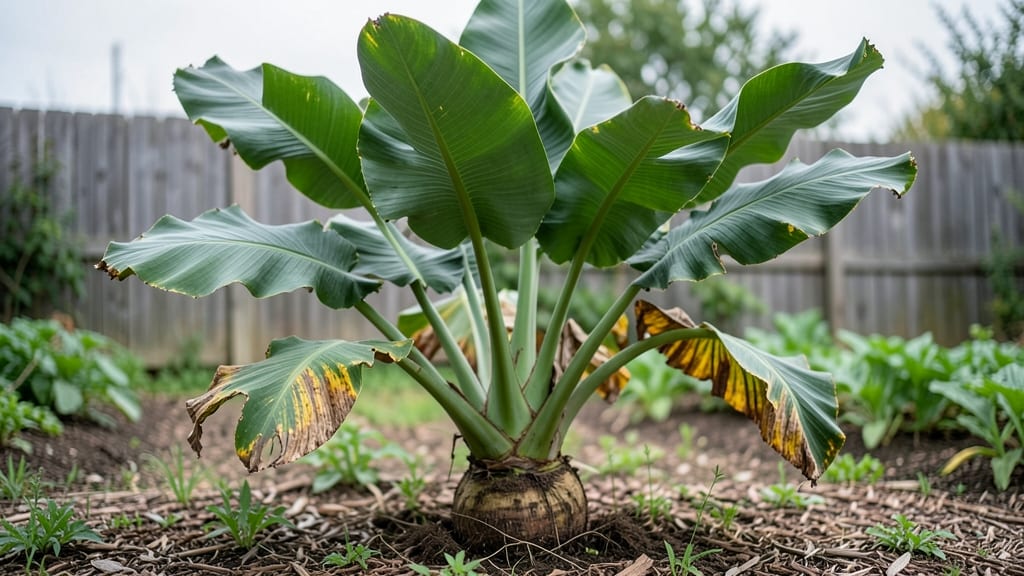
Pruning your perennial banana tree doesn't just keep it tidy—it unlocks a second harvest when done right. ✨ I learned this the hard way after my first winter, when I nearly lost my Musa basjoo to neglect.
The key is understanding when to cut back for growth versus when to let it rest, and how to spot the subtle signs that tell you exactly what your plant needs.
These hardy bananas thrive in zones 6-9, where they’ll regrow from the ground each spring—no tropical drama required. You’ll need well-draining soil, 6+ hours of sun daily, and a watering routine that keeps roots moist but never soggy.
The pruning itself is simpler than it looks: focus on removing dead fronds in late winter and thinning out crowded pseudostems in early summer to encourage new shoots.
By mid-summer, you’ll see those familiar banana-shaped leaves unfurling again, but this time with two harvest windows instead of one. The first batch ripens in late summer, and if you time your pruning right, you’ll get a second flush in fall.
The trick is balancing aggression—cut too much, and you stunt growth; too little, and you miss the productivity boost.
Cold snaps? No problem. These aren’t your grocery-store bananas—they’re cold-hardy survivors that’ll bounce back from 20°F dips if you mulch heavily and protect the crown. Even in colder zones, a little winter prep means you’re back to harvesting by June. Let’s get those shears ready!
📚 In This Guide
- What you need
- Instructions
- Tips and common mistakes
- Wrapping up and next steps
What you need
- ● Sharp pruning shears or loppers: Choose bypass pruners (8-10” blades) for clean cuts—sterilize with rubbing alcohol before use!
- ● Pruning saw: For thicker stems (10-12” blade, serrated edge).
- ● Gloves: Heavy-duty gardening gloves (nitrile-coated for grip and protection).
- ● Disinfectant (70% isopropyl alcohol or bleach solution): 1 part bleach to 9 parts water—sterilizes tools between cuts to prevent disease.
- ● Rope or twine (¼” diameter, 20+ ft): For supporting heavy bunches or tying down stems post-pruning.
- ● Compost or mulch: Shredded leaves or aged compost (5-10 gallons) to replenish soil nutrients after trimming.
- ● Watering can or hose with nozzle: For immediate post-pruning hydration (1-2 gallons per tree).
- ● Hand pruners (for precision): Great for delicate trimming of smaller suckers.
- ● Tree tie straps: Reusable straps for securing stems to stakes (if your tree needs extra support).
- ● Fertilizer (balanced 10-10-10 or banana-specific): Apply 1-2 cups post-pruning for a nutrient boost.
- ● Spray bottle with neem oil: Prevents fungal infections if your tree is prone to pests.
- ● Camera or phone: Snap before/after pics to track growth progress!
How to prune a perennial banana tree for continuous fruit
Here's how I keep my banana plants productive year after year—no wasted energy, no missed harvests.
🌿 Step 1: Identify and Remove Old, Unproductive Pseudostems
Start by examining your banana plant's pseudostems—the thick, leafy trunks that grow from the base. Look for stems that are hollow, brown at the base, or have no new leaves emerging. These are done fruiting and won't produce again. Use clean, sharp pruners to cut them off at the base, about 1 inch above the ground.
I always prune these in late winter or early spring, just before new growth begins. This gives the plant room to focus energy on fresh pseudostems. Never remove more than 30% of the plant's stems at once—this ensures the remaining stems can support the plant's needs. You'll notice the remaining stems look firmer and greener, signaling they're ready for new growth.
✂️ Step 2: Trim Dead or Damaged Leaves
Banana leaves are tough, but they can get torn or yellowed from storms, pests, or disease. Use your pruners to snip off any leaves that are more than 50% brown or torn. Cut at the base of the leaf stem, just above where it meets the pseudostem. This prevents pests from hiding in damaged tissue and keeps the plant looking tidy.
Here's the thing—don't overdo it. Remove only the clearly dead or damaged leaves. Healthy leaves, even if they're old, still contribute to photosynthesis. You'll see new leaves emerging from the center of the plant within 2-4 weeks after trimming, which means your plant is staying active and productive.
🌱 Step 3: Encourage New Growth with Strategic Pruning
Once you've removed the old stems and damaged leaves, focus on the remaining healthy pseudostems. If a stem has produced fruit and is now flowering again, let it finish its cycle—bananas need that energy to regenerate. However, if a stem has finished fruiting but still has green leaves, you can prune it back to encourage a new shoot to grow from the base.
Cut the stem at the base, but leave the roots intact. Within 4-6 weeks, you should see a new shoot emerging from the rhizome. This is how you keep your banana plant productive for years. I like to prune one or two stems at a time to avoid shocking the plant. Watch for new growth—it’ll start as a small, tight bud at the base of the remaining stems.
☀️ Step 4: Maintain Year-Round Health with Light Pruning
Throughout the growing season, keep an eye out for any leaves that are crowding the center of the plant. Banana plants need good airflow to prevent fungal diseases. Use your pruners to trim back any leaves that are blocking sunlight from reaching the center. This also helps the plant focus its energy on producing fruit rather than maintaining unnecessary foliage.
I do this every 6-8 weeks, especially after a heavy rain or windstorm. You'll notice the plant looks more open and airy, with sunlight reaching all the way to the center. This not only keeps the plant healthier but also encourages more uniform fruit production. Avoid pruning during extreme heat or cold—stick to mild weather for the best results.
⏰ Step 5: Prepare for Winter Dormancy (If Applicable)
If you're in a colder climate where banana plants go semi-dormant in winter, prune back any remaining dead or dying leaves in late fall. Cut them down to about 1 foot tall to protect the rhizome from freezing temperatures. This also makes it easier to cover the plant with mulch or frost cloth if needed.
I always leave a few healthy leaves if possible—they help the plant retain some energy for spring. In warmer climates, you can skip this step entirely. The key is to keep the plant as tidy as possible without removing too much growth. You'll see new shoots emerging in early spring, ready to start the cycle again.
Tips & tricks for pruning perennial banana trees
These practical insights will help you maintain a thriving banana plant that keeps producing fruit year after year.
Timing is Everything: The late winter or early spring timing in Step 1 is crucial because this aligns with the plant's natural dormancy period. Cold weather slows growth, making the plant more resilient to pruning. If you're in a warmer climate where seasons don't change dramatically, aim for your coolest months instead.
Visual Cues for Healthy Stems: When examining pseudostems in Step 1, look for stems that feel soft or hollow when tapped gently. Healthy stems should be firm with green leaves at the top. I've learned to trust my fingers—if it feels like pressing a water balloon, it's time to prune!
Pruning Strategy for New Growth: In Step 3, when pruning finished stems to encourage new shoots, focus on stems with green leaves but no new fruit clusters. These stems have already given their energy to fruit production and are ready to regenerate. I've found that pruning just one or two stems at a time prevents stress on the plant while still encouraging new growth.
Seasonal Adjustments: The 6-8 week maintenance pruning in Step 4 works best during mild weather. If you're in a tropical climate with consistent warmth, you can prune more frequently—every 4-6 weeks—to prevent leaf crowding. In cooler areas, extend to 8-10 weeks between prunings during summer months when growth is most active.
Pro Tips for Perennial Banana Tree
- These practical insights will help you maintain a thriving banana plant that keeps producing fruit year after year.
- Timing is Everything: The late winter or early spring timing in Step 1 is crucial because this aligns with the plant's natural dormancy period.
- Visual Cues for Healthy Stems: When examining pseudostems in Step 1, look for stems that feel soft or hollow when tapped gently.
Frequently asked questions
Got questions about keeping your perennial banana tree thriving with pruning? You’re not alone!
Here are answers to the most common concerns—so you can enjoy year-round harvests without the guesswork.
How often should I prune a perennial banana tree?
Prune your perennial banana tree twice a year: once after the first harvest (to encourage regrowth) and again in late winter (to remove dead or weak pseudostems). Young trees may need lighter trims, while mature trees can handle more aggressive pruning. Always leave at least one healthy pseudostem to keep the plant productive.
Can I prune my banana tree at any time of year?
Avoid heavy pruning during peak flowering or fruiting seasons—this can stress the plant and reduce yields. Late winter (before new growth starts) and post-harvest are the ideal times. In tropical climates, prune during the dry season to minimize disease risks.
What do I do if my banana tree turns yellow or brown after pruning?
Yellowing or browning leaves are normal right after pruning as the plant redirects energy. However, if it persists beyond 2–4 weeks or spreads to the pseudostem, check for fungal infections (like sigatoka) or nutrient deficiencies. Boost potassium with compost and ensure proper airflow to prevent rot.
Are there alternatives to pruning for managing perennial banana trees?
While pruning is the most effective way to control size and boost productivity, you can also thin out suckers (baby shoots) to focus energy on fewer, healthier stems. Mulching heavily and removing old leaves (but not the pseudostem) can also improve air circulation and reduce pests—though pruning remains the gold standard for long-term health.
Will pruning my perennial banana tree reduce my fruit harvest?
Not if done correctly! Strategic pruning increases yields by removing spent pseudostems and encouraging more robust regrowth. Just avoid cutting back more than 30% of the plant at once. Over-pruning can shock the tree, but a well-timed trim ensures bigger, healthier bunches in future cycles.
Wrapping up and next steps
Growing a perennial banana tree with year-round harvests is totally within reach—thanks to strategic pruning! By mastering the right techniques, you’ll enjoy fresh, homegrown bananas for months, not just seasons. Start small, stay consistent, and watch your tropical oasis thrive!
Ready to take the next step? Pick a sunny spot, grab your tools, and begin pruning today! 🌱✂️