
Flowers
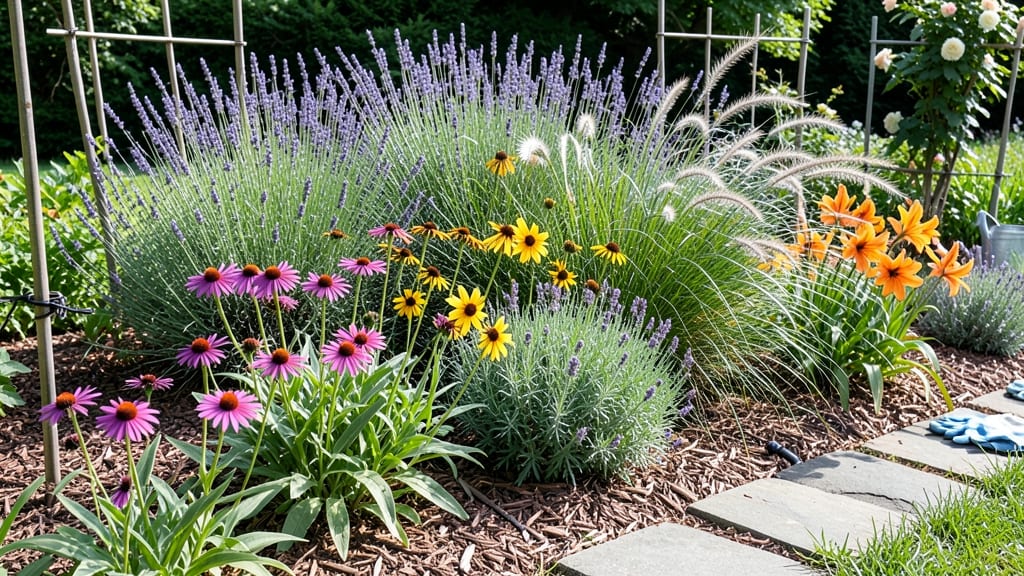
Sun-catching flower beds transform your backyard into a seasonal showstopper—and the best designs start with a bold color scheme that pops from spring through frost. 🌸 I’ve designed flower beds that bloom in waves, so you’re never stuck with bare soil, and the key is layering plants that love your sunlight conditions.
My favorite trick? Pairing tall drama (like coneflowers) with spilling cascades (like creeping thyme) to create movement that draws the eye.
The secret to low-maintenance success lies in three simple layers: first, the sturdy backbone of perennials that return every year, then mid-height annuals for summer color, and finally, trailing plants to soften edges.
For small spaces, I swear by raised circular beds—they maximize visual impact while keeping weeds at bay. Urban gardens can even use vertical pockets on fences or trellises to add height without footprint. By the end of summer, you’ll have a bed so vibrant it makes neighbors pause mid-stride.
The best part? These designs evolve naturally—spring bulbs fade into summer blooms, which give way to fall foliage and winter interest. Mulch keeps roots happy year-round, and a 10-minute weekly check ensures nothing gets overwhelmed. Perfect for any yard size, from tight city patios to sprawling suburban plots.
Let’s sketch out a design that fits your space—and your sunlight—before the first spring bulb goes in the ground.
📚 In This Guide
- What you need
- Instructions
- Tips and common mistakes
- Wrapping up and next steps
What you need
- ● Soil & Amendments: High-quality garden soil (2-3 cubic yards, depending on bed size)
- ● Compost (1-2 bags, for nutrient-rich soil)
- ● Perlite or sand (1 bag, for drainage)
- ● Plants & Flowers: Perennials (e.g., coneflowers, black-eyed Susans, daylilies) – 12-20 plants
- ● Annuals (e.g., marigolds, petunias, zinnias) – 10-15 plants
- ● Ground cover (e.g., creeping thyme or ajuga) – 5-10 plants
- ○ Shrubs or ornamental grasses (optional, for texture) – 2-4 plants
- ● Tools & Supplies: Garden spade or shovel (for digging)
- ● Garden trowel (for planting small flowers)
- ● Wheelbarrow (for moving soil)
- ● Rake (for leveling soil)
- ● Measuring tape (for layout planning)
- ● Gloves (to protect your hands)
- ● Watering can or hose with spray nozzle (for gentle watering)
- ● Mulch (2-3 bags, shredded bark or pine straw)
- ● Edging materials (e.g., metal, stone, or plastic) – to define your bed
- ● Decorative rocks or pebbles – for a polished look
- ● Trellis or obelisk – for climbing flowers like morning glories
- ● Solar-powered garden lights – for evening ambiance
- ● Plant markers – to track varieties
Step-by-Step instructions for backyard flower bed designs
Let's create a sun-catching, year-round showstopper that blooms from spring through frost.
🪴 Step 1: Plan Your Sun-Catching Layout
Start by mapping your flower bed's sun exposure—most designs thrive with 6+ hours of direct sun daily, but shade-tolerant perennials can anchor darker corners. I sketch my design on graph paper, using 12-inch squares to represent mature plant widths. This prevents overcrowding later.
For maximum visual impact, group plants by height: tall backdrops (like black-eyed Susans or coneflowers) go at the rear, mid-height accents (such as daylilies or coreopsis) fill the middle, and spiller varieties (like ajuga or lychnis) cascade over edges. I always include 3-5 focal points—like a single red cardinal flower or purple salvia—to draw the eye.
☀️ Step 2: Prepare Soil for Season-Long Success
Test your soil’s pH and amend it to 6.0–7.0—most flowers thrive in neutral to slightly acidic conditions. I mix 2 inches of compost and 1 inch of perlite into the top 6 inches of soil to improve drainage and aeration. For heavy clay, add 1 part sand to the mix to prevent waterlogging.
Dig a swale (a shallow trench) around the perimeter of your bed to direct rainwater inward. This keeps moisture where it’s needed while preventing erosion. If your yard has poor drainage, consider raised beds—12–18 inches high—to keep roots from sitting in soggy soil.
🌿 Step 3: Layer Plants for Year-Round Interest
Plant spring ephemerals (like bleeding heart or hepatica) first—they’ll fade by summer but leave space for summer bloomers (such as black-eyed Susans or shasta daisies). I tuck evergreen foliage (like heuchera or sedge) at the front to maintain structure when other plants go dormant.
For fall color, include asters, goldenrod, or Japanese anemones—they’ll carry the show when summer annuals fade. I space plants 12–24 inches apart, depending on their mature size, and always plant in odd-numbered groupings (3, 5, or 7) for natural balance.
✂️ Step 4: Mulch and Maintain for Long-Term Beauty
Apply 3 inches of organic mulch (like shredded bark or pine needles) to retain moisture and suppress weeds. I avoid dyed mulches—they can leach harmful chemicals into the soil. Water deeply 2–3 times per week until plants establish roots (4–6 weeks), then taper to 1 inch per week during dry spells.
Deadhead spent blooms regularly to encourage more flowers, but leave seed heads on a few plants (like coneflowers or rudbeckias) for winter interest. I also fertilize lightly in early spring with a balanced 10-10-10 formula—just enough to boost growth without burning tender roots.
🌱 Step 5: Refresh and Rotate for Seasonal Magic
Every 3–4 years, divide overcrowded perennials (like daylilies or hostas) to rejuvenate their growth. I swap out annuals every 6–8 weeks—like pansies in spring, geraniums in summer, and mums in fall—to keep the bed vibrant without replanting everything at once.
For a low-maintenance touch, add ground covers (such as creeping thyme or ajuga) to fill gaps and prevent weeds. A drip irrigation system on a timer makes watering effortless—just set it for early morning to avoid fungal diseases from evening moisture.
Tips & tricks for stunning backyard flower bed designs
Transforming your outdoor space into a vibrant, year-round garden takes more than just planting flowers—it's about strategic planning and thoughtful execution. Here are the game-changing insights I've gathered from years of designing sun-catching flower beds that wow from spring to frost.
Design with Seasonal Flow: When planning your layout in Step 1, think beyond just visual appeal—consider the seasonal progression. I like to use spring ephemerals like bleeding heart as temporary placeholders that will be replaced by summer's black-eyed Susans. This creates a natural transition where each season's stars take center stage without competition. The key is to overlap bloom times by 2-3 weeks between seasons to avoid bare patches.
Soil Prep Secrets: In Step 2, don't just amend the soil—transform it. I've found that adding worm castings (optional but magical) along with the recommended compost and perlite creates a living soil ecosystem that retains moisture better and feeds plants continuously. For clay-heavy soils, mix in 1 part coconut coir instead of sand—it improves structure without compacting like sand. Test your soil's texture by squeezing a handful: if it forms a tight ball, you definitely need more perlite or coir.
Plant Spacing Pro Tip: The 12-24 inch spacing in Step 3 might seem generous, but trust me—it's worth it. I've learned the hard way that cramped perennials struggle with air circulation, leading to fungal issues. For particularly aggressive spreaders like daylilies, give them the full 24 inches. Pro tip: Use a stake with string to mark planting locations before digging—this prevents overcrowding as you work and helps visualize the mature plant sizes.
Mulching Mastery: That 3-inch mulch layer in Step 4 is your secret weapon against weeds and moisture loss, but here's the trick: apply it after watering when the soil is damp. This creates a moisture barrier that locks in water for your plants. I also recommend double-layering mulch—start with 1 inch of coarse wood chips, then add the 3 inches of shredded bark. The coarse layer improves drainage while the fine layer retains moisture.
Pro Tips for Backyard Flower Bed Designs
- Transforming your outdoor space into a vibrant, year-round garden takes more than just planting flowers—it's about strategic planning and thoughtful execution.
- Design with Seasonal Flow: When planning your layout in Step 1, think beyond just visual appeal—consider the seasonal progression.
- Soil Prep Secrets: In Step 2, don't just amend the soil—transform it.
Frequently asked questions
Got questions about creating a stunning, low-maintenance flower bed?
You’re not alone! Here are answers to the most common queries—so you can design with confidence and enjoy your blooms all season long.
What’s the best time of year to plant a flower bed?
For most regions, spring (after the last frost) and early fall (6-8 weeks before first frost) are ideal. Cool weather helps roots establish before summer heat or winter cold sets in. Perennials planted in fall often bloom earlier the next year! If you’re in a mild climate (like Zones 8-10), you can plant year-round.
How can I design a flower bed on a tight budget?
Start with native plants—they’re cheap, drought-resistant, and attract pollinators. Skip pricey mulch by using free alternatives like grass clippings, shredded leaves, or straw. Visit local plant swaps or check discount nurseries for end-of-season sales. Even a small bed (3’x3’) can make a big impact with strategic layering!
What’s the easiest way to keep pests away naturally?
Plant pest-repelling companions like marigolds (deter bugs), lavender (keeps deer away), or basil (discourages mosquitoes). Use neem oil or insecticidal soap sparingly for targeted issues. Encourage beneficial insects (like ladybugs) by adding a small water source. Healthy soil = resilient plants that fend off pests better!
Will my flower bed survive winter? What do I need to do?
Most perennials and shrubs are winter-hardy, but tender annuals (like petunias) will die back. Mulch heavily (3-4 inches) with straw or shredded bark to insulate roots. Cut back dead foliage in late winter (not fall) to avoid encouraging mold. Evergreens and ornamental grasses add year-round structure—consider them for winter interest!
How do I fix a flower bed that looks messy or overgrown?
Start with a reset: trim back dead or leggy plants, then pull weeds at the root. Add fresh mulch to suppress weeds, and rearrange plants for better airflow (this reduces disease). If the design feels off, try the “rule of thirds”: group odd numbers of plants (3, 5, or 7) for a natural look. A little pruning goes a long way!
Can I use containers or raised beds instead of in-ground planting?
Containers and raised beds are great for small spaces, poor soil, or mobility. Use well-draining potting mix and containers with drainage holes. For raised beds, line the bottom with landscape fabric to block weeds. Just ensure containers get 6+ hours of sun (matching the plants’ needs) and water more frequently than in-ground beds.
Wrapping up and next steps
Transforming your backyard into a vibrant, sun-soaked sanctuary is easier than you think! With the right flower bed designs, you can create a low-maintenance, year-round display that delights the senses and boosts curb appeal.
Whether you’re drawn to bold geometric patterns, cascading layers, or wildflower meadows, the key is choosing plants that thrive in your climate and sunlight—then letting nature do the rest.
Ready to get started? Grab your gardening gloves, sketch out your dream layout, and take the first step today! Your backyard oasis awaits—just add flowers. 🌸✨