
Flowers
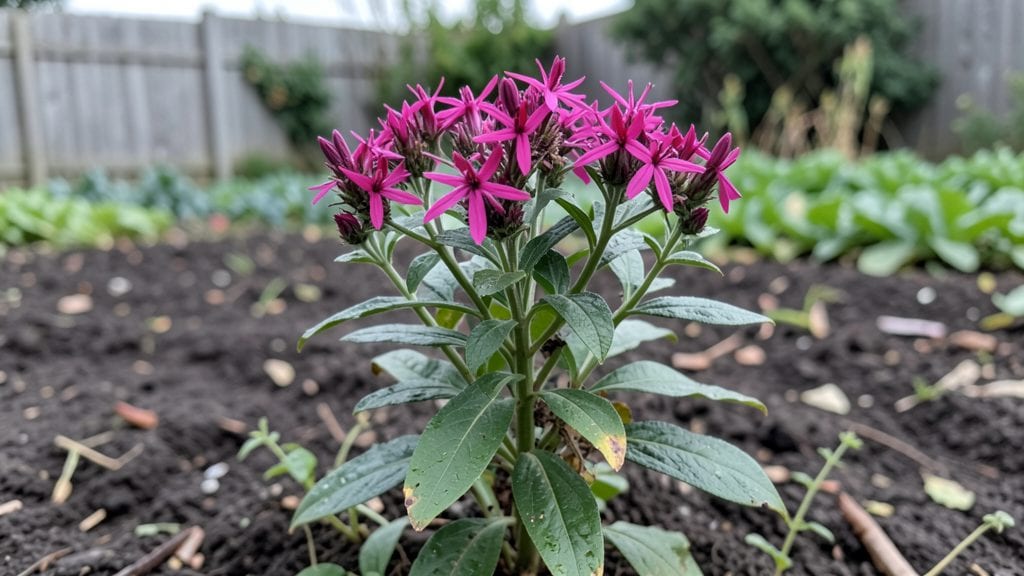
Deciding whether pentas flowers are annual or perennial depends on your climate: they act as annuals in cooler regions but function as perennials in USDA zones 10-12, where they return every year with proper winter care. Their frost sensitivity forces replanting in frost-prone areas each spring.
Pentas flowers thrive in warm climates because their tender stems and leaves can't survive freezing temperatures. 🔥 In zones 10-12, they naturally regrow each spring from their root systems, earning their perennial classification, while gardeners in colder areas must treat them as annuals or take special overwintering steps.
The key difference lies in their ability to withstand winter chill—once temps drop below 32°F, their growth stops, and they won't bounce back without protection.
For gardeners outside their native tropical range, this means strategic planning. You can extend their lifespan by bringing potted pentas indoors before the first frost or using mulch to insulate root zones. Some varieties even self-seed prolifically, creating a natural renewal cycle in milder winters.
The bottom line? Pentas flowers reward patience—whether you treat them as annuals or perennials depends entirely on where you live and how you adapt to their needs.
💡 In This Article
- Pentas Flower Cold Tolerance Limits Explained
- Year-Round Pentas Gardening Strategies
Pentas flower cold tolerance limits explained
Pentas flowers are tropical natives, meaning their cellular structure lacks the antifreeze proteins found in cold-hardy plants. When temperatures dip below 32°F, ice crystals form in their cell walls, rupturing membranes and causing irreversible damage.
This threshold explains why they behave as annuals in most U.S. climates—even a light frost can kill the foliage and roots. The science gets more interesting when you consider humidity: dry air accelerates moisture loss through transpiration, while high humidity creates a protective barrier that slightly extends their cold tolerance.
In USDA Zone 10, where winters rarely drop below 30°F, pentas often survive winters because their roots remain protected by warm soil temperatures. However, in Zone 9, where temperatures can flirt with freezing, their survival depends entirely on soil insulation.
A 4-inch layer of mulch can raise soil temps by 5-10°F, creating a microclimate that keeps roots viable. This is why gardeners in these zones sometimes see pentas return year after year—it's not true hardiness, but rather a survival strategy against brief cold snaps.
The classification as "tender perennial" comes from their ability to regrow from roots when conditions improve. Unlike true perennials (like lavender) that survive -10°F winters, pentas rely on warm-season regrowth.
Their stems contain latex-like compounds that help them recover quickly from pruning or frost damage, but this mechanism fails when roots freeze. That's why even in Zone 10, a prolonged cold snap below 28°F can kill them—it's not just about the air temperature, but how long the cold persists.
Here's what actually happens at the cellular level: When pentas experience 32°F for more than 4-6 hours, their meristematic cells (growth centers) begin dying. These are the same cells that would regenerate new growth in spring.
The damage cascades because pentas lack the cryoprotective sugars that help hardy plants survive winter. Instead, their energy goes toward flowering during warm months—a survival adaptation for their native tropical habitats where cold simply doesn't exist.
For comparison, consider how impatiens (another tender perennial) handles cold: they survive 28°F for short periods because their leaves contain higher moisture content. Pentas, with their succulent-like stems, store less water, making them more vulnerable.
This is why you'll see pentas thriving as container plants in Zone 8 gardens—they can be moved to protected areas before winter, while their roots remain dormant but viable in well-draining soil.
What most gardeners don't realize is that pentas' cold tolerance improves with age. Younger plants are more susceptible because their root systems aren't fully established to store nutrients.
A 3-year-old pentas with a 12-inch root ball might survive a 28°F night if the soil stays above 30°F, while a 6-month-old plant would likely die. This age-related resilience is why many tropical plants behave differently in their native environments versus cultivated gardens.