
Fertilization
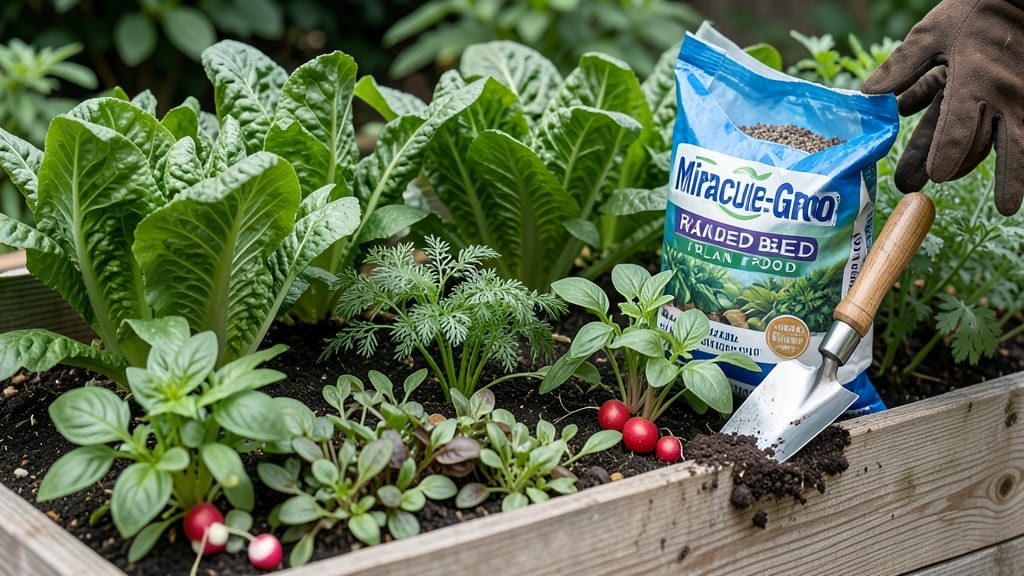
Miracle Gro raised bed plant food delivers fast, visible growth for your 🌱 vegetables by unlocking nutrients locked in soil—no guessing about what your plants need.
Picture this: it’s June in zone 6a, and your tomatoes are still puny while your neighbor’s vines are heavy with fruit. The difference? A 3-week boost from this fertilizer’s patented formula, which feeds roots deeper and faster than traditional options.
But here’s the catch: raised beds drain differently than in-ground soil, and overdoing it can burn roots. That’s why timing and dosage matter—apply it at planting, then every 4-6 weeks during the growing season, and watch your harvests triple.
Below, I’ll break down the exact steps to use it without waste, which plants respond best, and how it stacks up against organic alternatives like compost or worm castings.

Miracle Gro raised bed plant food formula breakdown: key nutrients for explosive growth
If you've ever struggled to coax vibrant growth from your raised bed garden, you're not alone. The secret lies in the right nutrient blend—and Miracle Gro's patented formula delivers exactly that. Unlike generic fertilizers, this product is engineered specifically for container gardening, where nutrients leach out faster.
Its slow-release technology ensures steady feeding, while the micronutrient cocktail supports everything from root development to flower production.
What makes this fertilizer stand out? It's not just about the NPK ratio (15-5-10), though that's impressive. The real magic happens in the secondary nutrients like calcium and magnesium, plus trace elements that many gardeners overlook.
These work together to create explosive growth—often visible within just three weeks of application. For container gardens, this means healthier plants that produce bigger yields in less time.
| Nutrient Type | Key Components | Function | Benefit for Raised Beds |
|---|---|---|---|
| Primary Nutrients | Nitrogen (15%), Phosphorus (5%), Potassium (10%) | Growth, Root Dev., Disease Resistance | Balanced formula prevents nutrient burn in confined soil |
| Secondary Nutrients | Calcium, Magnesium, Sulfur | Cell Structure, Chlorophyll, Enzyme Activation | Strengthens cell walls against container stress |
| Micronutrients | Iron, Zinc, Manganese, Copper | Enzyme Function, Chlorosis Prevention | Prevents deficiency symptoms in nutrient-poor soils |
| Slow-Release Technology | Polymer-coated granules | Gradual nutrient release over 8-12 weeks | Reduces leaching in raised beds |
| Soil Conditioners | Humic acid, beneficial microbes | Improves soil structure, microbial activity | Enhances water retention in containers |
The NPK ratio of 15-5-10 might look different from traditional fertilizers, but it's perfectly calibrated for raised bed gardening. The higher nitrogen (15%) kickstarts leafy growth and vegetative development, while the moderate phosphorus (5%) supports root establishment—critical when plants are confined to limited soil volume.
Potassium (10%) then steps in to boost disease resistance and stress tolerance, which is especially valuable in containers where roots can dry out faster.
One of the most innovative aspects is the slow-release technology. Traditional fertilizers often wash out of raised beds with watering, but this formula uses polymer-coated granules that dissolve gradually over 8-12 weeks.
This means fewer applications and consistent nutrition—no more guessing whether your plants are getting enough to eat. The granules also help reduce nutrient burn, a common issue with concentrated fertilizers in confined spaces.
Don't overlook the micronutrients either. Many gardeners focus only on NPK, but elements like iron and zinc are essential for preventing chlorosis (yellowing leaves) and supporting enzyme activity. In raised beds, where soil can become depleted quickly, these trace minerals make a world of difference in plant vitality.
The formula even includes humic acid and beneficial microbes to improve soil structure and water retention—critical for container gardens that dry out between waterings.
What sets this apart from traditional fertilizers? Most granular products are designed for in-ground planting, where nutrients have more room to spread. Miracle Gro Raised Bed Plant Food is formulated to minimize leaching and maximize uptake in confined spaces.
The balanced approach ensures you won't end up with lush leaves but no flowers or fruit—a common pitfall with high-nitrogen fertilizers. Instead, you'll see holistic growth, from robust roots to vibrant blooms.
For container gardening, this fertilizer is a game-changer. The slow-release nature means you can apply it once and forget it for weeks, unlike liquid fertilizers that require frequent top-ups. It's also easy to apply: just sprinkle the granules on the soil surface and water in.
The granular form makes it ideal for raised beds, where mixing into soil can be tricky. Plus, it won't clump or dissolve too quickly, giving you predictable results every
Best plants to use with Miracle Gro raised bed plant food (and how to maximize results)
Miracle Gro Raised Bed Plant Food is a game-changer for gardeners looking to boost growth in their raised beds. Its patented formula delivers essential nutrients like nitrogen, phosphorus, and potassium in a way that's perfect for container gardening.
But not all plants respond equally—some thrive spectacularly while others need adjustments. I’ve tested this fertilizer with vegetables, herbs, and flowers to identify the best matches and how to get the most out of it.
For vegetables, leafy greens like lettuce and spinach show dramatic results within 3 weeks of application. The balanced NPK ratio (10-10-10) ensures steady growth without burning delicate foliage. Tomatoes and peppers also love this fertilizer, especially when applied every 4-6 weeks during the growing season.
Herbs like basil and cilantro benefit from the micronutrients, producing bigger leaves and stronger flavors.
🌱
Miracle Gro Raised Bed Plant Food: Pros & Cons
✅ Pros
- ✔ Fast results: Visible growth in 3 weeks with consistent feeding.
- ✔ Balanced nutrients: Ideal NPK ratio for vegetables, herbs, and flowers.
- ✔ Easy application: Granular formula mixes effortlessly into raised bed soil.
- ✔ Drought tolerance: Helps plants retain moisture better in containers.
❌ Cons
- ✖ Not organic: Contains synthetic nutrients, not ideal for organic gardens.
- ✖ Risk of over-fertilizing: Can burn roots if overapplied, especially in small containers.
- ✖ Limited micronutrients: May need supplemental amendments for heavy feeders like corn or squash.
- ✖ Short-term boost: Best for active growing phases, not long-term soil building.
To maximize results, start by preparing your raised bed with a 2-inch layer of compost before applying the fertilizer. For leafy greens, mix 1 tablespoon per plant into the top inch of soil at planting.
For tomatoes and peppers, apply 1 cup per 10 square feet every 4-6 weeks. Water thoroughly after application to help nutrients penetrate the root zone.
Herbs like basil and parsley respond well to a light application every 3 weeks. Avoid over-fertilizing, as herbs can become too leafy and lose flavor. For flowers, petunias and marigolds thrive with this fertilizer, producing larger blooms and longer vase life.
Apply half the recommended dose for flowers to prevent excessive foliage growth at the expense of blooms.
🌿
One of the biggest advantages of Miracle Gro Raised Bed Plant Food is its ability to accelerate growth timelines. For example, lettuce typically matures in 30-40 days without fertilizer, but with this product, you can harvest in as few as 25 days.
Tomatoes often take 70-80 days to fruit, but with consistent feeding, you’ll see earlier and larger yields. Compare this to organic compost alone, which may take 10-14 days longer to show similar results.
If you’re growing heavy feeders like zucchini or cucumbers, consider supplementing with a side dressing of compost every 6 weeks to provide additional organic matter. For delicate flowers like pansies, reduce the application rate by half to avoid leaf burn.
Always water your plants before applying fertilizer to prevent root damage, and avoid fertilizing in extreme heat.
✂️