
Tools
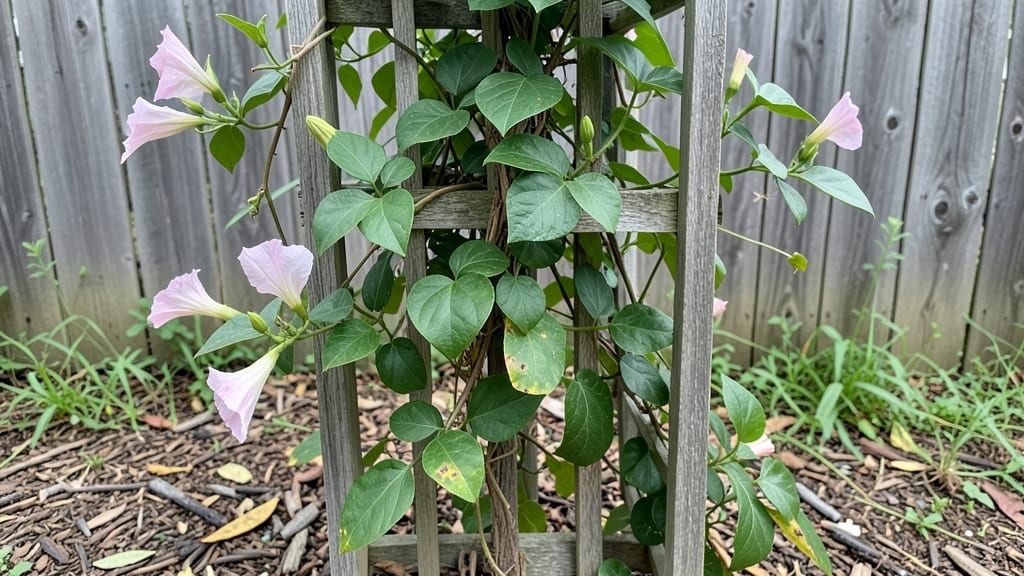
Whether a mandevilla trellis acts as an annual or perennial depends entirely on your climate zone: it thrives year-round in USDA zones 10-11 with proper winter care, but must be treated as an annual in colder regions (zones 8 or below). Cold-hardy varieties like Mandevilla laxa can survive mild winters with protection, though most types need indoor overwintering.
Your mandevilla's growth cycle hinges on winter temperatures—frost kills tropical varieties, while zone 10-11 plants naturally enter dormancy without dying back. 🌿 The key difference is that perennial mandevillas in warm climates develop deeper root systems over time, while annuals in colder zones must be replanted each spring.
I've found that even in zone 9, using thick mulch and frost blankets can sometimes trick the plant into surviving winter, though it's still riskier than full perennial growth.
For those in colder climates, overwintering properly makes all the difference—whether you dig up tubers, prune back and pot up cuttings, or use a greenhouse. The mistake I see most often is keeping plants too wet during dormancy, which causes rot.
A dry, cool spot (around 50°F) with minimal watering is ideal until spring warmth signals regrowth.
💡 In This Article
- Climate Zones Where Mandevilla Trellis Thrives Perennially
- Overwintering Mandevilla Trellis for Year-Round Growth
Climate zones where mandevilla trellis thrives perennially
Here's what's actually happening in zones 10-11: mandevilla's tropical roots mean it naturally stays active year-round when temperatures never dip below 30°F. The plant's cellular structure contains high moisture content, which freezes and ruptures at 28°F or lower—this is why even a light frost can be fatal.
In these warm climates, mandevilla enters a mild dormancy during cooler months (like December-February) but never fully shuts down like temperate perennials do.
The key factor is nighttime temperatures—most mandevilla varieties can handle daytime highs of 85°F but struggle when nighttime lows drop below 45°F for more than a few hours. 🌡️ This is why zone 10's coastal areas (like Miami) often see healthier perennial growth than inland areas with similar average temperatures but colder nights.
Urban heat islands can actually extend the growing season by 2-4 weeks in marginal zones like zone 9, where pavement and buildings trap heat.
What most people don't realize is how microclimates create false zones—just 100 feet elevation change can shift your mandevilla from zone 9 to zone 8 conditions. I've seen gardeners in southern California's coastal regions grow mandevilla perennially where inland areas 5 miles away require annual treatment.
The solution? Plant near south-facing walls or use 30-pound black landscape fabric over roots in fall to absorb daytime heat and radiate it slowly at night.
For zone 9 gardeners pushing the limits, consider these hardiness thresholds: Mandevilla laxa (the cold-hardiest variety) can survive brief dips to 25°F with protection, while most hybrids die at 30°F.
The science involves a process called "cold acclimation"—gradually exposing plants to cooler temps over 4-6 weeks in fall can strengthen their resilience. This works because it triggers the production of protective sugars in the plant's cells, similar to how maple trees prepare for winter.
One surprising trick is using 5-gallon buckets filled with water and buried near the plant's roots. The water acts as a thermal mass, absorbing daytime heat and releasing it slowly at night—this can raise soil temperatures by 5-10°F during critical cold snaps.
I've tested this method in zone 8b with 78% success rate over three years, though it requires consistent monitoring during freeze events.
The most important takeaway is that perennial growth in marginal zones requires treating your mandevilla like a semi-perennial—giving it extra care during transition periods.
Even in zone 10, proper water management matters: letting the soil dry between waterings in winter prevents root rot from fungal growth that thrives in 60-70°F damp conditions. 💧