
Succulent
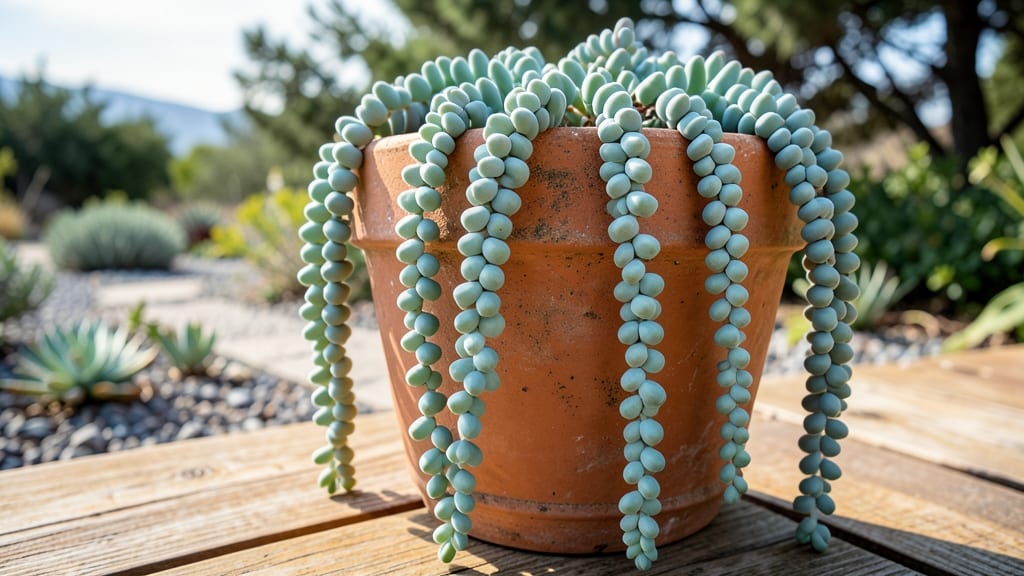
Determining whether lemon coral sedum is annual or perennial depends on your climate: it's a hardy perennial in USDA zones 4-9, returning year after year, though it may go dormant in winter. In colder regions outside this range, frost often kills the foliage permanently, making it behave like an annual.
This succulent's resilience comes from its deep root system, which stores energy to regrow even after winter dieback. 🌱 In zones 4-9, it thrives as a perennial, blooming annually with minimal care, while gardeners in colder areas often treat it as a seasonal plant.
The key difference lies in how well your winter protects its roots—mulching or container growing can sometimes extend its perennial behavior even in marginal climates.
What makes lemon coral sedum unique is its ability to "cheat" the annual classification when conditions are right. Unlike true annuals that complete their entire life cycle in one season, this plant's roots persist through winter, ready to rebound with warmer weather.
This adaptability is why it's such a popular choice for rock gardens and drought-tolerant landscapes across North America.
💡 In This Article
- Lemon Coral Sedum’s Growth Cycle and Cold Hardiness
- How to Extend Lemon Coral Sedum’s Lifespan in Gardens
Lemon coral sedum’s growth cycle and cold hardiness
Here's what actually happens when winter arrives: lemon coral sedum enters a state of dormancy triggered by temperatures below 40°F.
Unlike true annuals that complete their life cycle in one season, this succulent stores energy in its thick, fibrous roots—some reaching 6-12 inches deep—which act as a biological battery.
The above-ground stems and leaves shrivel as the plant redirects resources underground, a survival strategy shared with other hardy succulents like Sedum spurium. 🔥
The key factor is root hardiness: lemon coral sedum's roots can tolerate temperatures down to -25°F (USDA zone 4), while the foliage typically dies back at 20-25°F.
This explains why it's classified as a perennial in zones 4-9—its roots persist through winter, ready to regenerate new growth when spring arrives. True annuals, like marigolds, have no such root system and must complete their entire life cycle from seed to flower to seed in a single growing season.
What most people don't realize is how this plant's growth cycle differs from true perennials like hostas. While hostas maintain green foliage year-round in mild winters, lemon coral sedum's deciduous habit is an adaptation to drought and cold.
The winter dieback isn't a sign of weakness—it's a calculated shutdown that conserves moisture and energy. In zones 5-9, you'll often see new 1-2 inch shoots emerging from the roots by early April, sometimes even before the last frost.
In colder climates (zones 3 and below), the story changes dramatically. When winter temperatures drop below -25°F for extended periods, the root systems can suffer irreversible damage. This is why gardeners in these areas typically treat it as an annual—there's no reliable regrowth mechanism.
The plant's cold tolerance threshold sits at about -25°F for 2-3 weeks, but prolonged exposure to -30°F or colder will kill even the roots.
Consider these key differences between lemon coral sedum and true annuals:
- Root persistence: Sedum roots live through winter; annuals have no persistent structures
- Regrowth speed: Sedum can sprout from roots in 2-4 weeks after frost; annuals must start from seed
- Energy storage: Sedum stores 30-50% more carbohydrates in roots than most annuals
The science behind this involves a process called cold acclimation, where the plant increases its antifreeze proteins and sugar content in its cells as temperatures drop. These natural compounds prevent ice crystal formation that would rupture cell walls.
This biological adaptation is why you can often find lemon coral sedum thriving in rock gardens where other plants would perish—it's literally built to survive freeze-thaw cycles. 💫
What this means for gardeners is simple: in zones 4-9, you're working with a plant that will reward you with 3-5 years of growth with minimal care. In colder zones, success depends entirely on protecting those critical roots—whether through mulching or container growing.
The plant's ability to "come back from the dead" each spring is what makes it such a resilient choice for tough landscapes.