
Flowers
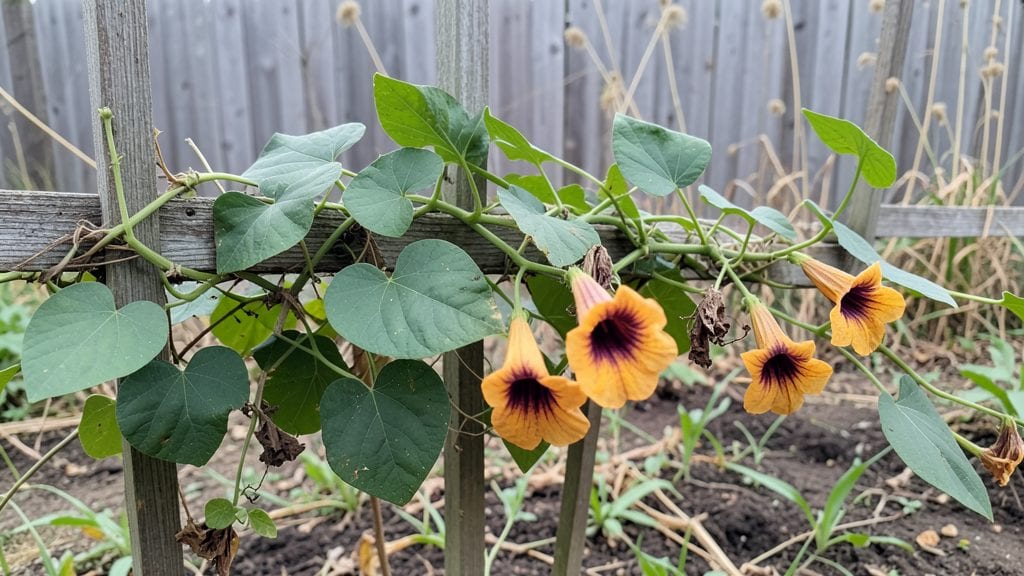
Thunbergia acts as a perennial only in warm climates (USDA Zones 10-11), where it naturally returns each year. In colder regions, frost kills its tender stems and foliage, forcing gardeners to treat it as an annual unless they overwinter it carefully.
Thunbergia's perennial nature depends entirely on climate—its tropical roots make it sensitive to temperatures below 40°F. 🌿 In cooler zones, gardeners can extend its lifespan by digging up tubers before frost hits and storing them in a dry, cool spot until spring.
This method mimics its natural dormancy cycle, letting you enjoy its vibrant blooms year after year with minimal effort.
What sets Thunbergia apart is its ability to bounce back from dormancy, unlike many tropical plants that die completely in cold weather. With the right overwintering approach, you're essentially giving it a second chance to thrive, making it a rewarding plant for patient gardeners in marginal climates.
💡 In This Article
- Thunbergia Plant Hardiness and Climate Requirements
- Overwintering Thunbergia in Cooler Climates
Thunbergia plant hardiness and climate requirements
Thunbergia's tropical origins mean it thrives in USDA Zones 10-11, where average winter temperatures stay above 30°F and rarely drop below 20°F. This range aligns with its natural habitat in Southeast Asia and Africa, where consistent warmth triggers continuous growth.
The plant's stems contain little natural insulation—unlike woody perennials—which makes them highly vulnerable to frost damage at 32°F or lower. 🌡️
Here's what happens when temperatures drop: frost causes cellular damage in the stems and leaves by forming ice crystals that rupture cell walls. Unlike hardy vines such as morning glories (which tolerate 25°F), Thunbergia's foliage and tender growth die back completely when exposed to even light freezes.
However, its underground tubers can survive brief cold snaps, which is why overwintering focuses on protecting these storage organs. The plant's ability to regenerate from tubers is what makes it technically perennial—even in colder climates.
Thunbergia's growth cycle is directly tied to temperature thresholds. In warm zones, it grows aggressively from spring through fall, reaching 10-20 feet in length under ideal conditions. The plant's rapid vine growth (up to 1 foot per week in summer) requires consistent warmth—below 50°F at night slows photosynthesis dramatically.
This sensitivity explains why gardeners in cooler regions must treat it as an annual unless they intervene during dormancy.
When comparing Thunbergia to other tropical vines like passionflower (USDA Zone 8 hardiness) or sweet potato vine (Zone 9), its frost sensitivity becomes clearer. Passionflower can handle 10°F dips because its stems contain more structural lignin, while sweet potato vine's tubers survive 20°F temperatures.
Thunbergia falls somewhere in between—its tubers are more frost-tolerant than its foliage, creating a unique challenge for gardeners who want to extend its lifespan beyond one season.
The key to understanding Thunbergia's hardiness lies in its cellular structure. Its leaves contain large water-filled vacuoles that freeze easily, while its stems lack the protective bark found in temperate perennials.
This combination makes it highly responsive to microclimates—even a 10°F temperature swing can determine whether it thrives or dies back. In coastal areas or urban heat islands where winter temps hover around 35°F, Thunbergia might survive outdoors with winter protection, demonstrating how precise temperature management can push its limits.
What most gardeners don't realize is that Thunbergia's dormancy period isn't true winter rest like temperate perennials. Instead, it enters a state of suspended growth when temperatures drop below 55°F.
This physiological response explains why it can regrow from tubers in spring—its energy reserves remain intact if protected from prolonged cold. The plant's ability to "reset" each year makes it an excellent candidate for overwintering experiments in marginal climates.
For those pushing Thunbergia's limits, consider these temperature benchmarks: 50-60°F is ideal for growth, 40-49°F triggers dormancy, and anything below 32°F risks lethal damage. Understanding these thresholds helps gardeners make informed decisions about whether to grow Thunbergia as an annual or invest in overwintering techniques. 🌱