
Flowers
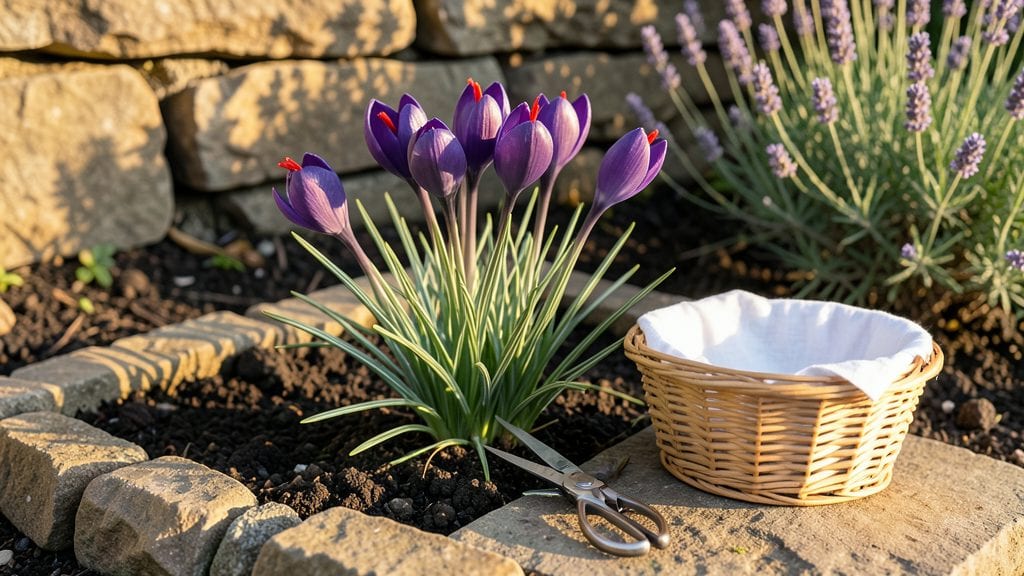
Saffron is not a perennial in traditional terms, though its crocus plant (Crocus sativus) lives for multiple years under ideal conditions. It produces flowers and harvestable saffron threads only in its second year, then often declines unless carefully managed as a biennial or short-lived perennial.
Botanically speaking, saffron's crocus behaves more like a short-lived perennial than a true perennial because its flowering and harvestable thread production peaks in just 2-3 years before declining.
Unlike lavender or asparagus, which regrow consistently, saffron's corms (bulb-like roots) gradually deplete their energy reserves after producing flowers, making them less reliable for long-term harvests. 🌱 The key to extending its productivity lies in proper soil nutrition and seasonal care—think of it as a high-maintenance biennial rather than a low-maintenance perennial.
What sets saffron apart is its dormancy cycle: after flowering, the plant enters a resting phase where it stores energy underground. This makes it vulnerable to overcrowding or poor soil conditions, which can accelerate bulb exhaustion.
In Mediterranean climates where saffron thrives naturally, gardeners often replant corms every 3-4 years to maintain quality, while colder regions may need even more frequent renewal due to shorter growing seasons.
💡 In This Article
- Saffron Crocus Lifecycle: Why It Acts Like a Biennial
- Growing Saffron Long-Term: Bulb Care and Harvest Tips
Saffron crocus lifecycle: why it acts like a biennial
The saffron crocus (Crocus sativus) follows a unique growth pattern because its corms—thickened underground stems—store energy differently than true perennials. Unlike lavender, which produces new growth annually from the same root system, saffron corms deplete their reserves after flowering.
This happens because each flower stalk draws heavily on stored nutrients, leaving the corm weaker for subsequent years. The plant’s natural lifecycle mirrors biennials like carrots, where energy is directed toward reproductive growth before decline.
Here’s what’s happening underground: After planting, the corm develops a network of smaller cormlets (baby corms) in its first year, but these remain dormant. In year two, the mother corm produces 1-3 flower stalks, each bearing 3-4 stigmas (the saffron threads).
This massive energy expenditure weakens the corm, and by year three, many gardeners notice a 30-50% drop in flower production unless the corms are divided and replanted. The key factor is the corm’s limited energy storage—unlike perennials like asparagus, which regenerate from extensive rhizomes.
Climate plays a critical role in this cycle. In Mediterranean regions, where saffron thrives naturally, cooler winters (40-50°F) trigger dormancy, while warm springs (60-70°F) stimulate flowering. In colder zones, the shorter growing season accelerates corm exhaustion, often requiring replanting every 2-3 years.
Poor soil drainage or overcrowding worsens the issue by starving corms of oxygen and nutrients, leading to premature decline.
Compare this to annuals like marigolds, which complete their entire lifecycle in one season, or true perennials like lavender, which regrow from the same root system year after year. Saffron’s corms are more like biennials in that they prioritize reproduction over longevity.
The trade-off is striking: while annuals die after flowering, saffron’s corms persist but at a cost—each harvest weakens them, making long-term cultivation a delicate balance of soil health and corm management.
What most people don’t realize is how light affects this cycle. Saffron corms need 12-14 hours of daylight to trigger flowering, but too much sunlight can overheat the soil, stressing the corms. In contrast, true perennials like lavender tolerate broader light conditions.
This sensitivity explains why saffron struggles in hot climates unless shaded or irrigated carefully—another reason it behaves more like a biennial than a hardy perennial.
To extend saffron’s productivity, gardeners often divide corms every 3 years, replanting the healthiest segments. This mimics the natural cycle of bulbs like tulips, which also decline after peak flowering.
The difference? Tulips regenerate from offsets, while saffron’s corms lack this resilience, making them a short-lived perennial at best. 🌿