
Flowers
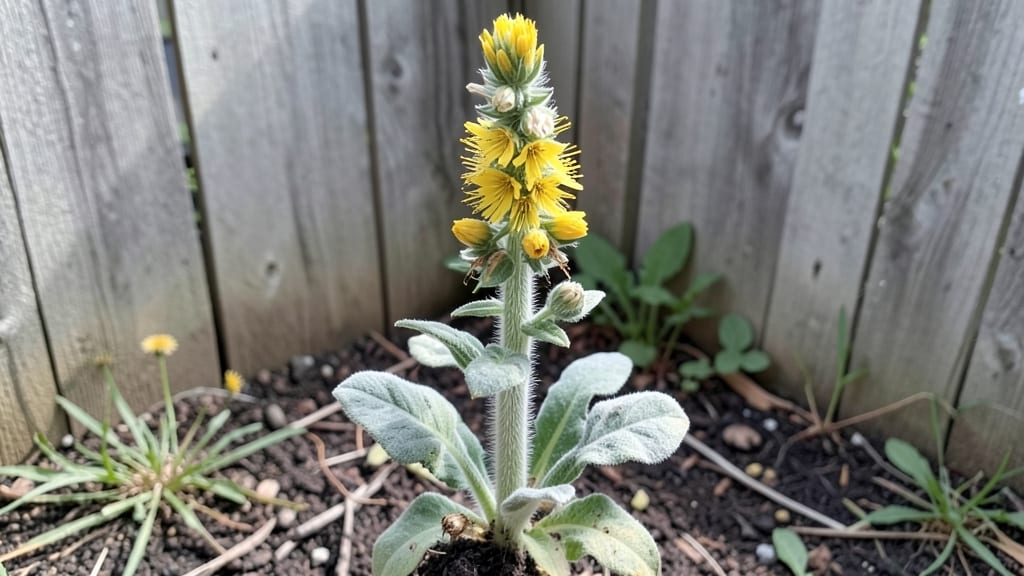
Mullein is a perennial plant that thrives for multiple years, often reaching 3 to 5 feet tall, with deep taproots that allow it to regrow annually from the same root system after dying back in winter.
Mullein’s perennial nature comes from its hardy root system, which stores nutrients underground to fuel regrowth each spring. 🌱 Unlike annuals that complete their life cycle in one season, mullein’s deep roots let it survive harsh winters and bounce back stronger—though some species may live only 2-3 years before declining.
I’ve seen it thrive in poor soil where other plants struggle, making it a low-maintenance choice for wildflower gardens or medicinal patches.
What really sets mullein apart is its adaptability—it handles everything from dry climates to partial shade, though it prefers full sun. The key to long-term growth is spacing plants properly (18-24 inches apart) to prevent overcrowding, which can weaken the roots.
Many gardeners swear by its resilience, especially when dealing with pests like deer, which usually avoid it.
💡 In This Article
- Mullein’s Lifespan and Growth Cycle
- Cultivating Mullein as a Long-Term Garden Plant
Mullein’s lifespan and growth cycle
The secret behind mullein's perennial success lies in its deep, robust taproot system that can extend up to 3 feet underground. This root structure acts like a natural storage unit, accumulating starches and nutrients during the growing season to fuel regrowth when conditions improve.
Unlike annuals that rely on quick reproduction, mullein's roots develop a woody, fibrous core that persists through winter dormancy, allowing it to rebound each spring. 🌿
Most common mullein species like Verbascum thapsus (great mullein) follow a biennial or short-lived perennial pattern. In their first year, they focus on building root mass, then produce leaves and flowers in the second year before potentially declining after 3-5 years.
However, Verbascum phoeniceum (moth mullein) often lives longer—up to 7-10 years)—thanks to its more extensive root network. The difference comes down to genetic adaptations: longer-lived species develop secondary root growth that thickens over time.
Seasonal die-back is where mullein's survival strategy shines. After flowering, the above-ground stems die back to the ground, but the roots remain active underground. This process, called senescence, conserves energy while maintaining root viability.
In colder climates, mullein may enter deeper dormancy, while in Mediterranean regions, it can grow nearly year-round. The plant's ability to photosynthesize through its woody stems even when leaves are absent gives it a competitive edge in harsh conditions. 🌡️
Climate plays a crucial role in determining mullein's longevity. In dry, arid environments, mullein often lives longer because its deep roots access water far below the surface. However, in humid or waterlogged soils, root rot can shorten its lifespan.
The plant's natural resistance to drought comes from its succulent stems that store moisture, while its fuzzy leaves reduce water loss through transpiration. These adaptations explain why mullein thrives in disturbed soils and poor-quality land where other perennials struggle.
What most gardeners don't realize is that mullein's growth cycle can be accelerated or slowed by human intervention. Over-fertilizing can lead to weak, top-heavy growth that collapses under its own weight, while proper spacing (18-24 inches apart) allows roots to develop fully.
In my experience, mullein planted in full sun with minimal disturbance often outlives its expected lifespan, sometimes reaching 10+ years in ideal conditions. The key is letting nature take its course—mullein doesn't need our help to thrive. 🌱
For those interested in medicinal uses, it's worth noting that the young leaves and flowers contain the highest concentrations of beneficial compounds. Since mullein's flowering period varies by climate (typically June-August in temperate zones), planning harvests around its natural cycle ensures maximum potency.
The plant's ability to self-seed aggressively means once established, it often becomes a permanent fixture in the landscape—though some consider it invasive in certain regions.