
Flowers
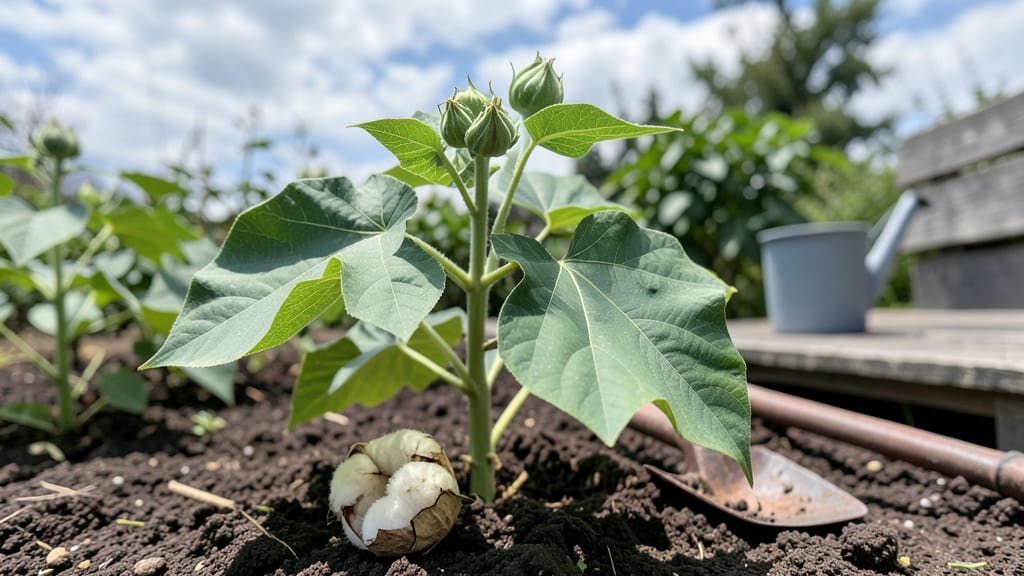
Cotton is not a perennial plant—it grows as an annual, completing its life cycle in one season before dying. However, its roots may persist in warm climates, allowing regrowth under ideal conditions, which can create a semi-perennial appearance in some regions.
Cotton's annual classification stems from its sensitivity to temperature shifts, particularly frost.
Unlike perennials that regrow from the same root system year after year, cotton plants die back completely after producing seed pods. 🌱 The exception occurs in frost-free zones where residual roots can sprout new shoots—though this isn't true perennial behavior.
For gardeners, this means treating cotton like an annual in most regions, but tropical growers can exploit its hardy root system for repeated harvests with proper care.
Understanding this distinction helps explain why cotton fields are replanted annually in temperate climates while some subtropical varieties show persistent growth. The key difference lies in the plant's reproductive strategy—cotton prioritizes seed production over long-term survival, unlike true perennials that focus on root system preservation.
💡 In This Article
- Why Cotton Acts Like an Annual in Most Climates
- Growing Cotton as a Perennial in Tropical and Subtropical Zones
Why cotton acts like an annual in most climates
Cotton's annual nature stems from its biological adaptation to maximize seed production in a single growing season. Unlike perennials such as lavender or asparagus—which develop deep root systems to survive multiple years—cotton plants prioritize rapid growth and flowering.
This strategy allows them to complete their life cycle before first frost (typically below 32°F), which would kill the above-ground biomass. The plant's entire energy focus shifts from vegetative growth to reproductive development within 120-150 days after germination.
The key mechanism is cotton's thermoperiod sensitivity—its response to temperature cycles. Most commercial varieties require 18-20 hours of daylight combined with warm nights (75-85°F) to trigger flowering. Once flowering begins, the plant's lifespan accelerates toward seed maturity.
This contrasts with true perennials like almond trees, which gradually build biomass over years while delaying reproduction until they're physiologically mature—often requiring 3-5 years before bearing fruit.
Cotton's frost intolerance explains why it can't persist through winter in temperate zones. The plant's taproot system (extending 3-5 feet deep) stores some energy, but the above-ground stems and leaves contain 80% of the plant's biomass—all of which dies back when temperatures drop.
Even if roots remain viable, they lack the specialized buds of true perennials that can regenerate shoots. This is why gardeners in USDA zones 5-10 must replant cotton annually, while tropical varieties show semi-perennial behavior.
Consider the contrast with asparagus: its crown (a cluster of fleshy roots) contains 10-15 dormant buds that can regenerate shoots year after year. Cotton, by comparison, produces a single main stem with lateral branches—structures that lack the regenerative capacity of perennial buds.
The plant's entire reproductive strategy revolves around one-time seed production, making it ecologically distinct from plants that invest in long-term survival.
What most gardeners overlook is how cotton's growth habit differs from even other annuals like corn. While corn also completes its life cycle in one season, it lacks cotton's woody stem base (which can reach 1-2 inches in diameter) and extensive root network.
This structural difference means cotton's residual roots in warm climates can persist for 2-3 years before fully decomposing, creating the illusion of perennial behavior when in reality, it's just delayed senescence.
The botanical term for this is "monocarpic"—plants that flower and fruit only once before dying. Cotton exemplifies this trait, whereas polycarpic perennials (like fruit trees) produce multiple harvests. Understanding this helps explain why cotton fields are always replanted annually in commercial agriculture, despite occasional regrowth in frost-free regions.