
Flowers
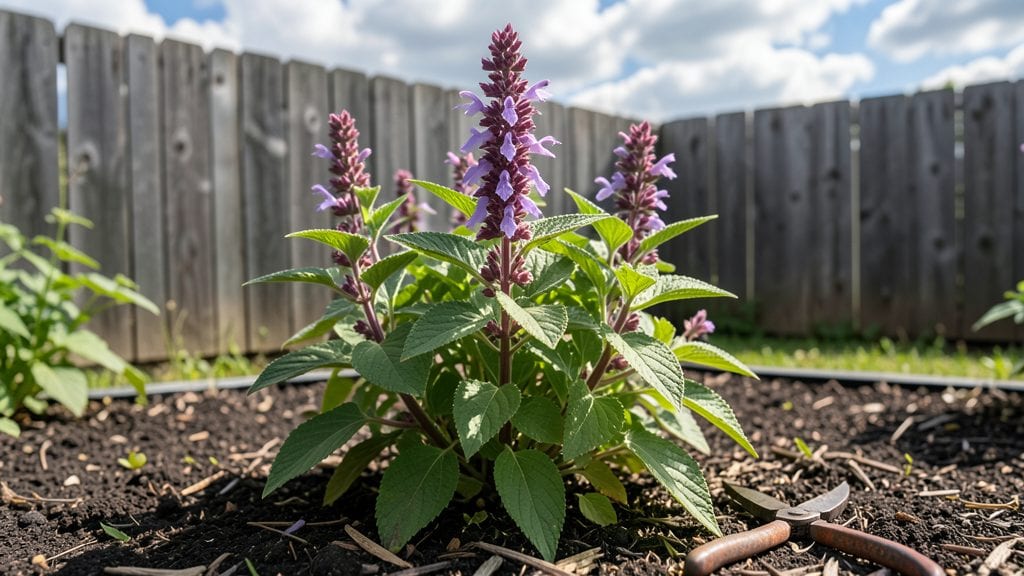
Yes, bergamot is a perennial herb that thrives in warm climates but often dies back in colder zones, regrowing from its hardy root system each spring. Its cold-hardiness depends on the variety and winter conditions, with most thriving in USDA zones 5-9.
Bergamot's perennial nature comes from its deep, woody root system that stores energy underground during winter dormancy. 🌱 In colder regions, the above-ground stems may blacken and appear dead, but the roots remain alive—ready to sprout fresh growth once temperatures rise.
This makes it a semi-perennial in marginal zones, where it behaves more like a short-lived perennial than a true hardy one.
What sets bergamot apart is its ability to regenerate from just a small root fragment, making it resilient even after severe winters. Many gardeners in zones 4 and below grow it as an annual or use container gardening to move plants indoors during freezing months.
The key to maximizing its lifespan is protecting those roots—whether through heavy mulch or strategic planting in sheltered microclimates.
💡 In This Article
- Bergamot’s Perennial Nature and Root System
- Extending Bergamot’s Lifespan in Cold Climates
Bergamot’s perennial nature and root system
Bergamot's survival strategy hinges on its thick, fibrous root system that extends up to 3 feet deep into the soil. Unlike true perennials that maintain above-ground growth year-round, bergamot enters dormancy in cold climates, shedding its leaves and stems while the roots remain active.
These roots store carbohydrates and nutrients during winter, fueling rapid regrowth when temperatures climb above 50°F in spring. The root system's woody texture makes it far more resilient than annual herbs, which must regrow entirely from seed each year.
Here's how the growth cycle works: In USDA zone 7, bergamot begins leaf dieback in late fall when night temperatures drop below 40°F. By winter, only the roots remain, protected by a 2-3 inch layer of mulch that insulates against freezing.
In warmer zones (8-9), some varieties maintain evergreen foliage year-round, though growth slows dramatically. The key difference from true perennials like lavender is that bergamot's above-ground parts are not frost-tolerant—they'll blacken at 25°F or lower, but the roots survive down to 10°F with proper protection.
What most gardeners miss is that bergamot's regrowth timing depends on root temperature, not air temperature. In zone 5, roots may stay dormant until mid-May when soil reaches 55°F, while zone 9 plants might sprout as early as February.
This explains why bergamot often appears "dead" in spring—it's actually waiting for soil warmth to trigger new shoots. The root system's ability to regenerate from even 1-inch fragments makes it uniquely adaptable, allowing gardeners to propagate new plants from old root sections.
Comparing bergamot to true perennials like asparagus reveals its semi-perennial nature: While asparagus maintains a permanent crown and foliage year-round, bergamot's growth is seasonally dependent. In marginal zones (4-5), gardeners often treat it as an annual because the roots may weaken after 2-3 years without winter protection.
The plant's aromatic compounds (like limonene) actually increase in concentration during dormancy, which is why some varieties develop more intense flavors after their first winter.
Visualize the process: In autumn, bergamot's stems turn brown and crisp, while the roots swell with stored energy. By spring, new shoots emerge from the root collar—the junction where stems meet roots.
This regrowth point is 1-2 inches below soil level, making deep planting (6 inches deep) crucial for cold protection. The plant's horizontal root spread (up to 3 feet wide) also helps it compete with weeds while accessing moisture during dry spells.
For those in zone 4 or colder, the challenge isn't whether bergamot can survive winter—it's whether the roots will have enough energy to regrow.
The solution lies in fall mulching with straw (not leaves, which compact) and choosing hardier varieties like 'Citriodora', which has been documented surviving to -10°F with proper care. The trade-off? These hardier varieties often produce slightly less intense flavors compared to tropical strains.
Here's the science: Bergamot's root system contains secondary xylem (wood-like tissue) that prevents water loss during dormancy. This same tissue allows the plant to translocate stored nutrients upward when conditions improve. The root's mycorrhizal associations (symbiotic fungi) further enhance its cold tolerance by improving nutrient uptake during stress periods. 💫