
Flowers
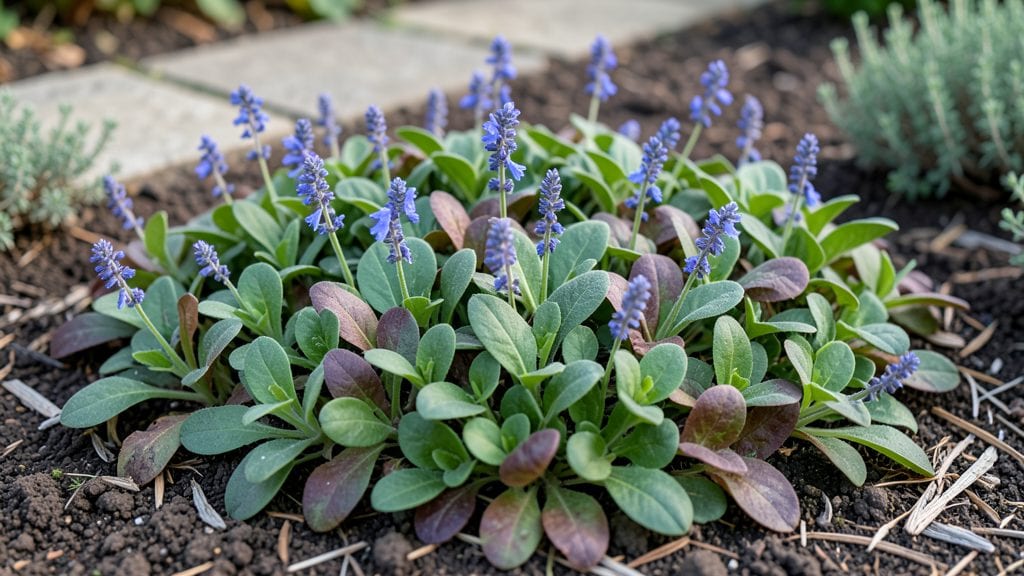
Ajuga is indeed a perennial, offering year-round ground cover with minimal upkeep while thriving across USDA zones 3 through 9 when given proper seasonal protection.
This hardy plant returns annually, thanks to its deep-rooted rhizomes that store nutrients for regrowth each spring. 🌱 Unlike annuals that complete their life cycle in one season, ajuga's persistent foliage and ability to spread via stolons make it a low-fuss choice for gardeners seeking long-term coverage.
The key to its longevity lies in its adaptability—whether you're in the deep freeze of zone 3 or the milder zone 9, ajuga can handle the conditions with the right care during winter months.
What sets ajuga apart is its dual nature: it stays green through mild winters in warmer zones while entering dormancy in colder areas, only to bounce back with vibrant purple, gold, or green foliage when temperatures rise.
This resilience makes it perfect for borders, slopes, or even as an understory plant where other ground covers might struggle.
💡 In This Article
- Ajuga Plant Lifespan and Growth Cycle
- Winter Care for Ajuga in Cold Climates
Ajuga plant lifespan and growth cycle
Ajuga earns its reputation as a true perennial through its sophisticated underground network of rhizomes—thick, horizontal stems that store carbohydrates and nutrients year-round. These rhizomes act like nature's battery pack, allowing the plant to survive harsh winters by maintaining a dormant root system while above-ground foliage dies back.
This underground resilience is why ajuga can regenerate from just a small root fragment, making it nearly indestructible once established. 🌿
The plant's growth cycle follows a clear seasonal rhythm: in spring, new shoots emerge from the rhizomes, forming a dense mat of foliage that spreads aggressively via stolons—long, creeping stems that root at nodes.
Stolons allow ajuga to colonize areas up to 12 inches per year, creating a self-sustaining carpet that crowds out weeds. Unlike annuals, which rely on seeds for reproduction, ajuga's vegetative spread ensures it dominates spaces without needing annual replanting.
Here's what's actually happening during dormancy: when temperatures drop below 20°F, ajuga's cells produce antifreeze proteins that prevent ice crystals from forming in its tissues. This biological adaptation explains why it thrives in zone 3 winters (-40°F to -30°F) while still performing well in zone 9's mild winters.
The rhizomes even insulate the crown, protecting the growing point from freezing soil temperatures that would kill shallower-rooted plants. ✨
Ajuga's adaptability extends to its foliage strategy: in colder climates, it develops thicker, more leathery leaves that reduce water loss, while warmer zones see softer, more delicate growth.
This plasticity is why ajuga maintains its vibrant purple, gold, or variegated foliage across such diverse climates—it's not just surviving, but actively optimizing its growth form based on local conditions.
What most people don't realize is how ajuga's growth habits actually improve with age. Younger plants spread slowly as they establish their rhizome network, but mature specimens can expand 3-4 feet per year through stolon production.
This makes it particularly valuable for erosion control on slopes, where its dense root system stabilizes soil while the above-ground mat prevents runoff. The plant's ability to photosynthesize even in low light makes it ideal for shady garden areas where other perennials struggle. 💫
Consider these key factors that make ajuga's perennial status unique:
- Rhizome depth: Roots extend 6-12 inches deep, accessing moisture and nutrients beyond the reach of most ground covers
- Dormancy triggers: Day length changes (not just temperature) signal when to enter winter dormancy
- Regrowth speed: Can emerge from dormancy within 2-3 weeks of spring thaw in optimal conditions
- Clonal reproduction: Each stolon node can become a new plant, creating genetically identical clones