
Landscaping
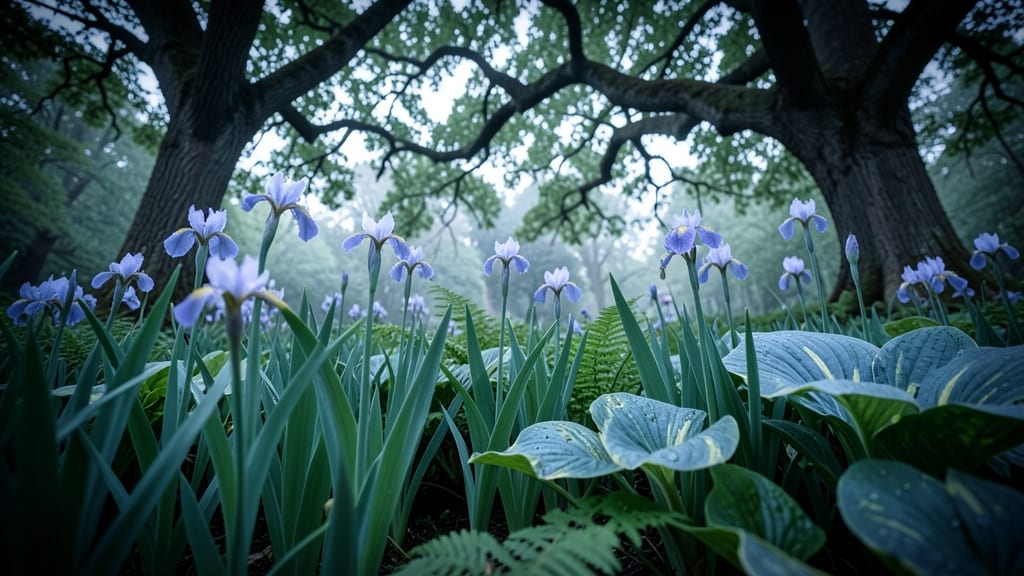
Iris flowers bring bold, cheerful color to gardens with minimal upkeep. These 10 bedding ideas combine irises with complementary perennials for year-round interest, drought tolerance, and easy maintenance—perfect for both beginners and seasoned gardeners.
Classic Iris and Lavender Border
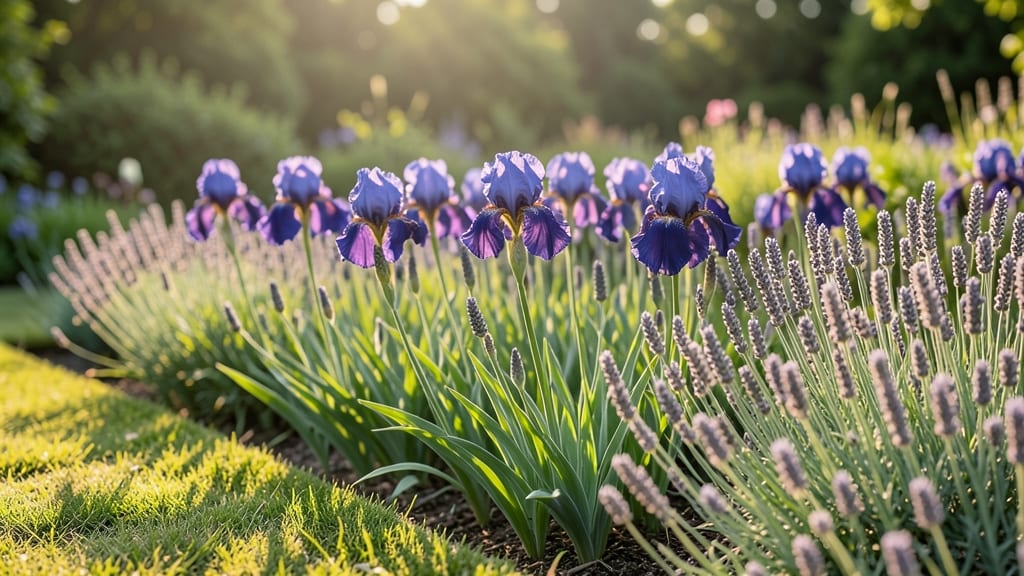
Transform your garden into a fragrant, deer-resistant oasis with this timeless iris and lavender border. This classic pairing thrives in full sun while requiring minimal water—perfect for drought-prone regions or low-maintenance landscapes.
Plant bearded irises (like 'Blue Flag' or 'Purple Sword') alongside English lavender ('Hidcote' or 'Munstead') for a striking contrast in height and texture. The irises bloom first in spring, followed by lavender's summer fragrance, creating year-round interest. Both plants naturally repel deer, making this combo ideal for rural or suburban gardens.
This border works beautifully in cottage-style gardens or as a low-water hedge. The soothing scent of lavender also deters pests while adding a calming atmosphere to your outdoor space. 🌿
Iris and Ornamental Grasses Mix
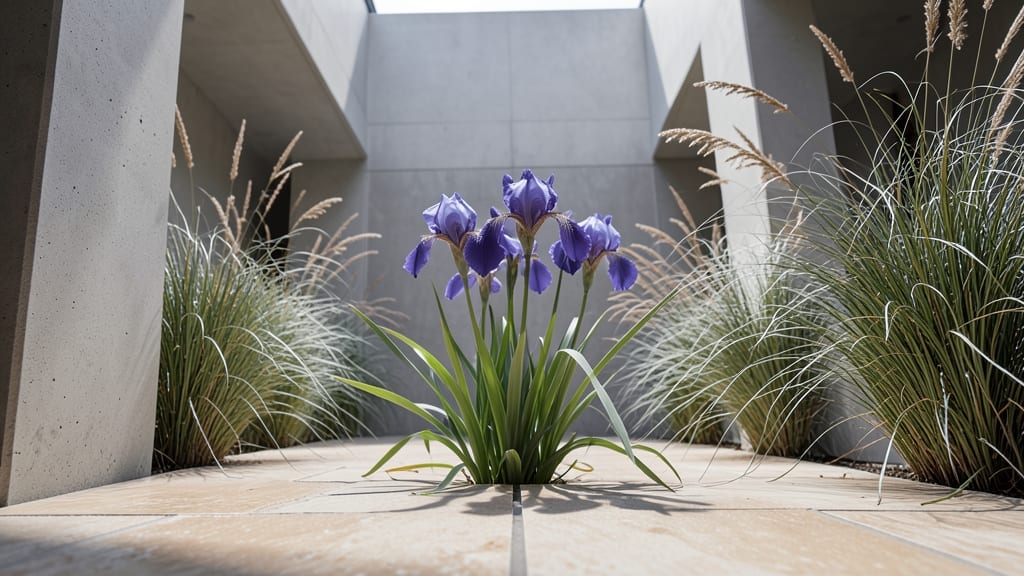
Transform your urban courtyard or modern garden into a sleek, textured masterpiece with a low-maintenance mix of irises and ornamental grasses. This pairing replaces high-maintenance hedges with effortless elegance, using the vertical lines of grasses to frame iris blooms while adding movement to still spaces.
Choose drought-tolerant grasses like Miscanthus sinensis or Pennisetum for their airy plumes that sway in the breeze, while bearded irises provide bold color and structure. Plant grasses in clusters around irises for a natural, layered look—no trimming required after the initial setup. This combo thrives in full sun to partial shade, making it versatile for patios, balconies, or small yards.
Perfect for gardeners who want a contemporary aesthetic without the upkeep, this mix also attracts pollinators while reducing water needs. 🌿
Spring-Blooming Iris with Tulips
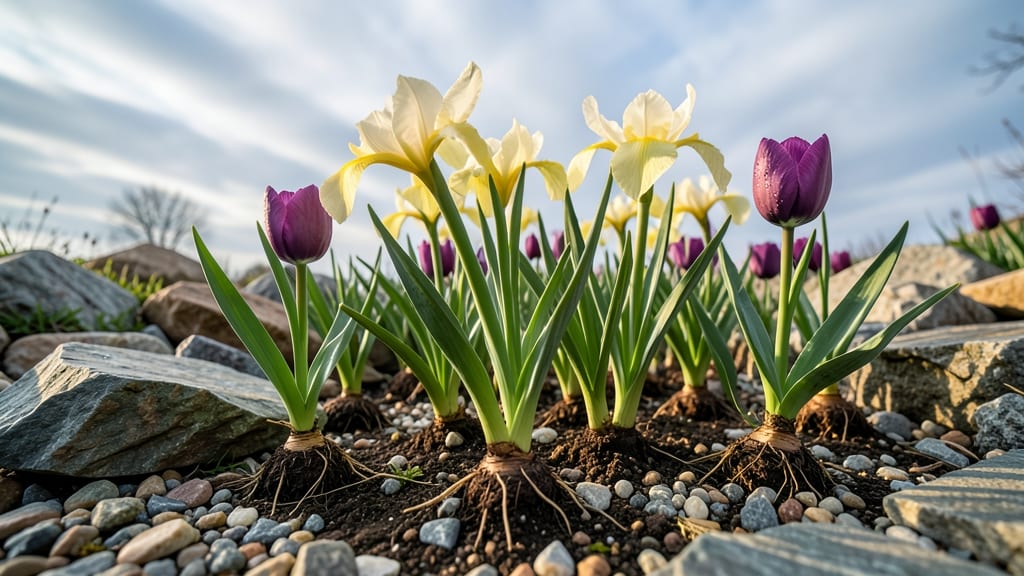
Want to beat the spring doldrums and create a showstopping early-season display? Pair spring-blooming iris varieties like 'Pale Yellow' or 'Winnipeg' with tulips for a two-week color explosion that outpaces most perennials.
Plant tulips first in well-draining containers or rock gardens, then tuck iris rhizomes around their edges. The irises will emerge later, extending your blooms into May while tulips fade. Choose dwarf tulips (like 'Early Harlequin') to keep the scale balanced—this combo thrives in full sun to partial shade and tolerates dry spells once established.
This pairing is perfect for small spaces, urban balconies, or early-season color cravings. The contrast of tulip petals against iris sword-like foliage creates instant visual interest, and both plants share similar care needs. 🌷
Iris and Daylily Combination
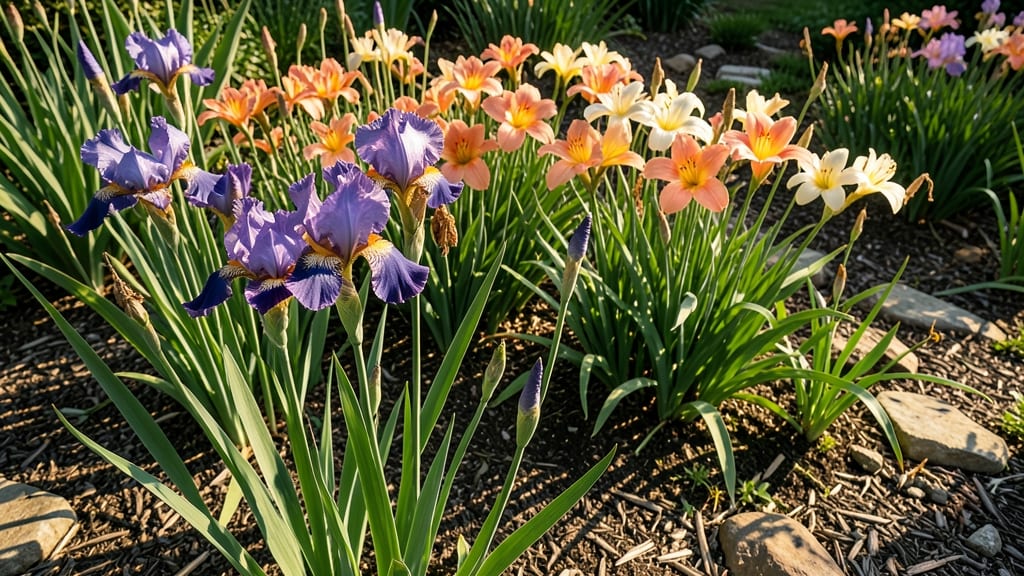
Want a summer-long color show without the fuss? Pair irises with daylilies for a low-maintenance duo that blooms back-to-back, creating a vibrant garden that thrives with minimal care.
Start by planting irises first—they bloom in late spring to early summer, followed by daylilies that take over in mid to late summer. Both love full sun to partial shade and well-draining soil, making them perfect companions. Daylilies also help suppress weeds, reducing your maintenance time.
This combo is especially rewarding for pollinator gardens, as both plants attract bees, butterflies, and hummingbirds. Ideal for busy gardeners or those new to perennials, this pairing delivers year-round interest with almost no effort. 🌻
Woodland Iris with Ferns
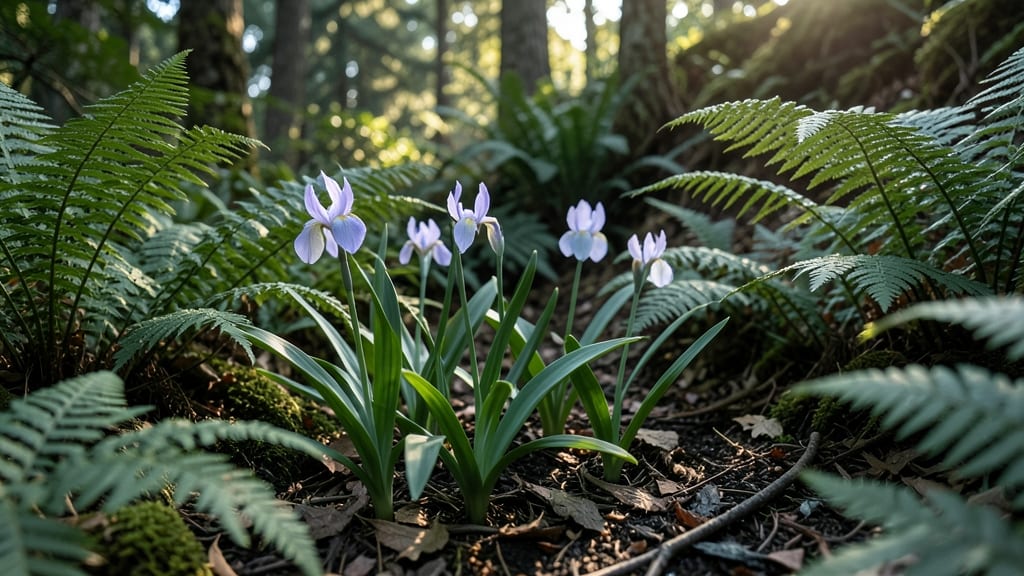
Want to transform a shady corner into a lush, low-maintenance garden? Woodland irises and ferns create a natural woodland tapestry that thrives in partial shade—perfect for understory plantings or forest-edge gardens.
Pair Iris cristata (dwarf woodland iris) with Ostrich fern or Japanese painted fern for layered texture and year-round interest. These plants love moist, well-draining soil and only need 2-4 hours of morning sun. Mulch with leaf litter to mimic forest floors and suppress weeds effortlessly.
This combo is ideal for gardeners with shady spots who crave beauty without the upkeep. The ferns provide lush greenery year-round, while irises bloom in late spring with delicate, nodding flowers. 🌿
Iris and Catmint Pollinator Garden
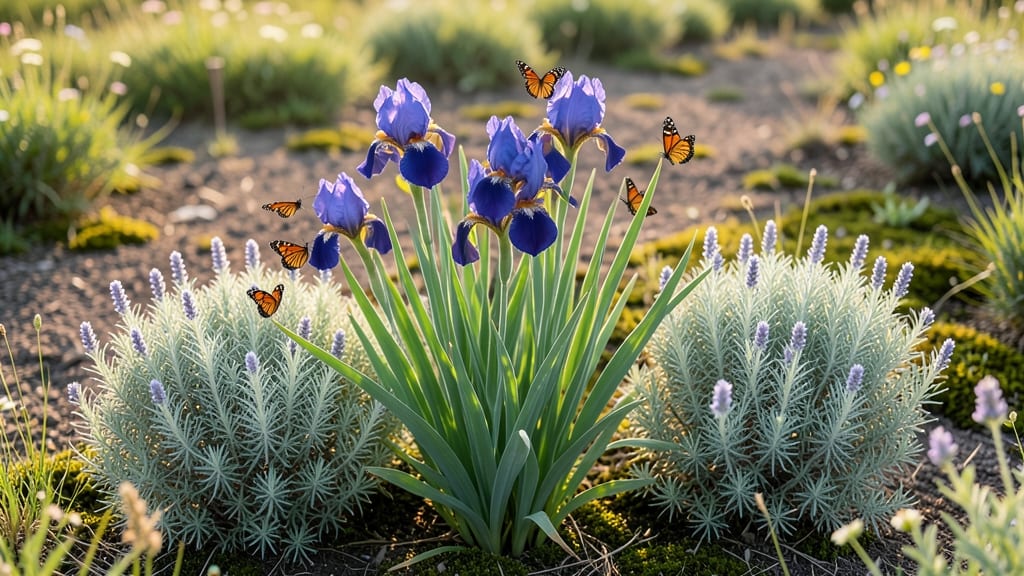
Want a garden that hums with life while requiring almost no effort? Pairing irises with catmint creates a pollinator paradise that thrives in even the most challenging soil conditions. This dynamic duo attracts butterflies year-round and naturally deters pests like rabbits and deer, making it perfect for eco-conscious gardeners.
The key to success is planting bearded irises alongside Nepeta (catmint) varieties like 'Walker's Low' or 'Six Hills Giant' in full sun. Catmint's silvery foliage contrasts beautifully with iris blooms while extending the season with its late-summer to fall flowers. Both plants are drought-tolerant once established, requiring minimal watering after the first year.
This combination is especially rewarding for gardeners who want to support local ecosystems without extra work. The fragrant catmint also repels mosquitoes naturally, creating a pleasant outdoor space. 🌟
Iris and Russian Sage Border
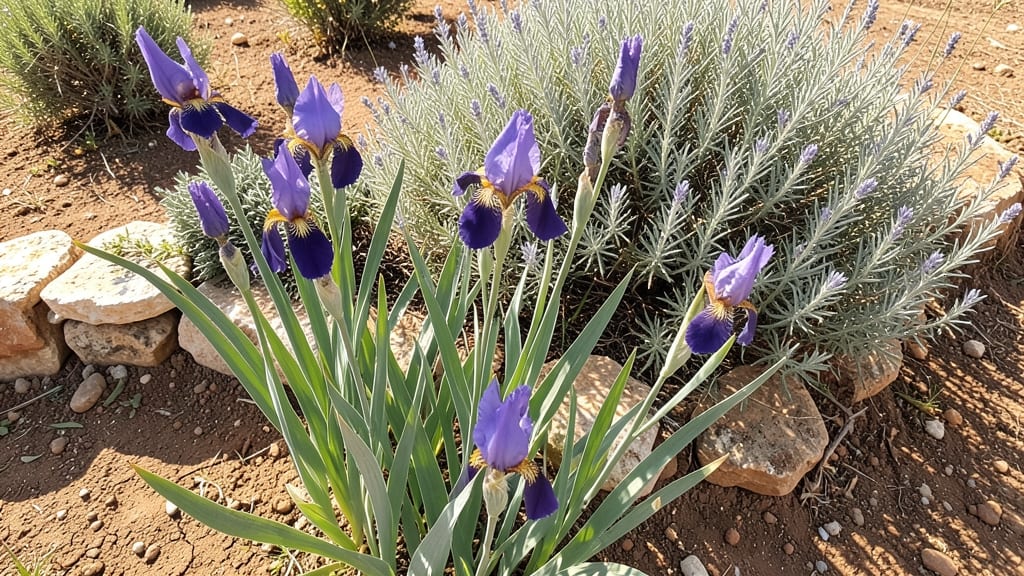
Transform your hot, dry garden into a fragrant, vertical masterpiece with a Russian sage and iris border. This powerhouse pairing thrives on neglect, requiring only occasional watering once established, making it ideal for water-wise landscapes or Mediterranean-style gardens.
Plant tall bearded irises (3-4 feet) in the back for dramatic height, then weave in Russian sage (4-5 feet) for airy, silvery foliage and late-summer blooms. The combination creates a textured, layered look while attracting pollinators and repelling pests with its natural oils. Prune both lightly in early spring to encourage bushier growth.
This border is perfect for gardeners in USDA zones 4-9 who want year-round structure—irises provide early spring color, while Russian sage keeps the show going until fall. 🌟
Iris and Daisy Ground Cover
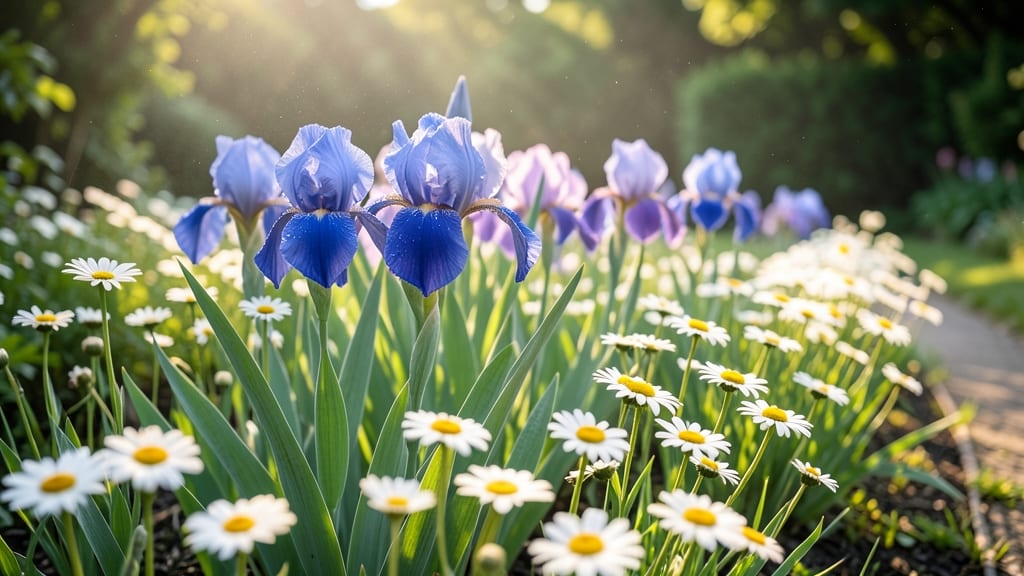
Craving a garden that feels like stepping into a storybook? Pairing irises with daisies creates a dreamy, low-maintenance ground cover that fills borders with soft romance and effortless charm.
Plant bearded irises (like 'Blue Flag' or 'Purple Haze') alongside Shasta daisies or oxeye daisies for a cottage garden vibe that thrives in full sun to partial shade. The irises bloom first in spring, followed by daisies that stretch the season until summer. Both plants spread gradually, filling gaps naturally without aggressive runners.
This combo is perfect for gardeners who love whimsical aesthetics but want minimal upkeep—ideal for beginners or those with busy schedules. 🌷
Iris and Salvia Contrast
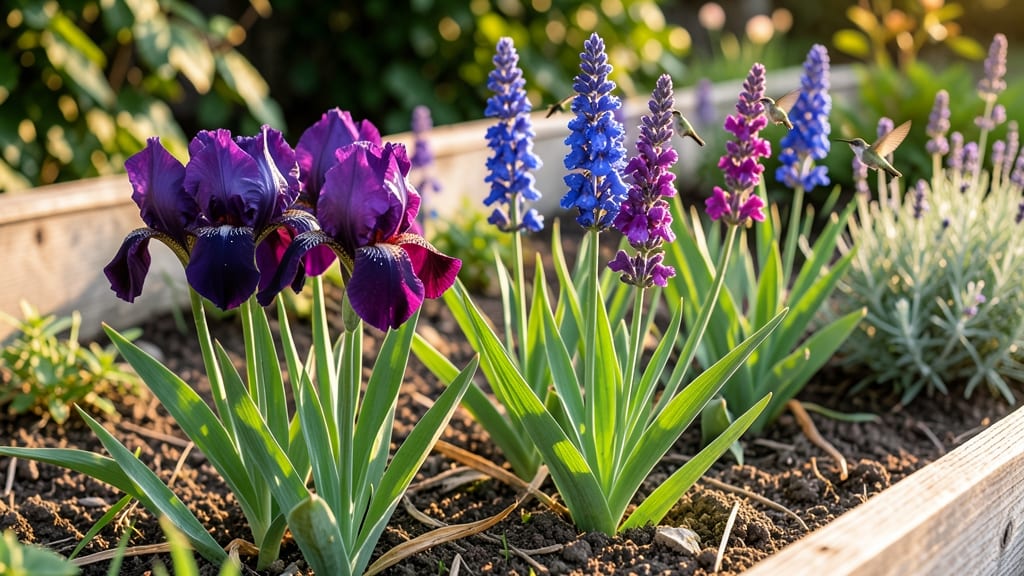
Want a bold, high-impact garden bed that thrives in summer heat without demanding your time? Pair irises with salvia for a striking contrast that hummingbirds can't resist. This combo delivers drama with minimal effort—no deadheading required!
The deep purple irises provide structure and early-season blooms, while salvia (especially Salvia nemorosa or Salvia 'Hot Lips') adds fiery red or purple spikes that bloom later. Both plants love full sun and well-drained soil, making them perfect for modern landscapes. The salvia's vertical spikes create movement, while irises anchor the bed with their classic sword-like foliage.
This pairing is ideal for urban gardeners or anyone craving a low-maintenance yet visually stunning bed. The salvia’s long bloom time extends the season, and irises return year after year—no replanting needed. 🌻
Iris and Hostas Shade Garden

Transform your shady garden into a lush, cool-season sanctuary with a iris and hostas combo that thrives where sunlight is scarce. This pairing leverages the late-spring blooms of irises and hostas' dramatic foliage to create a thriving understory that northern climates will love.
Plant blue flag irises (like Iris versicolor) alongside hostas in well-draining, moist but not soggy soil. The irises' upright blooms will rise above the hostas' broad leaves, creating natural layers. Choose drought-tolerant hosta varieties like 'Halcyon' or 'Francee' to reduce maintenance—both handle shade and occasional dry spells better than fussy foliage plants.
This design is perfect for gardeners with limited sun exposure or those seeking a low-maintenance woodland aesthetic. The combination stays vibrant through summer while providing year-round structure with hostas' evergreen leaves. 🌿