
Flowers
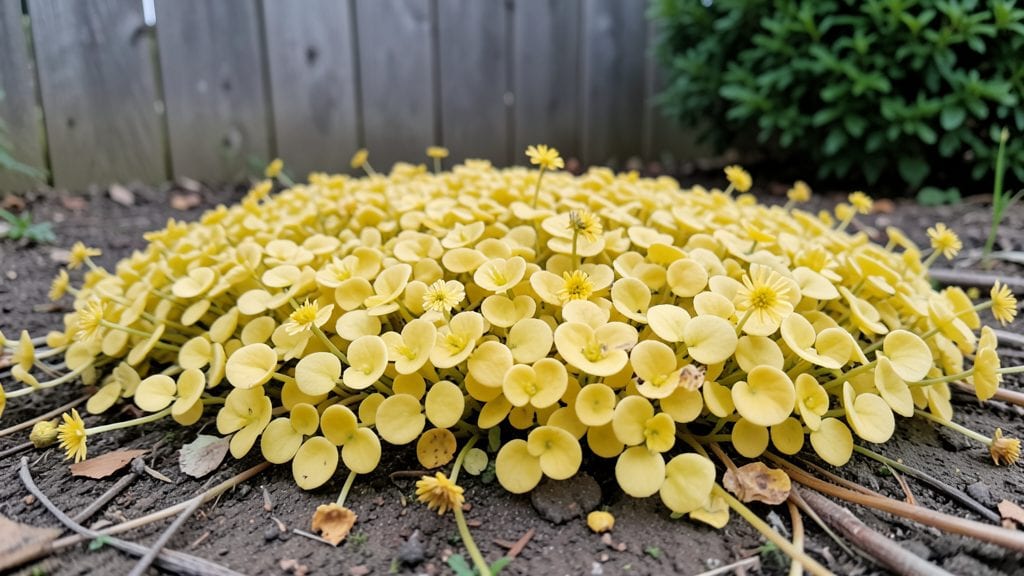
Deciding whether golden moneywort is an annual or perennial depends on your climate: it's a hardy perennial in USDA zones 3-9, regrowing each year from its deep rhizomes, but colder regions may treat it as an annual due to its aggressive spread and winter dieback.
This plant's perennial nature comes from its extensive underground network of roots, which stores nutrients and survives winter dormancy in milder zones. 🌱 While it dies back in freezing temperatures, the roots persist—ready to sprout again when conditions improve.
Many gardeners opt to remove it entirely in harsh winters, but in ideal zones, it returns with even more vigor, earning its reputation as a resilient ground cover.
What sets golden moneywort apart is its rapid growth and adaptability—it thrives in partial shade to full sun and tolerates poor soil, making it both a blessing and a challenge.
The key to managing it lies in containment: planting in containers or designated beds helps prevent it from overtaking your garden. For those who prefer low-maintenance options, alternatives like creeping thyme or ajuga offer similar ground cover benefits without the same invasive tendencies.
💡 In This Article
- Why Golden Moneywort Returns Year After Year
- Best Practices for Controlling Perennial Golden Moneywort
Why golden moneywort returns year after year
Golden moneywort's perennial nature stems from its sophisticated underground system. This plant develops extensive rhizomes—horizontal, creeping root stems that store carbohydrates and nutrients. These rhizomes can grow up to 12 inches deep and spread laterally by 2-3 feet annually under ideal conditions.
Unlike true annuals, which complete their life cycle in one season, moneywort's rhizomes remain dormant but viable through winter, ready to regenerate when temperatures rise above 40°F in spring.
The plant's cold hardiness explains why it persists across USDA zones 3-9. Its rhizomes contain natural antifreeze compounds that prevent cellular damage during freeze-thaw cycles.
In zone 3, where winters drop to -40°F, the above-ground foliage dies back completely, but the rhizomes survive by entering a state of cryoprotection—a biological process where cells accumulate protective sugars that prevent ice crystal formation.
This is why gardeners in colder regions sometimes treat it as annual: the top growth disappears, but the root system remains hidden until spring.
What truly sets moneywort apart is its adaptability to soil conditions. It thrives in everything from sandy loam to clay soils with pH ranging from 5.0 to 7.5, making it far more resilient than most perennials.
The plant's ability to photosynthesize through its stems (a trait called cladophyll) allows it to regenerate quickly even after severe pruning.
This explains why a single plant can become a dense mat covering 100 square feet in just two growing seasons—its growth rate is 2-3 times faster than traditional ground covers like creeping thyme.
Here's what most gardeners don't realize about its dormancy cycle: moneywort doesn't just survive winter—it strategically conserves energy. During cold months, the rhizomes reduce metabolic activity by up to 90% while maintaining just enough cellular function to prevent tissue death.
This is why even after a 10-year absence from a garden bed, a single rhizome fragment can regenerate into a full plant when conditions improve. The plant's ability to remain viable for decades underground is what makes it truly perennial in most climates.
To understand why some treat it as annual, consider this comparison: true annuals like marigolds complete their entire life cycle in one season, producing seeds before dying. Moneywort, however, skips seed production in many cases, focusing all its energy on vegetative growth through its rhizomes.
This makes it behave more like biennials that spread vegetatively rather than through seeds—except it does this every year, hence its perennial classification in most regions.
One fascinating detail about its persistence is how it responds to disturbance. When you dig up moneywort, you'll often find the rhizomes have already sent out new shoots from nodes along their length—a survival strategy called fragmentation. This is why even small pieces left in soil can regrow.
The plant's ability to regenerate from just 1-inch rhizome segments makes it one of nature's most resilient ground covers, capable of outlasting many cultivated perennials in the same conditions.
The bottom line? Golden moneywort's perennial nature isn't just about surviving winter—it's about strategic energy conservation, aggressive vegetative reproduction, and remarkable physiological adaptations that allow it to dominate spaces while remaining dormant when conditions are unfavorable.
This is why, despite its occasional treatment as annual, it's classified as perennial in most climates where it can establish a robust rhizome system.