
Flowers
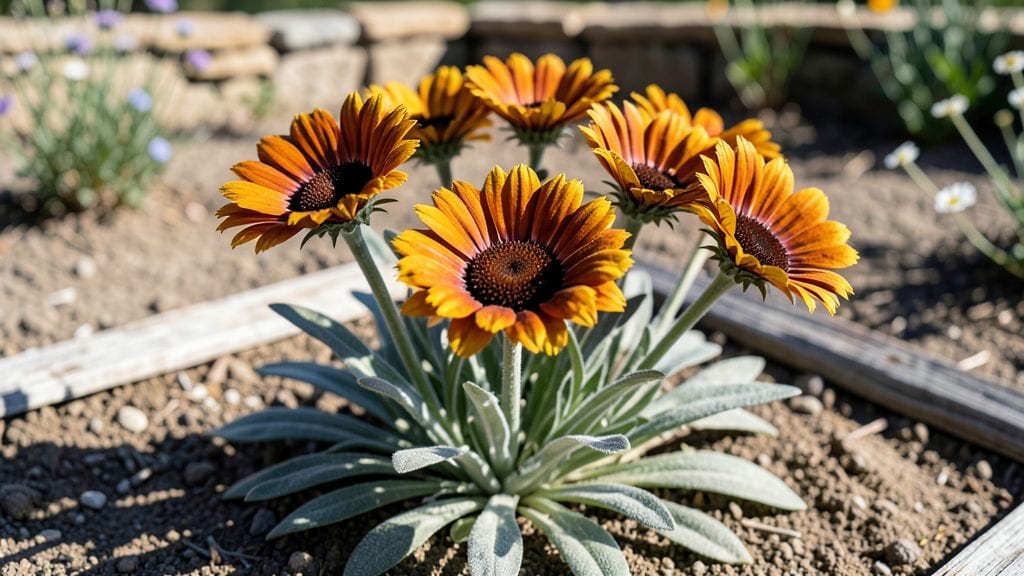
Deciding whether gazania flowers are annuals or perennials depends on your climate—most regions treat them as annuals, but in USDA zones 10-12, they naturally return each year without replanting. Their survival hinges on avoiding frost and maintaining consistent warmth.
Gazanias love warmth and bolt at the first hint of cold, which is why they die back in cooler climates. 🌡️ In frost-free zones, though, their roots stay active year-round, producing fresh foliage and blooms season after season.
The key difference comes down to temperature thresholds—once nighttime temps drop below 32°F, even perennial gazanias in warm zones will struggle to survive. This makes them perfect for container gardening in cooler areas, where you can bring them indoors before winter and replant in spring.
For gardeners in transitional zones, the secret to long-term gazania success lies in microclimates and protective strategies. I’ve seen them thrive in sheltered spots where frost lingers later, or when grown in containers that can be moved.
The plant’s natural dormancy instincts kick in when days shorten, so timing your care around these seasonal cues can extend their blooming window dramatically.
💡 In This Article
- Gazania Flower Lifespan by Climate Zone
- Extending Gazania Blooms: Annual Planting Tips
Gazania flower lifespan by climate zone
The botanical distinction between annual and perennial gazanias comes down to their cold tolerance thresholds. Gazanias native to South Africa evolved in regions where nighttime temperatures rarely drop below 50°F, making them highly sensitive to frost.
When exposed to temperatures below 32°F, their cell membranes rupture due to ice crystal formation, a process called cryodamage. This is why they die back in most U.S. climates, behaving as annuals.
However, in USDA zones 10-12, where winters stay above 40°F, gazanias experience a different survival mechanism. Their fibrous root systems remain active year-round, continuously producing new growth when conditions are favorable.
The key trigger is day length—shorter days in winter signal dormancy, but without frost, the roots simply wait for warmer temperatures to resume blooming. This perpetual cycle is what classifies them as perennials in these zones.
The science behind this involves photoperiodism, where gazanias detect seasonal changes through light exposure. In cooler zones, the first frost acts as a terminal signal, killing the plant entirely. But in frost-free climates, the roots enter a quiescent state—a temporary pause in growth—rather than dying.
This explains why gazanias in Southern California or Florida can return for 5+ years with proper care, while those in New England must be replanted annually.
Here's what happens at the cellular level: Gazanias produce antifreeze proteins when temperatures drop, but these only work down to about 35°F. Below that, ice crystals form in their vascular tissue, blocking water transport and causing irreversible damage.
In warm zones, the absence of frost means these proteins remain effective year-round, allowing continuous regrowth.
For gardeners in transition zones (8-9), the challenge lies in mimicking these frost-free conditions. Using black plastic mulch can raise soil temperatures by 5-10°F, while container growing allows for winter protection. The result? Gazanias that might otherwise die back can sometimes survive multiple seasons with these interventions.
What most people don't realize is that gazanias' seed production also plays a role in their lifespan. In perennial zones, they often self-seed prolifically, creating dense colonies that return each year.
This natural propagation means you might see gazanias spreading beyond their original planting area—proof of their persistent nature when frost isn't a factor.