
Tools
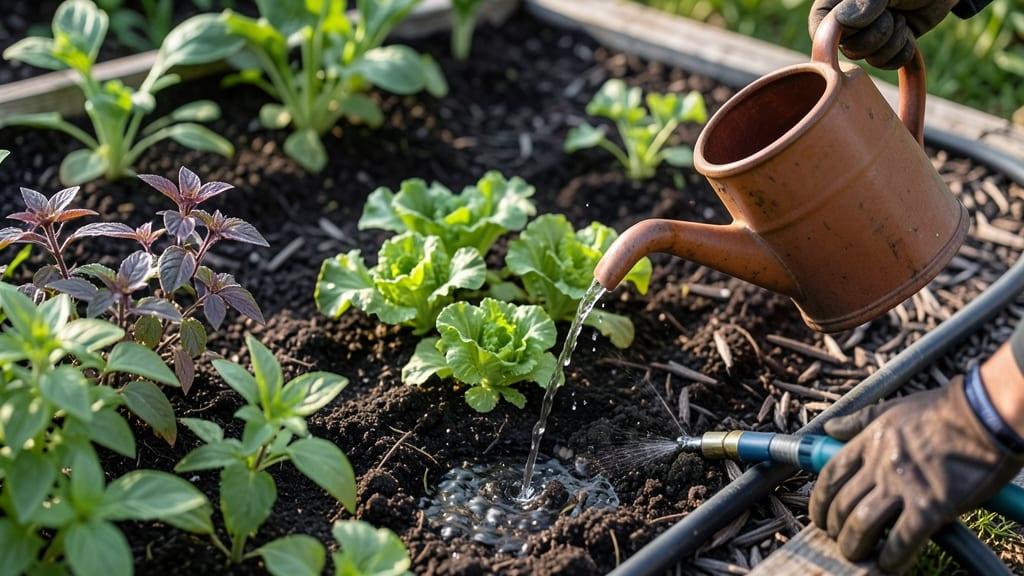
Watering your garden bed the right way means delivering moisture where it matters most—deep into the soil—without wasting a drop or drowning your plants.
Struggling with uneven moisture in your garden beds? Overwatering or underwatering can ruin your plants—yet most gardeners waste water without realizing it. The secret lies in strategic watering zones that deliver perfect hydration every time.
Think about it: a drip irrigation system buried near tomato roots won’t help your lettuce growing just a few feet away. Different plants need different care, and scattering water randomly leads to soggy soil in one spot and thirsty roots in another.
In this guide, I’ll show you how to divide your garden into smart zones, choose the best watering method for each, and keep your soil consistently moist without overdoing it. No more guesswork—just healthy plants and happy water bills.
How to divide your garden bed into watering zones for optimal hydration
Creating watering zones in your garden bed is like designing a custom irrigation system tailored to each plant's needs. By grouping plants with similar hydration requirements, you'll save water, prevent root rot, and ensure every leaf gets just the right amount of moisture.
The key is understanding how sun exposure, plant type, and soil composition affect water absorption.
I've mapped out my own garden beds using this method, and the difference is night-and-day. My tomatoes and peppers thrive in one zone with deep watering, while my lavender and rosemary barely need a sip in another.
The secret? Grouping plants by their natural water needs rather than just throwing seeds into the dirt and hoping for the best.
Before you grab your hose, grab a sketchpad or use garden twine to mark boundaries. Measure your bed and divide it into sections based on sunlight hours and plant families.
Full-sun areas will dry faster, while shady spots retain moisture longer. This simple step prevents overwatering sun-lovers or underwatering shade-dwellers.
Here's where things get scientific: deep-rooted plants like asparagus need infrequent, deep watering, while shallow-rooted lettuce prefers consistent light moisture. By creating zones, you'll deliver water exactly where it's needed—no more guessing games or wasted gallons of water.
Let's break down how to create these zones using a practical comparison table to visualize the differences between plant groups.
Watering Zone Comparison
| Zone Type | Plant Examples | Water Frequency | Depth per Watering | Sun Exposure |
|---|---|---|---|---|
| Zone 1: Thirsty Vegetables | Tomatoes, Peppers, Cucumbers | Every 2-3 days | 6-8 inches deep | Full Sun (6+ hours) |
| Zone 2: Moderate Flowers | Marigolds, Zinnias, Petunias | Every 3-4 days | 4-6 inches deep | Partial Sun (3-6 hours) |
| Zone 3: Drought-Tolerant Herbs | Rosemary, Thyme, Lavender | Every 7-10 days | 3-4 inches deep | Full Sun to Partial Shade |
| Zone 4: Leafy Greens | Lettuce, Spinach, Kale | Every 1-2 days | 2-3 inches deep | Partial Shade (3-4 hours) |
| Zone 5: Bulbs & Perennials | Tulips, Daylilies, Hostas | Every 5-7 days | 4-5 inches deep | Full Sun to Full Shade |
*Depth refers to how deeply water should penetrate the soil for optimal root development
Now that you've mapped your zones, it's time to implement boundaries. Use landscape fabric or mulch paths to separate zones and prevent water from bleeding into neighboring areas. I like to use black plastic mulch for vegetable zones—it retains heat and suppresses weeds while keeping water exactly where it belongs.
Pro tip: Install drip irrigation lines along zone boundaries for precision. These systems deliver water directly to roots, reducing evaporation and runoff. For larger beds, consider a soaker hose that snakes through each zone—just adjust the flow rate based on your plant group's needs.
Don't forget to monitor your zones weekly. Stick your finger 2 inches into the soil—if it feels dry, it's time to water that zone. If it's damp, hold off. This simple check prevents both overwatering and underwatering, two common mistakes that kill more plants than pests ever could.
Watering techniques by plant type: what each zone really needs
Not all plants share the same thirst—yet many gardeners treat their entire bed like a monolith. Drought-tolerant succulents wilt from overzealous watering while leafy greens beg for moisture.
The solution? Tailoring your watering method to each plant's needs while minimizing runoff. Let's break down the best techniques for your garden zones.
For vegetables like tomatoes and peppers, deep watering 1-2 times per week is ideal—they crave moisture but hate soggy roots. Delicate flowers like petunias prefer consistent light watering, while herbs such as rosemary thrive on neglect.
The key is matching your watering method to these needs without wasting a drop.
| Plant Type | Watering Method | Frequency | Depth | Notes |
|---|---|---|---|---|
| Vegetables (tomatoes, peppers) | Drip irrigation | 2-3x/week | 6-8 inches | Deep soak at base |
| Flowers (petunias, marigolds) | Soaker hoses | Daily (light) | 2-3 inches | Avoid wetting foliage |
| Herbs (rosemary, thyme) | Hand-watering | Weekly | 1-2 inches | Drought-resistant |
| Succulents (aloe, sedum) | Drip irrigation | Bi-weekly | 1 inch | Well-draining soil |
| Leafy greens (lettuce, spinach) | Soaker hoses | Daily | 3-4 inches | Keep soil moist |
Drip irrigation is my go-to for vegetables and succulents because it delivers water directly to the roots while avoiding runoff. Place emitters 6-12 inches from plants and let them run for 30-60 minutes to ensure deep saturation.
For flowers and greens, soaker hoses work wonders—they mimic natural rainfall and keep moisture levels consistent.
Hand-watering is perfect for herbs and small containers, but it’s easy to overdo it. I use the "finger test": stick your finger 1-2 inches into the soil. If it feels dry, water lightly. If it’s damp, wait another day. This simple trick saves water and prevents root rot.
Mulching is non-negotiable for minimizing runoff. A 2-3 inch layer of straw or wood chips keeps moisture locked in while suppressing weeds. For sandy soils, add compost to improve water retention. In clay-heavy beds, raise your plants slightly to prevent water pooling.
Seasonal adjustments are crucial. In summer, water early in the morning to reduce evaporation, while winter calls for bi-weekly checks—most plants need far less when dormant. By matching your method to the plant and season, you’ll transform your garden into a water-efficient paradise.
Remember: Consistency beats intensity. A little water daily beats a deep soak once a week—it’s how you train roots to grow deeper and healthier. Start with these zones, and soon your garden will thrive without a single wasted drop. 💧🌱