
Tools
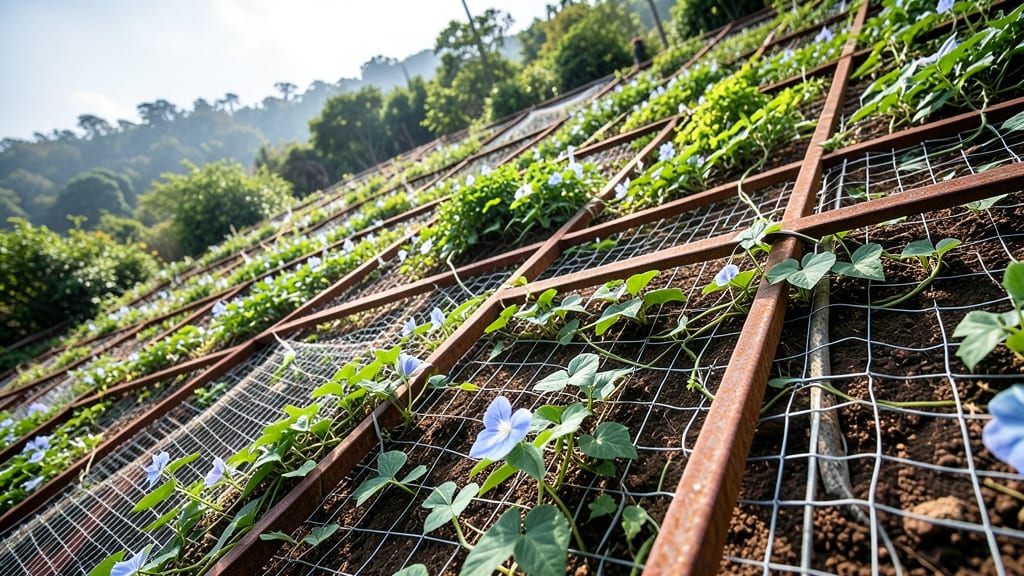
Working with a sloped garden doesn’t mean sacrificing beautiful plantings—these 10 terraced garden bed ideas transform steep terrain into lush, erosion-resistant growing spaces while maximizing space and drainage.
Retaining Wall Stone Terraces
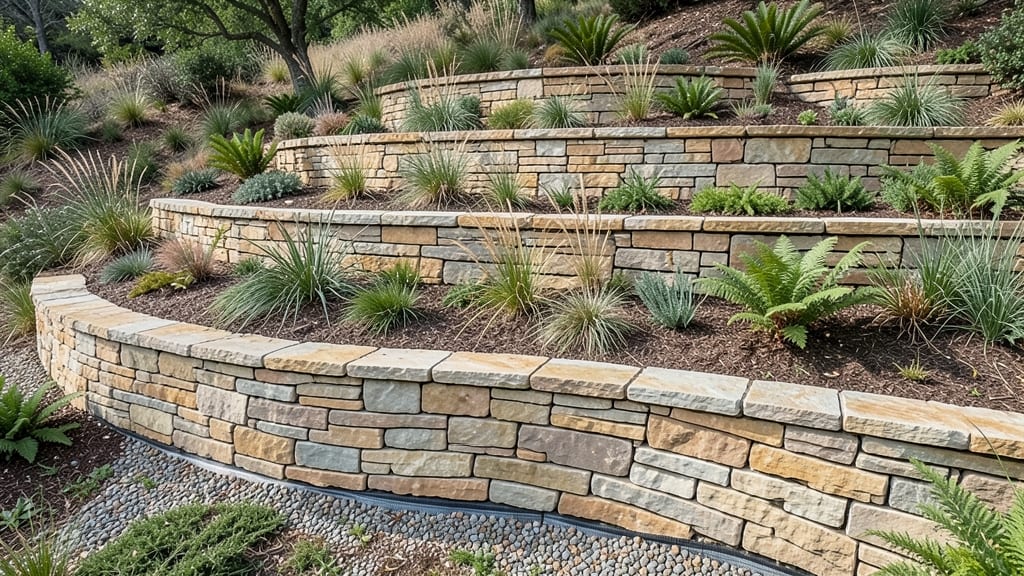
Transform your steep slope into a durable, decorative garden feature with retaining wall stone terraces. These timeless structures stabilize soil while creating visually striking borders that elevate any landscape—no more muddy runoff or unstable planting areas!
Use natural stone (like limestone or flagstone) or concrete blocks for a sturdy foundation that lasts decades. Stack them in staggered layers to create flat planting surfaces, ensuring proper drainage with a gravel base. For extra flair, top each terrace with drought-tolerant plants like lavender or sedum, which thrive in well-drained soil while adding color.
Perfect for permanent gardens or high-traffic areas, these terraces require minimal upkeep once installed. They’re ideal for gardeners who want long-term beauty without the hassle of frequent repairs. 🌿
Wooden Box Terraces with Gravel Base
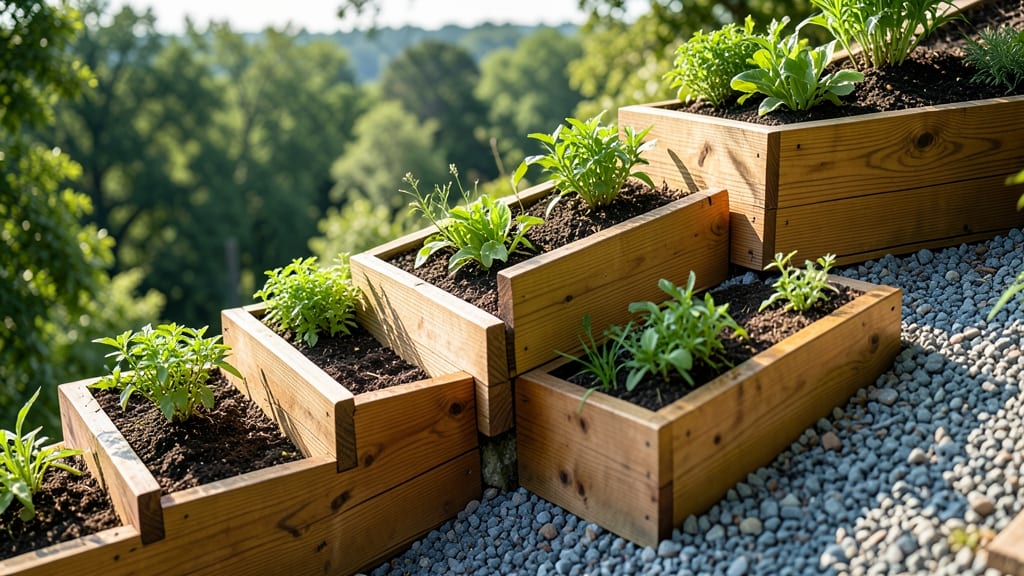
Skip the heavy lifting (and high costs) of stone terraces—wooden box terraces offer a budget-friendly, customizable way to tame moderate slopes while keeping your garden soil healthy. These DIY-friendly boxes, built from cedar or redwood, sit atop a gravel base that doubles as drainage and erosion control, making them perfect for gardeners who want structure without the permanence of stone.
Start by digging shallow trenches along your slope, filling them with 3-4 inches of gravel to create a stable base. Space your boxes 12-18 inches apart to allow for easy access and prevent soil compaction. Fill with lightweight, well-draining soil and plant drought-tolerant perennials or shallow-rooted veggies like thyme, lettuce, or strawberries—ideal for slopes where water runs off quickly.
This method is ideal for urban gardeners or beginners who want a low-maintenance solution that blends natural beauty with practicality. Plus, you can easily adjust the design as your garden evolves! 🌿
Hugelkultur Raised Beds
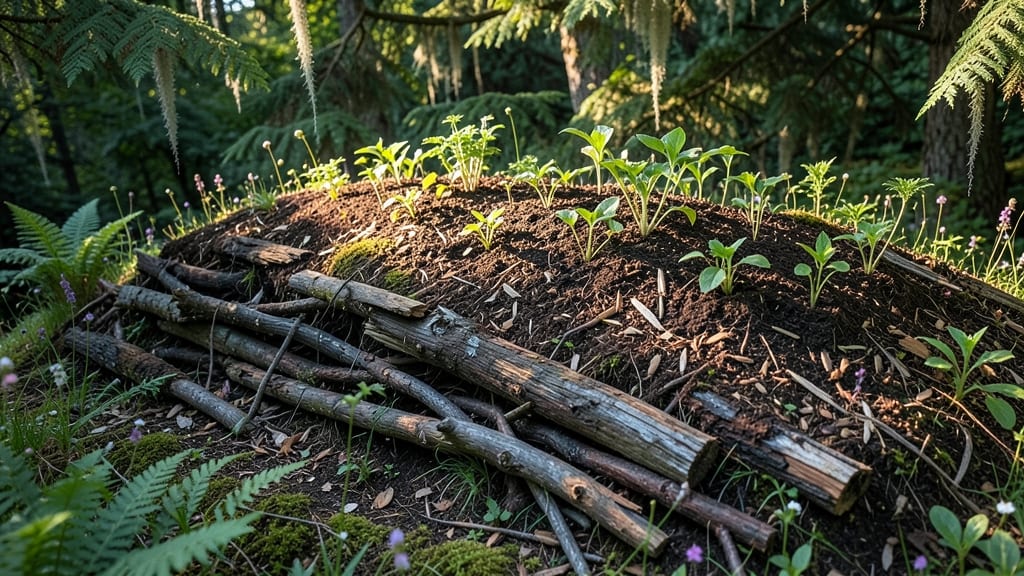
Turn your slope into a thriving, self-sustaining garden with hugelkultur raised beds—a nature-inspired technique that mimics forest floor decomposition. By burying logs, branches, and other woody debris, you create nutrient-rich mounds that retain moisture for years while stabilizing soil naturally, even on steep grades.
Start by layering fallen branches (3-6 inches thick) at the base, followed by smaller sticks, leaves, and topsoil. Plant directly into the mound or cover with mulch and wait 6-12 months for decomposition to enrich the soil. This method thrives with drought-tolerant perennials like lavender or berries, as the slow-release nutrients support plants long-term.
Perfect for eco-conscious gardeners or those with rocky slopes, hugelkultur requires minimal maintenance once established. It’s also a great way to repurpose yard waste while creating a low-water, high-fertility growing space. 🌿
Gabion Wire Baskets with Plants
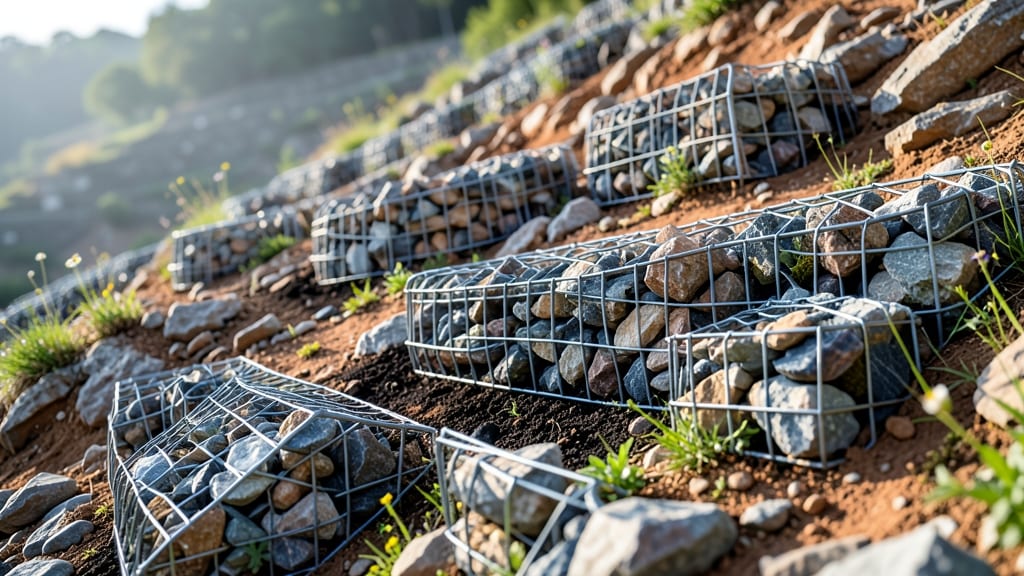
Transform your rocky slope into a stylish erosion-control masterpiece with gabion wire baskets. These industrial-chic wire cages, filled with rocks and soil, create natural-looking terraces that double as drainage channels while adding texture to your landscape.
Start by stacking the baskets along the slope’s contour, filling them with a mix of river rocks (for weight and drainage) and well-draining soil (topped with mulch). Plant drought-tolerant succulents or native ground covers like sedum or creeping thyme to thrive in the rocky mix. The rusted metal aesthetic blends seamlessly with natural landscapes, making it ideal for modern or rustic gardens.
Perfect for gardeners who want low-maintenance erosion control without sacrificing style, gabions require minimal upkeep and last for years. 💚
Swale Planting Trenches
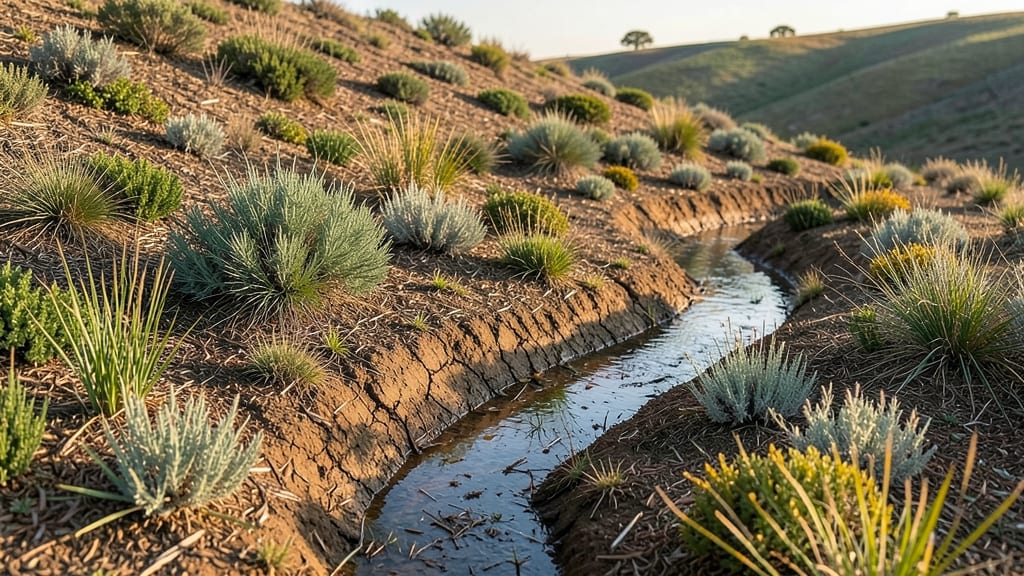
Turn your slope into a water-wise oasis with swale planting trenches, a simple yet powerful technique that captures rainwater where it falls. Unlike traditional terraces, swales use the natural grade of your land to create shallow, curved trenches that slow water flow while nourishing deep-rooted plants.
Dig a trench about 6-12 inches deep along the contour of your slope, then fill it with a mix of compost, sand, and native plants like Russian olive, switchgrass, or yarrow. These deep-rooted perennials thrive in moist conditions while stabilizing soil and reducing runoff. For best results, space swales 10-20 feet apart and mulch heavily to retain moisture.
This low-cost, no-tools-required method is perfect for drought-prone areas or gardeners who want to restore natural water cycles without heavy construction. 🌱
Bamboo Fence Terraces
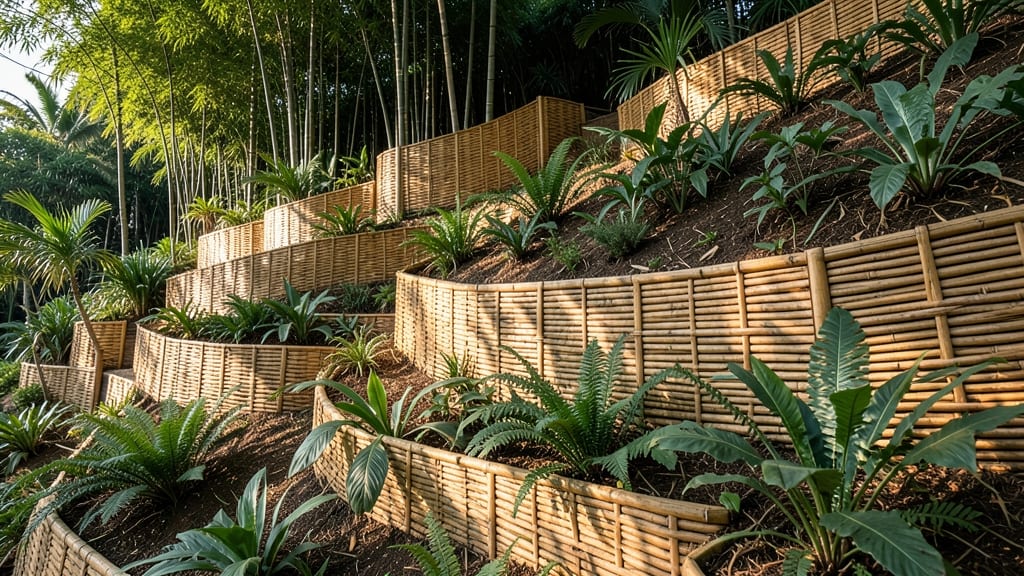
Transform your sloped garden into a tropical oasis with bamboo fence terraces—a living, breathable solution that adds privacy while taming erosion. Woven bamboo sections create natural steps that contour to the slope, allowing you to plant directly into the soil behind each layer for a seamless, layered look.
This method thrives in humid climates, where bamboo’s natural moisture resistance prevents rot and warping. Plant ferns, orchids, or calatheas in the shaded layers for a jungle-like effect, while drought-tolerant succulents can edge the terraces. The flexible fencing adapts to uneven terrain, making it ideal for steep or irregular slopes where rigid materials would fail.
Perfect for gardeners who love organic, low-maintenance designs, bamboo terraces require minimal tools—just stakes, strong twine, and your choice of plants. Plus, the vertical privacy screen adds instant curb appeal. 🌿
Stepping Stone Pathways with Edges
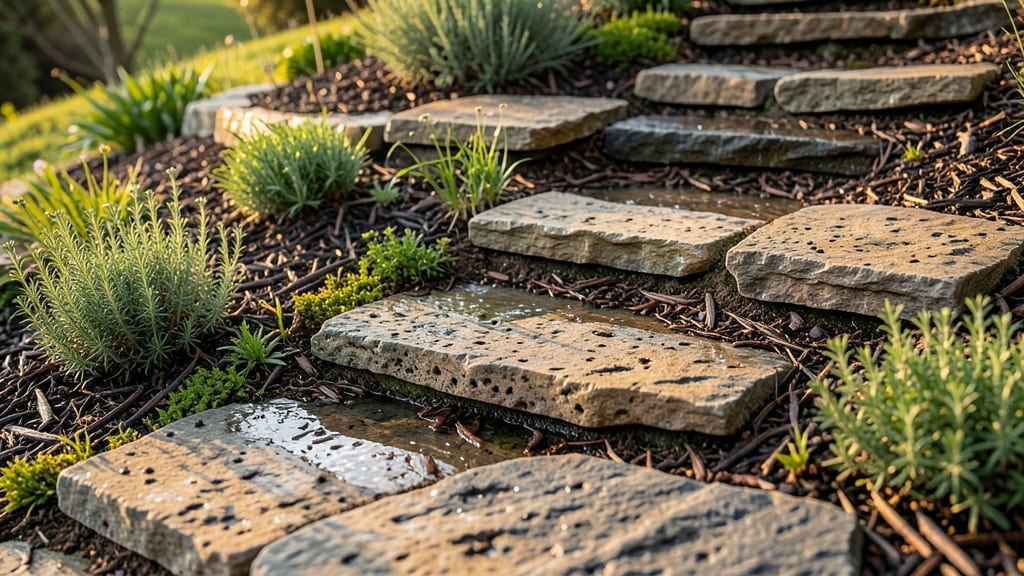
Tired of watching soil wash away every time it rains? Stepping stone pathways with edges solve this problem while adding rustic charm to your sloped garden. These shallow terraces use flat stones to create defined planting pockets between walkways, slowing water flow and keeping soil in place naturally.
Start by laying stones in a gentle curve to follow the slope’s natural contour. Leave 2-3 inch gaps between stones to plant drought-tolerant ground covers like creeping thyme or lavender—these thrive in the shallow soil pockets while preventing erosion. For extra stability, edge the pathway with upright stones or bricks to contain the soil and create a polished look.
This design is perfect for small slopes, cottage gardens, or pathways where you want both function and beauty. It’s also beginner-friendly since it requires minimal tools and can be adjusted over time as your garden evolves. 🌿
Log and Root Barrier Terraces
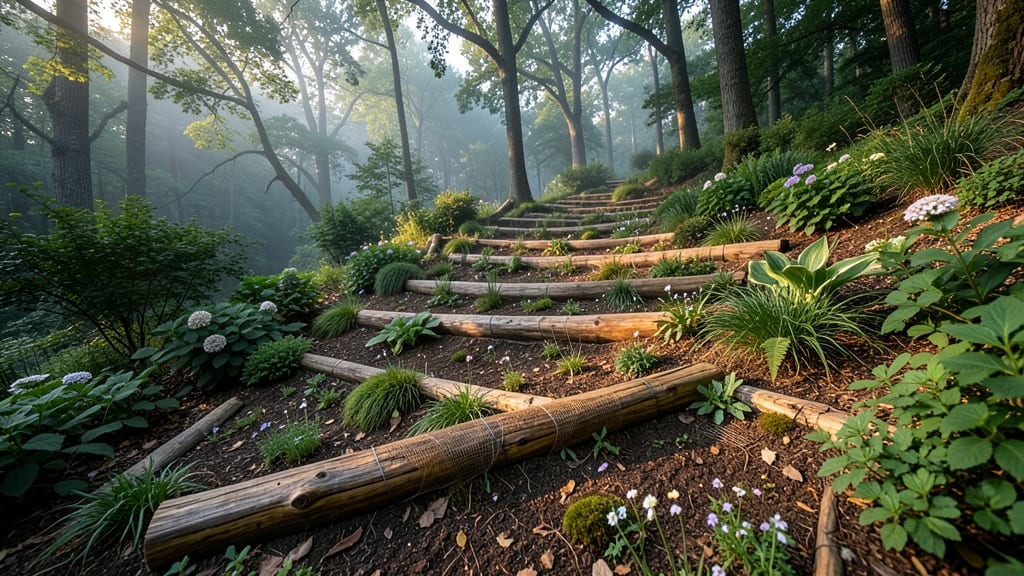
Transform your slope into a thriving woodland garden with log and root barrier terraces—a natural, low-maintenance solution that mimics forest ecosystems while controlling erosion. This technique uses fallen logs buried vertically along slope edges, creating micro-terraces that slow water runoff and encourage deep root growth.
Start by selecting rot-resistant logs (cedar or oak work best) and burying them vertically at 30-degree angles, spaced 2-3 feet apart. Fill the gaps with topsoil and plant deep-rooted perennials like wild strawberries, comfrey, or Russian sage—their roots will anchor the soil while adding beauty. The logs act as natural barriers, while the roots create a living filter that improves soil structure over time.
This method is perfect for woodland gardeners, permaculture enthusiasts, and those seeking sustainable solutions—no concrete or heavy materials required! The terraces blend seamlessly into natural landscapes while reducing maintenance. 🌿
Modular Plastic Crate Gardens
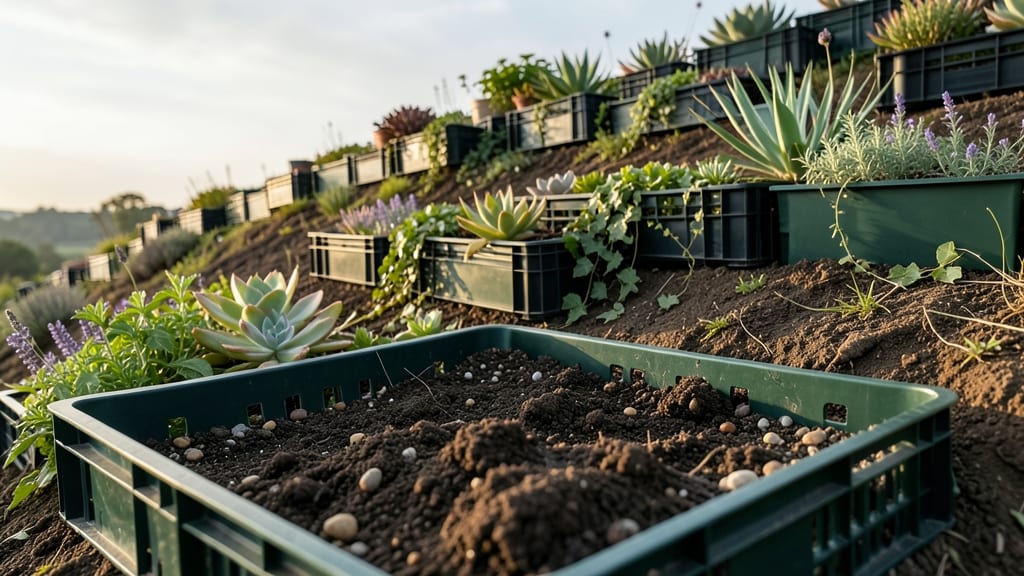
If you're renting a home, avoiding permanent alterations, or need a quick, movable garden solution, modular plastic crate gardens are your answer. These interlocking crates create instant terraces on any slope without digging, stakes, or heavy materials—just snap them together and fill with soil.
Each crate typically holds 1-2 cubic feet of soil, perfect for growing vegetables, herbs, or flowers while preventing erosion. The lightweight plastic resists warping and won’t rot like wood, and the interlocking design ensures stability on uneven ground. You can rearrange them yearly or move them entirely if your rental lease ends.
This system is ideal for urban gardeners, beginners, or anyone with limited space—just add drainage holes and your favorite plants for a low-maintenance, high-impact slope garden. 🌻
Living Wall Terraces with Climbing Plants

Turn your barren slope into a vertical garden oasis with living wall terraces that support climbing plants like clematis or passionflower. This innovative approach uses sturdy trellises and wire mesh to create layered planting zones, transforming steep or uneven terrain into a lush, green feature without traditional terraces.
Start by installing galvanized wire mesh along the slope, then attach wooden or metal trellises at intervals to support vines. Plant fast-growing climbers at the base and let them cascade upward, creating a natural curtain of foliage. This method works especially well for slopes under 6 feet tall and requires minimal soil disturbance, making it ideal for urban or small spaces.
Perfect for gardeners who love romantic, cottage-style gardens, this technique also reduces erosion by stabilizing soil with plant roots. Plus, it maximizes growing space in tight areas while adding year-round interest. 🌷